What Government Curbs Mean For Yes Bank Depositors
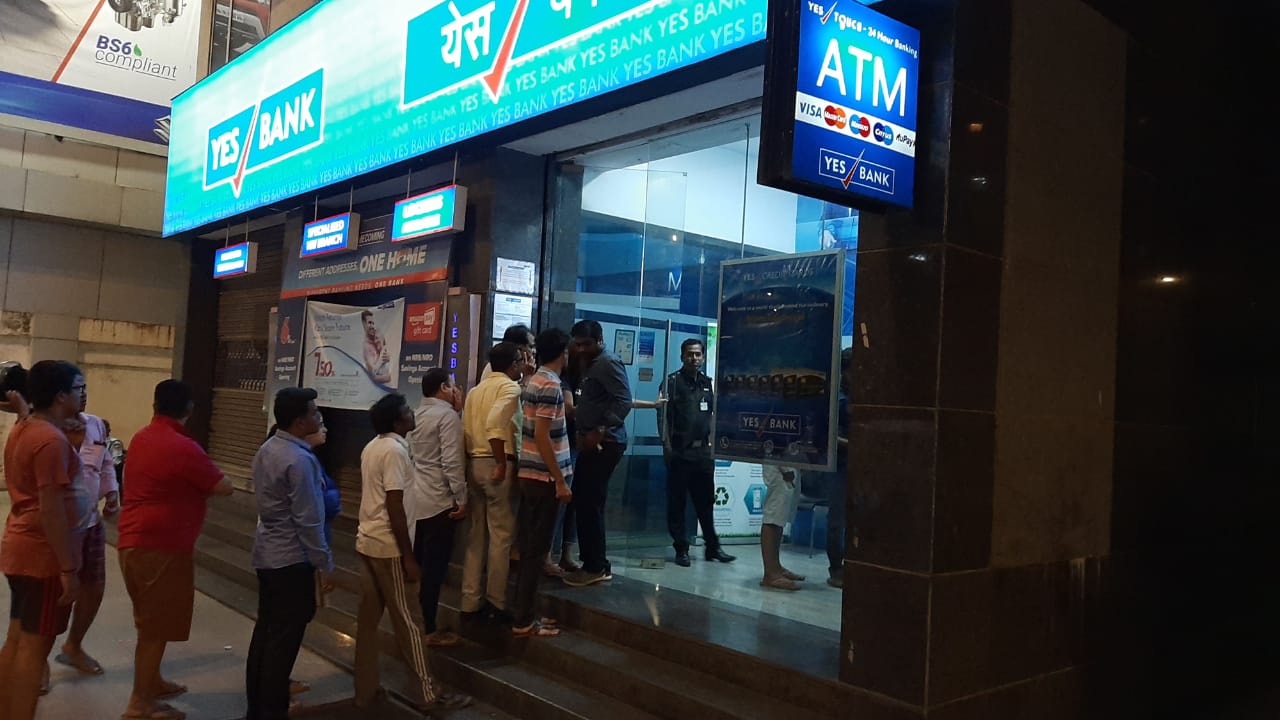
The government placed Yes Bank Ltd. under moratorium and capped withdrawals by customers of the private sector lender for a month citing its poor financial condition.
Depositors will not be allowed to withdraw more than Rs 50,000 from the bank without written permission from the Reserve Bank of India during the period of the moratorium which ends on April 3, according to a finance ministry statement. The restriction on withdrawals is irrespective of the number of accounts any customer may have in the bank.
If the depositor has dues payable to the bank, those will be adjusted first before withdrawal of any amount.

When Can Depositors Withdraw More?
The RBI may permit a Yes Bank depositor to withdraw up to Rs 5 lakh under certain emergency conditions. These circumstances include:
- medical treatment of the depositor or any person actually dependent on them;
- towards the cost of higher education of the depositor or any person actually dependent on him for education in India or outside India;
- to pay obligatory expenses in connection with marriage or other ceremonies of the depositor or his children or of any other person actually dependent upon him;
- in connection with any other unavoidable emergency.
The restriction does not apply on any drafts or pay orders issued by Yes Bank and unpaid on March 5.
The Ministry of Finance took the decision of capping withdrawals after considering an application by the RBI. It's the first instance of a large private bank being put under such a moratorium by the government.
Former Economic Affairs Secretary CM Vasudev said depositors should not panic as their money would be “quite safe”. “It is only that for some time they will have to bear with the system and the moratorium will do that job.”
What Yes Bank Can And Can't Do?
Yes Bank has been prohibited from making any loans, investments, payments, or transfer any properties, said another RBI statement.
The private lender, however, can pay bills already received, employee salaries, rent and taxes.
What's The Way Forward?
The regulator and government should now ensure that they get the bank's operations up and running as soon as possible, according to Abizer Diwanji, partner at EY India. “There is a larger need to save the deposit base. And one should instill more and more confidence in them about the revival ability of the bank,” Diwanji said.
The bank should make sure, and I am sure the administrator will make sure, that we do not have dry ATMs.Abizer Diwanji, Partner, EY India
Former Deputy Governor of RBI, HR Khan, agreed. “It is quite a large bank with balance sheet size of more than Rs 4 lakh crore so the RBI has acted. Probably in the next one month they will see what the scheme of reconstitution could be. The depositors' and public interest must be the uppermost in their mind.”


-
The Economic Imperative: Analysing The Material Driving Force Behind India-Canada Strategic Reset

This economic complementarity is further reinforced by deep institutional investment ties and talent mobility, which form the bedrock of the bilateral framework.
-
Medicine Pricing: Where Must Profit Stop?
India must confront excessive margins, hidden incentives and regulatory gaps that threaten the integrity of medicine.
-
Why Amazon And Flipkart Are Struggling To Beat Meesho In India's Smaller Cities
With 274 million users and lowest-cost logistics, Meesho is defending its value commerce crown against giants like Amazon and Flipkart.
-
High US Salaries, No Green Card Certainty: The Financial Calculation Facing Indian H-1B Families
The suspension of PERM processing at eight technology employers does not cancel existing H-1B visas. What it does is force a question many Indian families have been avoiding: is the US salary worth tying your career and family plans to one employer?
-
Swiggy vs Eternal: Food Delivery's Two Rivals Are No Longer In The Same Race
Eternal is building a private AI assistant, dark.ai. Swiggy is still working out how to make Instamart pay, with an operating loss of Rs 895 crore in the July-September quarter while Blinkit stayed profitable.
-
Where You Live Shapes How You Get To Work | The Reason Why
Two-wheelers are the most popular way to get to work in India, accounting for nearly 43% of workplace commutes.
-
Unhedged Position: Can India See An Indonesia-Style Time Correction?
The Nifty is trading below levels it first clocked in 2024. Is there, then, as I have suggested in the headline, potential that the current time correction drags on painfully for the next three-five, even ten years?
-
Navigating Friction And Energy Realities: An Analysis Of Marco Rubio's October Visit To India
Occurring at a critical juncture marked by stalled trade negotiations and escalating geopolitical pressures over global energy supplies, the visit offers a profound window into modern US-India relations.
-
India Exports Capital. Why Not Export Trusteeship?
The big question, then, is whether India can build an institution that global borrowers, investors, banks, and lawyers can trust, even without an Indian connection.
-
France's Economy & Politics Are In Crisis | The Reason Why
Let's look at how the French economy and politics evolved under Nicolas Sarkozy, Franois Hollande and Emmanuel Macron.










