What Economists, Industry And Market Experts Made Of RBI’s Policy
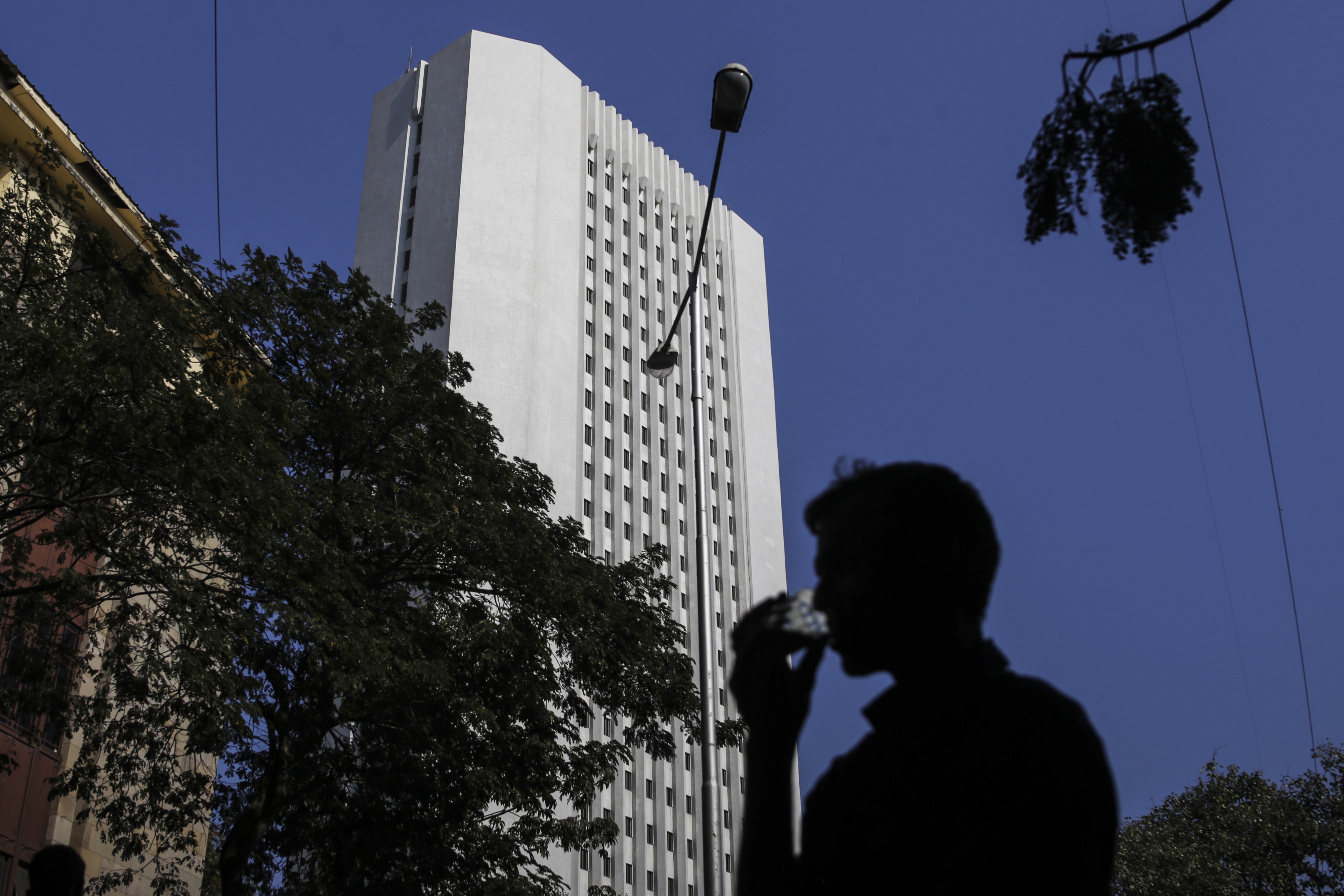
The Reserve Bank of India today kept benchmark lending rates unchanged but raised its inflation forecast and slashed the growth outlook for the country's slowing economy.
The monetary policy committee voted to keep the repo rate unchanged at 6 percent and reverse repo rate at 5.75 percent. The GVA growth forecast has been cut to 6.7 percent for FY18 compared to 7.3 percent earlier.
The decision was on expected lines with 31 out of 32 economists predicting a status quo policy in a Bloomberg survey. Economists, industry and market experts expect the RBI to hold its fire power on rates as the economic picture remains clouded by disruptions related to the Goods and Services Tax implementation and slowing growth.
‘Policy Instils Confidence Among Investors'
Further policy action by the RBI will be contingent on the evolution of the output gap and its impact on the inflation trajectory, ICICI Bank's Managing Director and Chief Executive Officer Chanda Kochhar said in an emailed statement.
By retaining the focus on inflation targets, this policy ensures that the confidence of the investors on the Indian macroeconomic indicators will continue.Chanda Kochhar, MD & CEO, ICICI bank
‘Q2 GDP Key Deciding Factor'
Another rate cut this fiscal is possible only if the risks to economic growth rise and inflation undershoots the monetary policy committee's forecast, according to ratings agency CRISIL.
The second-quarter GDP data will be a key deciding factor. If growth sulks down further, it can potentially bring down core inflation, tooCRISIL Report
CRISIL believes that a large part of the growth slowdown is transitory. It cut its GDP forecast to 7 percent from 7.4 percent earlier, but added that “the economy will grind up over the next few quarters as the impact of demonetisation and destocking due to GST implementation wears off”.
Also Read: RBI To Allow Funds Transfer Among Mobile Wallets
Industry Needed A ‘Feel-Good Factor'
The Federation of Indian Chambers of Commerce and Industry, which had sought a 100 basis point reduction in the “unduly high” interest rates, said that it was disappointed by the RBI's decision.
In context of the current industrial situation, we felt that there was a need for a further cut in the repo rate. Growth conditions remain under strain which is reflected in the persistently weak investment activity and the first quarter GDP growth numbers.Pankaj Patel, President, FICCI
The RBI should give “equal consideration” to growth prospects of the economy, as it does to inflationary pressures, Pankaj Patel, president of FICCI said in an emailed statement.
He added that the industry needed a “feel-good factor” to motivate people to spend and buy more. A rate cut would've helped “propel demand for interest sensitive sectors” like consumer durables, automobiles and housing, he added.
Fiscal Prudence By Centre May Create Room For Rate Cut
Weaker-than-expected economic growth, coupled with the government's decision to maintain its budgeted fiscal target could open up room for one more rate cut, according to Nomura.
The Japanese brokerage, however, expects RBI to leave rates unchanged as it sees a “higher probability” of the government missing its 3.2 percent FY18 fiscal deficit target by 30 basis points.
Economic growth has bottomed out and will only recover from here on, Nomura said, adding that consumer price inflation will likely rise above 4 percent in the coming quarters.
‘Prudent Call'
Maintaining its neutral monetary stance was a “prudent call” by the central bank due to rising inflation and limited visibility on growth going ahead, said Rajni Thakur, economist at RBL Bank.
Thakur added that the slashing of growth outlook highlights fears “that have been impacting business and consumption sentiments in the economy”. These concerns will likely persist in the current fiscal as well, she added.
‘Appropriately Hawkish'
It was an “appropriately hawkish policy” by the RBI with not enough room to cut rates, said Vibhav Kapoor, group chief investment officer of IL&FS. With upside risks to the central bank's inflation target, there's not much the RBI could've done, he added.
On the stress in India's banking system, Kapoor said even Rs 30,000-40,000 crore of additional capital would not make a big difference to the health of India's PSU banks, while questioning where the money would come from. And if the government manages to infuse more funds, it will run the risk of a higher fiscal deficit, he added.
Its a pretty tight situation and RBI has taken a pretty balanced view.Vibhav Kapoor, Group CIO, IL&FS

-
The Economic Imperative: Analysing The Material Driving Force Behind India-Canada Strategic Reset

This economic complementarity is further reinforced by deep institutional investment ties and talent mobility, which form the bedrock of the bilateral framework.
-
Medicine Pricing: Where Must Profit Stop?
India must confront excessive margins, hidden incentives and regulatory gaps that threaten the integrity of medicine.
-
Why Amazon And Flipkart Are Struggling To Beat Meesho In India's Smaller Cities
With 274 million users and lowest-cost logistics, Meesho is defending its value commerce crown against giants like Amazon and Flipkart.
-
High US Salaries, No Green Card Certainty: The Financial Calculation Facing Indian H-1B Families
The suspension of PERM processing at eight technology employers does not cancel existing H-1B visas. What it does is force a question many Indian families have been avoiding: is the US salary worth tying your career and family plans to one employer?
-
Swiggy vs Eternal: Food Delivery's Two Rivals Are No Longer In The Same Race
Eternal is building a private AI assistant, dark.ai. Swiggy is still working out how to make Instamart pay, with an operating loss of Rs 895 crore in the July-September quarter while Blinkit stayed profitable.
-
Where You Live Shapes How You Get To Work | The Reason Why
Two-wheelers are the most popular way to get to work in India, accounting for nearly 43% of workplace commutes.
-
Unhedged Position: Can India See An Indonesia-Style Time Correction?
The Nifty is trading below levels it first clocked in 2024. Is there, then, as I have suggested in the headline, potential that the current time correction drags on painfully for the next three-five, even ten years?
-
Navigating Friction And Energy Realities: An Analysis Of Marco Rubio's October Visit To India
Occurring at a critical juncture marked by stalled trade negotiations and escalating geopolitical pressures over global energy supplies, the visit offers a profound window into modern US-India relations.
-
India Exports Capital. Why Not Export Trusteeship?
The big question, then, is whether India can build an institution that global borrowers, investors, banks, and lawyers can trust, even without an Indian connection.
-
France's Economy & Politics Are In Crisis | The Reason Why
Let's look at how the French economy and politics evolved under Nicolas Sarkozy, Franois Hollande and Emmanuel Macron.










