For Cash Deposits Of Over Rs 20 Lakhs In A Year, Change In Rules
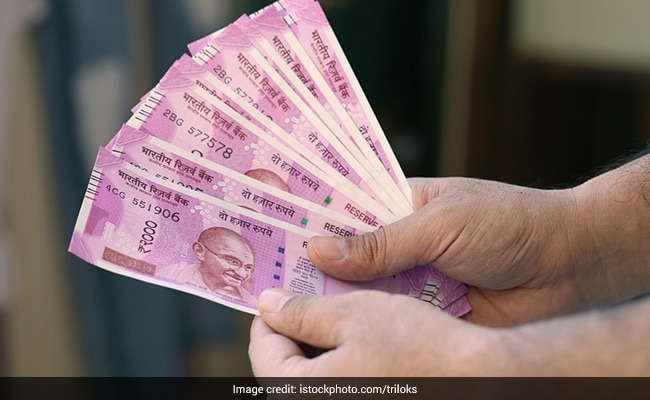
In a move to clamp down on illegal and unaccounted cash transactions, the government had amended cash limit rules earlier in the year. Paying or receiving cash above the limits set is punishable by a steep penalty of up to 100 per cent of the amount paid or received.
Under the new rules and regulations set by the Central Board of Direct Taxes (CBDT), individuals looking to deposit more than Rs 20 lakh a year will now need to present their PAN details and their Aadhaar card mandatorily.
While earlier there was a limit of Rs 50,000 per day before individuals needed to furnish PAN details when depositing cash, the Income Tax department had set no annual limit.
But under the new rules, cash withdrawals and deposits of large sums of money in a single year across single or multiple banks need to be followed with PAN and Aadhaar details to create trackable details.
"Every person shall, at the time of entering into a transaction specified in column (2) of the Table below, quote his permanent account number or Aadhaar number, as the case may be, in documents pertaining to such transaction, and every person specified in column (3) of the said Table, who receives such document, shall ensure that the said number has been duly quoted and authenticated," the CBDT said in its notice dated May 10.
Individuals who do not have a PAN need to apply for a PAN at least seven days before entering any transaction of above Rs 50,000 a day or above Rs 20 lakh a financial year.
The Income Tax department, along with other Central government departments, has been updating and amending rules to reduce the risk of financial fraud, illicit money transactions and other money crimes over the past few years.
The government also forbids receiving cash worth more than Rs 2 lakh to restrict the use of cash in high-value transactions. So, a person cannot accept more than Rs 2 lakh in cash, not even from close family.
The government has set various limits on cash transactions to combat black money. Let's take a look at some cash transactions that may have serious consequences:
- India's income tax laws prohibit cash transactions above Rs 2 lakh for any reason. For example, if you purchase gold jewellery worth Rs 3 lakh in a single transaction, you must make payment via cheque, credit card, debit card, or bank transfer.
- You must follow this guideline even if you receive money from any family member.
- The government prohibits anyone from accepting cash worth more than Rs 2 lakh to limit cash usage in high-value transactions. So, in a single day, an individual cannot accept more than Rs 2 lakh in cash, even from close relatives.
- One cannot accept even a cash gift of more than Rs 2 lakh from a single donor on a single occasion. Those who accept cash over Rs 2 lakh violating this clause may face a penalty equivalent to the amount received.
- Make sure you don't pay for health insurance in cash while tax planning. If taxpayers pay their insurance premium in cash, they are not eligible for the Section 80D deduction. It is required to be done through the banking system.
- If a person takes a cash loan from a financial institution or a friend, the total amount cannot exceed Rs 20,000. The same regulation applies to debt repayment. The repayment of a Rs 20,000 loan must be made through a financial channel.
- In a property transaction, the maximum cash allowed is also Rs 20,000. The limit remains the same even if a seller accepts an advance.
- When it comes to self-employed taxpayers, they cannot claim any expenditure over Rs 10,000 if it's paid in cash to a single person in a single day. The law establishes a higher threshold of Rs 35,000 for payments given to a transporter.

-
Getting To Work Costs Women More | The Reason Why

It is not just about women paying more than men. It is about women paying much more in cities than in villages.
-
AI Bias In Investing Cannot Be Eliminated, But It Can Be Governed
Framing is a particularly important example as identical financial information presented in terms of gains rather than losses can lead an LLM to reach a different assessment.
-
Joining The Dots | Dark Skies, Steady Diya: Why Hope Holds This Diwali
With war, a weak rupee and foreign outflows weighing on sentiment, policymakers at the NDTV World Summit and market veterans at NDTV Profit Ignite: Diwali Edition offered the same advice: stay invested and filter out the noise.
-
The Curious Case of Equitas Small Finance Bank And A CEO Who Quit For Stock
PN Vasudevan believes persistent investor concerns over a perceived conflict of interest had become a governance overhang on Equitas Small Finance Bank's stock, even as the lender improved profitability and asset quality.
-
Talking Points This Week: AI Cash Burn, A Tiger Comeback And An India That Still Finds Its Own Path
India is not immune to higher oil or tighter global liquidity, yet its earnings base is broader, its domestic policy levers are still available.
-
Foreign Investors Own Half Of HDFC Bank and ICICI Bank. An LTCG Cut Could Matter Most Here
Foreign portfolio investors have US$115 billion parked in HDFC Bank, ICICI Bank. If the government cuts long-term capital gains tax, Jefferies says returning foreign money could land here first.
-
'Never Seen This Level Of Negativity': Sandeep Tandon Says The Next Rally May Be Closer Than You Think
Veteran investor Sandeep Tandon says foreign selling is easing, large-caps are due a comeback and mid-caps are crowded, while he turns positive on gold, power and pharma this Diwali.
-
Indians Stay With Family, Not In Hotels | The Reason Why
India still lacks enough clean, reliable and affordable hotels for budget-conscious travellers.
-
The Economic Imperative: Analysing The Material Driving Force Behind India-Canada Strategic Reset
This economic complementarity is further reinforced by deep institutional investment ties and talent mobility, which form the bedrock of the bilateral framework.
-
Medicine Pricing: Where Must Profit Stop?
India must confront excessive margins, hidden incentives and regulatory gaps that threaten the integrity of medicine.










