Wall Street Is On High Alert For Cracks In Treasury-Bill Demand
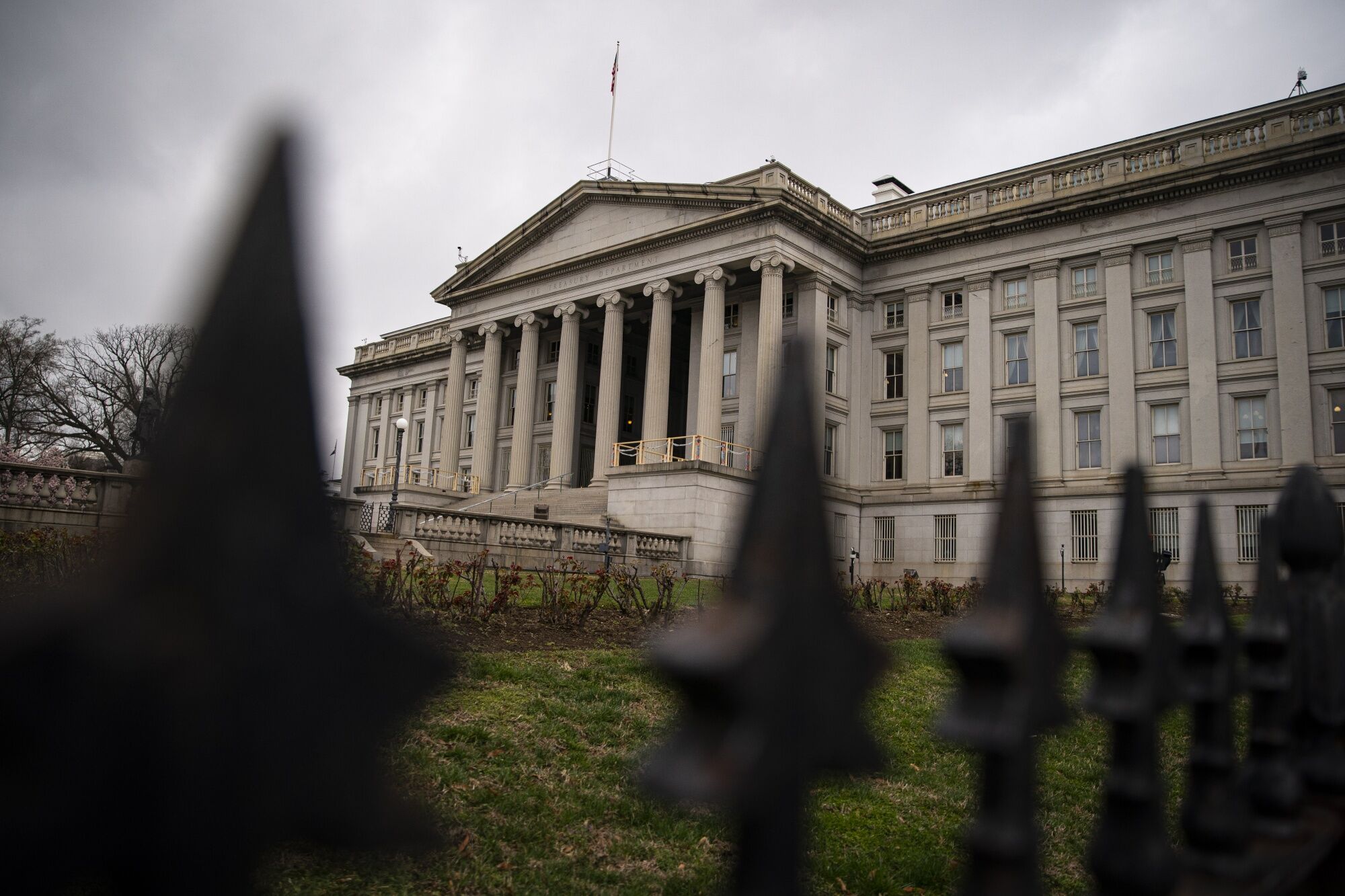
(Bloomberg) -- The US Treasury's ongoing barrage of bill issuance has left market participants trying to gauge when investors will lose their appetite for short-dated government debt.
Buyers have easily soaked up the $1.56 trillion of Treasury bills issued this year through the end of September, with the bulk coming after the government suspended the debt ceiling in June. But drainage of the Federal Reserve's overnight reverse repurchase agreement facility, where usage has dropped by over $1 trillion as cash is allocated to T-bills, to the widening gap between yields and overnight index swaps — a proxy for monetary policy expectations — are already raising concerns.
“The Treasury's bill supply increase acknowledges robust structural demand from money market funds and other investors,” said Joseph Abate, a strategist at Barclays Plc. “But how much will this demand grow and, more significantly, how much will bill yields need to cheapen to absorb the additional supply?”
Short-end issuance is being closely watched after the Treasury Borrowing Advisory Committee — a group comprising dealers, investors and other stakeholders — on Wednesday recommended the department skew future issuance toward shorter maturities where liquidity and investor demand is stronger. The committee even supported a meaningful deviation from its historical recommendation of T-bills making up 15% to 20% of all outstanding debt, before a return to the suggested range over time.
Read more: TBAC Advised Skewing Rises to Less Term-Premium Sensitive Tenors
The department is expected to increase bill supply by $700 billion in 2024, with the market growing to 22.4% of outstanding debt from its current share of 20.3%, Barclays estimated in a research note dated Wednesday.
Here's what to watch for potential signs of indigestion and possible knock-on effects:
Reverse Repo Facility
The Fed's reverse repo facility has been a place where counterparties — mostly money-market mutual funds — can park excess cash to earn a market rate, currently 5.3%.
A combination of liquidity from pandemic-era monetary and fiscal stimulus programs and lack of investable assets like Treasury bills, drove counterparties to stash a record $2.55 trillion there at the end of 2022. Since the supply deluge, usage has dropped to $1.079 trillion, the lowest since September 2021.
Bank of America strategists expect that as balances fall to zero in the second half or early 2025, bills could cheapen further and funding pressures will materialize.

Treasury Bill-OIS Spread
The spread between the yield on three-month Treasury bills and overnight index swaps has widened since the department unleashed trillions of dollars of supply. The broadening gap suggests that investors are demanding more compensation to buy into the flood of supply.
Since 2001, three-month bills have traded about 9 basis points below OIS — excluding the financial crisis — so by that measure yields are already high, according to Barclays. The firm expects yields to eventually cheapen to 20 basis points or more above OIS, once the reverse repo facility is drained.

Primary Dealer Holdings
If investors tire of Treasury bills, primary dealers could find themselves sitting on even more short-term government debt.
The more supply that builds up on balance sheets increases the risk that it impedes dealers' ability to intermediate in other markets, driving up the cost of financing those securities at a time when the US central bank has pledged to keep interest rates higher for longer.
Dealer holdings of bills reached an all-time high $116 billion in July before dropping to $49.7 billion in the week through Oct. 25, New York Fed data show, an indication supply has yet to impair market functioning.

More stories like this are available on bloomberg.com
©2023 Bloomberg L.P.

-
Talking Points This Week: Leadership Shock At Nvidia, Earnings Strength, And The Fog Over Hormuz

The Anthropic IPO pricing and first trading day, Nvidia's upcoming earnings, and any fresh signals from Iran will set the tone for the following week.
-
Signature Play: The Classic Cocktail Is Dead. Or Is It?
Classic cocktails are disappearing from India's cocktail menus. But they're still being ordered, taught to bartenders and borrowed from. So, who's really having the last drink?
-
A New Samvat Wishlist: Inclusive Prosperity And Human Development
India has strengthened its economic foundations through infrastructure, digital access and enterprise. Its next growth chapter must deepen productivity, create better livelihoods and widen participation in prosperity.
-
Love, Sex Aur Dhokha: The Audacious Plot To Spy On Jensen Huang
A Taipei dinner, a Singapore chip buyer and a suspected Chinese asset: inside the alleged spy operation that got close to NVIDIA's Jensen Huang.
-
Ten Things I Learnt This Samvat
Patience can be a trap. Cheap stocks can stay cheap. Leverage can wipe you out. What did Samvat 2082 teach us? Niraj Shah writes on 10 lessons from the year gone by.
-
Talking Points This Week: Tech Nerves, FII Buying, And A Faraway Banking Shock
The global markets are not shining this Diwali. The exception in the large markets is, India.
-
Midterm Rally Lasted A Day. The Hard Reality Of A Divided US May Last Two Years | Opinion
Between a contested AI boom, a debt ceiling that arrives in 2027 and a president with every incentive to act alone, the next two years may prove more volatile than the first day's rally suggests.
-
Blue Wave Will Derail the AI Trade but Won't Dismantle the AI Era | Unhedged Position
The Democrats' sweep of the US Congress will see politics collide with economic forces both over the long and short term.
-
It's Time To Take The GST Council's Bet On Trust Global
Payment records can prove India's services exports, and clear, proportionate rules can bring foreign digital sellers into the tax net.
-
Opinion | India at 38: From Innovation Overperformer to Innovation Powerhouse
India now has 453 VC-backed deep science startups, 18 of them late-stage, after 117 percent growth since 2020. Laurus Labs, at USD 9.3 billion, is the most valuable deep science company in any middle-income economy outside China.









