Voting Pattern At Tata EGMs Tells A Story That The Group Can’t Ignore
These days are very lonely because the newspapers are full of attacks, most of them unsubstantiated but nevertheless very painful.Ratan Tata, Interim Chairman, Tata Sons
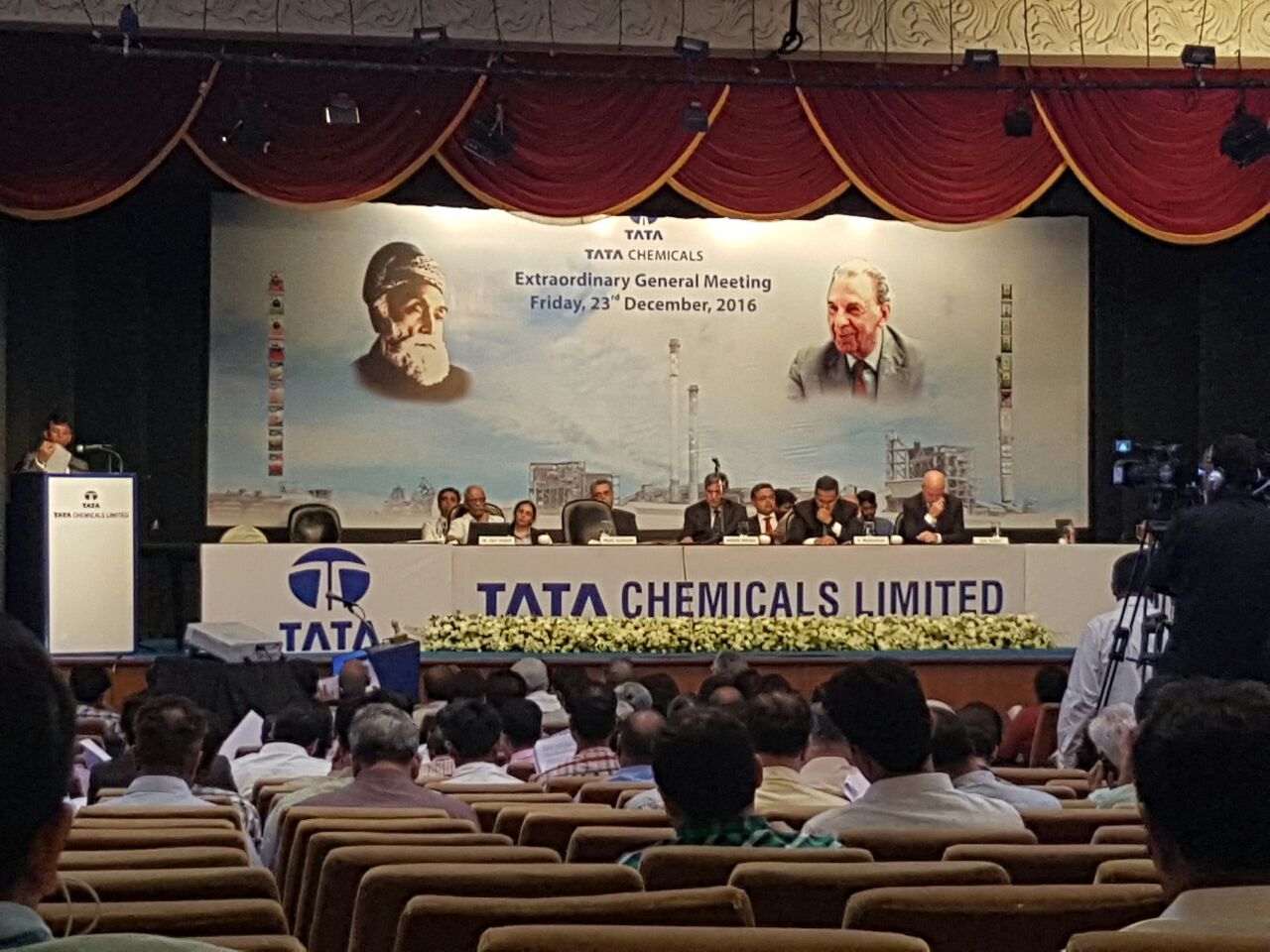
Nearly two months after the surprise ouster of Cyrus Mistry as Tata Sons chairman, which has triggered a protracted corporate battle, Ratan Tata finally broke his silence. Speaking at a Tata Chemicals extraordinary general meeting, the interim chairman of Tata Sons thanked shareholders who had stood by the group and voted against Cyrus Mistry and independent director Nusli Wadia.
Also Read: Ratan Tata Breaks His Silence On “Definite Move To Damage” His Personal Reputation
Tata Chemicals Ltd. was the last of six group companies that had called EGMs to remove Cyrus Mistry as a director from their boards. After being ousted as the director of Tata Consultancy Services Ltd. at the first such EGM, Mistry himself resigned from the boards of all Tata Group companies on December 19, prompting the EGMs of The Indian Hotels Company Ltd. and Tata Power Ltd. to become infructuous. But the shareholder meetings of three group companies -- Tata Motors Ltd., Tata Steel Ltd., and Tata Chemicals -- continued as scheduled as they were to also consider the removal of Nusli Wadia, chairman of Britannia Industries, as an independent director. Wadia, who had backed Mistry, was voted out in each of them.
The EGM Results
.png)
The results of the EGMs were along expected lines since the requisitionist, Tata Sons, and entities controlled and managed by it, held the largest voting share in each of these companies and cast their votes in favour of Mistry and Wadia's removal.
Retail investors, too, supported Tata Sons, by and large, but this could not be said of public institutional investors.
Institutional Shareholders
It (the Tata EGMs) could have gone either way...Ratan Tata, Interim Chairman of Tata Sons

Voting data of two Tata group companies -- Tata Motors and Tata Chemicals -- shows institutional shareholders were split right down the middle. Even at TCS, more than 40 percent of the institutional investors that voted went against Tata Sons. At Tata Steel,
Wadia found slim support.

To be fair, on an average only 64.50 percent of institutional investors cast their vote at the four Tata EGMs. Many large domestic financial institutions, such as the Life Insurance Corporation of India, abstained from voting at TCS, but voted in favour of the resolution at Tata Steel, where the state-run insurer holds nearly 14 percent of the equity. Insurance companies collectively hold nearly 20 percent in Tata Steel. Domestic mutual funds sat on the fence. But foreign institutional shareholders were less shy of making themselves heard. JN Gupta, co-founder and managing director of proxy advisory firm Stakeholder Empowerment Services, says many foreign funds follow ‘Auto Vote' policy based on what international advisory firms recommend. In the case of Tata EGMs, international advisory firm ISS recommended voting against the resolution.
According to proxy advisory firm Institutional Investor Advisory Services, shareholders are voting in greater numbers than ever before. E-voting, regulations mandating mutual funds to vote and increased activism from foreign portfolio investors have led to a higher level of participation in shareholder meetings.
In the four meetings, voting data shows that the voting percentage by the ‘non-promoter' category is at the 50 percent level. Only for one of the resolutions is this lower than the half-way mark (at 40 percent). But this still is relatively high. Historically, votes in the (Tata) group have been in the low- to-mid-30s, with Tata Motors being a bit higher because of the ADRs being voted.A Report By Institutional Investor Advisory Services
Retail Voting Pattern

The voting data suggests that non-institutional public shareholders, or retail investors, added to support for Mistry and Wadia in only two cases, Tata Motors and TCS.
Had the law prescribed a higher voting threshold for the removal of a director, Tata Sons would have witnessed mixed results.

The Tata Motors EGM results indicate that American Depository Receipt holders of the company voted against the resolution. ADR holders' votes are counted as non-institutional votes, or as ‘other public shareholders', and at Tata Motors 60.6 percent of this category of votes went against Tata Sons. Add to that 49.94 percent of the public institutions' votes and a majority 53.57 percent of the total votes cast by non-promoters were against the removal of Nusli Wadia as an independent director.
At TCS, retail participation at 17.7 percent was primarily due to investment arms of Cyrus Mistry, which voted against the resolution.
Gupta says voting in all Tata companies was related to one issue – governance – and not transactions related to any specific company.
Sriram Subramanian, founder of proxy advisory firm InGovern agrees. The voting pattern of public institutions across most of the companies should be seen as a warning message from foreign institutions seeking better governance standards from the management, he said. Both Mistry and Wadia had raised issues related to relationship between Tata Trusts, Tata Sons and Tata companies.
Going by the percentage of institutional voting, the governance issue has divided the investment community. Some feel there are governance issues and it would be in the Tatas' interest to have them examined by a third party, while there are others who don't see any such problem, SES's Gupta said.
The voting pattern clearly indicates that the Tata companies can no longer ignore the voice of the institutions, which either voted against the resolution or abstained from voting in favour of Wadia and Mistry.
Also Read: Ratan Tata Hits Out At Cyrus Mistry In His New Year Letter To Employees

-
We May Need Another Tukaram Mundhe To Fight Air Pollution | The Reason Why

Developers may install basic measures such as sprinklers and green nets, resume work, and continue violating rules when this equipment stops working.
-
Extracting Value From Battery Scrap Could Be Challenging For India | The Reason Why
A discarded lithium-ion battery still contains valuable materials such as lithium, nickel and cobalt. These can be recovered and reused. When such batteries are crushed and shredded, they produce a dark powder called black mass.
-
One El Nino, India Can Handle. Two Could Break The Granary
India's grain stocks can absorb one bad year, but a second El Nino could drain the buffer in two to three years, economists say.
-
India's Troika Of Good Luck | Joining The Dots
As Jensen Huang's exit drags Nvidia down, a cooling AI trade and resilient earnings have revived investor interest in India. A likely RBI rate hike looms.
-
Talking Points This Week: Leadership Shock At Nvidia, Earnings Strength, And The Fog Over Hormuz
The Anthropic IPO pricing and first trading day, Nvidia's upcoming earnings, and any fresh signals from Iran will set the tone for the following week.
-
Signature Play: The Classic Cocktail Is Dead. Or Is It?
Classic cocktails are disappearing from India's cocktail menus. But they're still being ordered, taught to bartenders and borrowed from. So, who's really having the last drink?
-
A New Samvat Wishlist: Inclusive Prosperity And Human Development
India has strengthened its economic foundations through infrastructure, digital access and enterprise. Its next growth chapter must deepen productivity, create better livelihoods and widen participation in prosperity.
-
Love, Sex Aur Dhokha: The Audacious Plot To Spy On Jensen Huang
A Taipei dinner, a Singapore chip buyer and a suspected Chinese asset: inside the alleged spy operation that got close to NVIDIA's Jensen Huang.
-
Ten Things I Learnt This Samvat
Patience can be a trap. Cheap stocks can stay cheap. Leverage can wipe you out. What did Samvat 2082 teach us? Niraj Shah writes on 10 lessons from the year gone by.
-
Talking Points This Week: Tech Nerves, FII Buying, And A Faraway Banking Shock
The global markets are not shining this Diwali. The exception in the large markets is, India.









