Visa Complains To US Government Over India's Preference To RuPay: Report
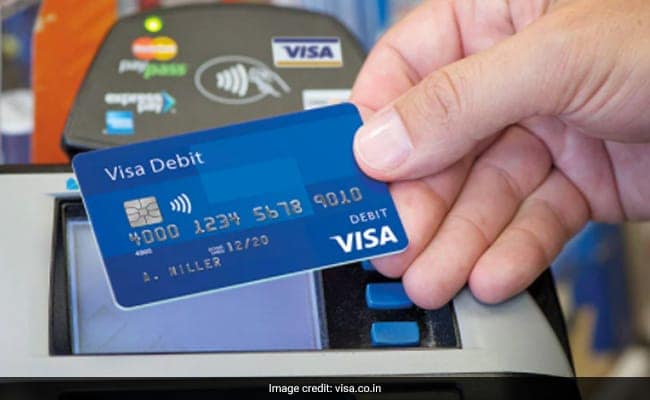
Visa Inc has complained to the US government that India's "informal and formal" promotion of domestic payments rival RuPay hurts the US giant in a key market, memos seen by Reuters show.
In public Visa has downplayed concerns about the rise of RuPay, which has been supported by public lobbying from Prime Minister Narendra Modi that has included likening the use of local cards to national service.
But US government memos show Visa raised concerns about a "level playing field" in India during an August 9 meeting between US Trade Representative (USTR) Katherine Tai and company executives, including CEO Alfred Kelly.
Mastercard Inc has raised similar concerns privately with the USTR. Reuters reported in 2018 that the company had lodged a protest with the USTR that Mr Modi was using nationalism to promote the local network.
"Visa remains concerned about India's informal and formal policies that appear to favour the business of National Payments Corporation of India" (NPCI), the non-profit that runs RuPay, "over other domestic and foreign electronic payments companies," said a USTR memo prepared for Tai ahead of the meeting.
Visa, USTR, Mr Modi's office and the NPCI did not respond to requests for comment.
Mr Modi has promoted homegrown RuPay for years, posing a challenge to Visa and Mastercard in the fast-growing payments market. RuPay accounted for 63 per cent of India's 952 million debit and credit cards as of November 2020, according to the most recent regulatory data on the company, up from just 15 per cent in 2017.
Publicly, Mr Kelly said in May that for years there was "a lot of concern" that the likes of RuPay could be "potentially problematic" for Visa, but he stressed that his company remained India's market leader.
"That's going to be something we're going to continually deal with and have dealt with for years. So there's nothing new there," he told an industry event.
'NOT SO SUBTLE PRESSURE'
Mr Modi, in a 2018 speech, portrayed the use of RuPay as patriotic, saying that since "everyone cannot go to the border to protect the country, we can use RuPay card to serve the nation".
When Visa raised its concerns during the USTR gathering on August 9, it cited the prime minister's "speech where he basically called on India to use RuPay as a show of service to the country," according to an email U.S. officials exchanged on the meeting's readout.
Finance Minister Nirmala Sitharaman said last year that "RuPay is the only card" banks should promote. The government has also promoted a RuPay-based card for public transportation payments.
While RuPay dominates the number of cards in India, most transactions still go through Visa and Mastercard as most RuPay cards were simply issued by banks under Mr Modi's financial inclusion programme, industry sources say.
Visa told the US government it was concerned about India's "push to use transit cards linked to RuPay" and "the not so subtle pressure on banks to issue" RuPay cards, the USTR email showed.
Mastercard and Visa count India as a key growth market, but have been jolted by a 2018 Reserve Bank of India (RBI) directive for them to store payments data "only in India" for "unfettered supervisory access".
Mastercard faces an indefinite ban on issuing new cards in India after the RBI said it was not complying with the 2018 rules. A USTR official privately called the Mastercard ban "draconian", Reuters reported in September.

-
AI Bias In Investing Cannot Be Eliminated, But It Can Be Governed

Framing is a particularly important example as identical financial information presented in terms of gains rather than losses can lead an LLM to reach a different assessment.
-
Joining The Dots | Dark Skies, Steady Diya: Why Hope Holds This Diwali
With war, a weak rupee and foreign outflows weighing on sentiment, policymakers at the NDTV World Summit and market veterans at NDTV Profit Ignite: Diwali Edition offered the same advice: stay invested and filter out the noise.
-
The Curious Case of Equitas Small Finance Bank And A CEO Who Quit For Stock
PN Vasudevan believes persistent investor concerns over a perceived conflict of interest had become a governance overhang on Equitas Small Finance Bank's stock, even as the lender improved profitability and asset quality.
-
Talking Points This Week: AI Cash Burn, A Tiger Comeback And An India That Still Finds Its Own Path
India is not immune to higher oil or tighter global liquidity, yet its earnings base is broader, its domestic policy levers are still available.
-
Foreign Investors Own Half Of HDFC Bank and ICICI Bank. An LTCG Cut Could Matter Most Here
Foreign portfolio investors have US$115 billion parked in HDFC Bank, ICICI Bank. If the government cuts long-term capital gains tax, Jefferies says returning foreign money could land here first.
-
'Never Seen This Level Of Negativity': Sandeep Tandon Says The Next Rally May Be Closer Than You Think
Veteran investor Sandeep Tandon says foreign selling is easing, large-caps are due a comeback and mid-caps are crowded, while he turns positive on gold, power and pharma this Diwali.
-
Indians Stay With Family, Not In Hotels | The Reason Why
India still lacks enough clean, reliable and affordable hotels for budget-conscious travellers.
-
The Economic Imperative: Analysing The Material Driving Force Behind India-Canada Strategic Reset
This economic complementarity is further reinforced by deep institutional investment ties and talent mobility, which form the bedrock of the bilateral framework.
-
Medicine Pricing: Where Must Profit Stop?
India must confront excessive margins, hidden incentives and regulatory gaps that threaten the integrity of medicine.
-
Why Amazon And Flipkart Are Struggling To Beat Meesho In India's Smaller Cities
With 274 million users and lowest-cost logistics, Meesho is defending its value commerce crown against giants like Amazon and Flipkart.










