Vijay Mallya, Six Others Barred From Holding Top Positions In Listed Companies
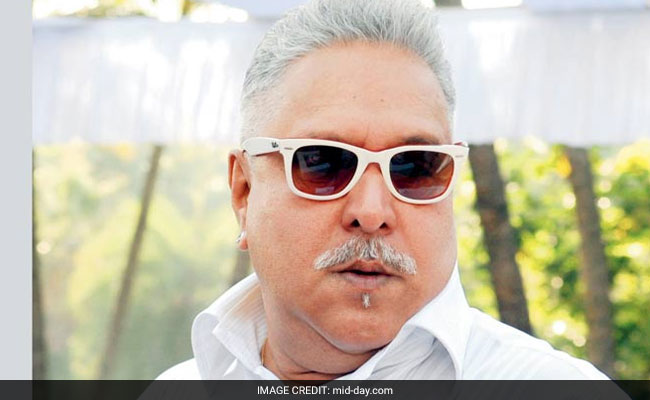
New Delhi: The Securities and Exchange Board of India (Sebi) on Wednesday barred beleaguered businessman Vijay Mallya and six others from the securities market in a case related to alleged fund diversions from United Spirits Ltd (USL).
Mr Mallya and former United Spirits official Ashok Capoor have also been restrained from "holding position as directors or key managerial persons (KMPs) of any listed company".
In an order, market regulator Sebi has restrained Mr Mallya and six others from the securities market and also from "buying, selling or otherwise dealing in securities in any manner whatsoever, either directly or indirectly" till further directions.
The six others are: Ashok Capoor, P A Murali, Sowmiyanarayanan, S N Prasad, Paramjit Singh Gill and Ainapur S R.
Sebi has been looking into the matter pertaining to alleged fund diversions and improper transactions at United Spirits.
Mr Mallya resigned as director and chairman of USL in March 2016.
Sebi's order also comes close on the heels of the CBI naming Mr Mallya, Kingfisher Airlines and nine others, in a charge sheet related to the 2015 loan default case.
In a 32-page order, Sebi Whole-Time Member S Raman said the alleged prima facie violations observed in the case are serious and have larger implications on the safety and integrity of the securities market.
"Investors might have based their investment decisions on the manipulated books of accounts prepared and presented by these persons."
"It would therefore not be in the interest of the securities market and the interest of investors to allow persons of such doubtful demeanour to continue to act as KMPs in the company or in other listed companies or allow them to deal in the securities market," he said.
According to him, pending investigations in the matter, effective preventive and remedial actions need to be taken.
In its order, Sebi also asked USL to provide details within three weeks about the action taken against Mallya and the six individuals.
Besides, the company has to submit information about the steps taken to recover from Mallya and the companies to which the amount was wrongly diverted.
The funds were diverted during the period between 2010 and 2013.
As per PwC-UK report, the amount is Rs 655.55 crore while E&Y report estimated the money at Rs 1,225.24 crore, Sebi order cited.
The markets regulator also said the "aspect of change in control of USL" that followed the agreement between Diageo and Mallya is being examined separately.
Further, Sebi is examining the settlement agreement between Mallya and Diageo as well as the role of auditors in the non-detection of diversion of funds from USL.
UK-based Diageo is the majority stakeholder in USL.
As per the notes to the accounts of the company's 2014-15 annual report, the initial inquiry report stated that between 2010 and 2013, funds involved in many transactions were diverted from the company and/or its subsidiaries to certain UB Group companies, including KFA.
In February last year, Diageo entered into a settlement agreement with Mallya wherein it agreed to pay $75 million to him. Subsequently, Mallya resigned from USL as chairman and non-executive director of USL.
USL and Mallya had entered into a pact wherein they agreed to a mutual release in relation to matters arising out of the Initial Inquiry by USL, according to Sebi.
The matter of Diageo entering into a settlement agreement with Mallya vis-a-vis USL's agreement with Mallya is being examined separately, the regulator said.
By way of settlement agreement between Diageo and Mallya, the latter had agreed to resign from his position as chairman and director of USL as well as director in other USL Group companies.
"Diageo and USL agreed with UBHL and Kingfisher Finvest India Ltd to terminate the shareholder's agreement entered into between the parties on November 9, 2013. The aspect of change in control of USL is also being examined separately by Sebi.

-
Indians Are Travelling, But Not Every Journey Is A Holiday | The Week In Whys

Pilgrims, patients and working women are the real travellers, and the system hasn't quite caught up with them.
-
Getting To Work Costs Women More | The Reason Why
It is not just about women paying more than men. It is about women paying much more in cities than in villages.
-
AI Bias In Investing Cannot Be Eliminated, But It Can Be Governed
Framing is a particularly important example as identical financial information presented in terms of gains rather than losses can lead an LLM to reach a different assessment.
-
Joining The Dots | Dark Skies, Steady Diya: Why Hope Holds This Diwali
With war, a weak rupee and foreign outflows weighing on sentiment, policymakers at the NDTV World Summit and market veterans at NDTV Profit Ignite: Diwali Edition offered the same advice: stay invested and filter out the noise.
-
The Curious Case of Equitas Small Finance Bank And A CEO Who Quit For Stock
PN Vasudevan believes persistent investor concerns over a perceived conflict of interest had become a governance overhang on Equitas Small Finance Bank's stock, even as the lender improved profitability and asset quality.
-
Talking Points This Week: AI Cash Burn, A Tiger Comeback And An India That Still Finds Its Own Path
India is not immune to higher oil or tighter global liquidity, yet its earnings base is broader, its domestic policy levers are still available.
-
Foreign Investors Own Half Of HDFC Bank and ICICI Bank. An LTCG Cut Could Matter Most Here
Foreign portfolio investors have US$115 billion parked in HDFC Bank, ICICI Bank. If the government cuts long-term capital gains tax, Jefferies says returning foreign money could land here first.
-
'Never Seen This Level Of Negativity': Sandeep Tandon Says The Next Rally May Be Closer Than You Think
Veteran investor Sandeep Tandon says foreign selling is easing, large-caps are due a comeback and mid-caps are crowded, while he turns positive on gold, power and pharma this Diwali.
-
Indians Stay With Family, Not In Hotels | The Reason Why
India still lacks enough clean, reliable and affordable hotels for budget-conscious travellers.
-
The Economic Imperative: Analysing The Material Driving Force Behind India-Canada Strategic Reset
This economic complementarity is further reinforced by deep institutional investment ties and talent mobility, which form the bedrock of the bilateral framework.










