Venezuela Oil Production Seen Rising 25% as US Eases Sanctions
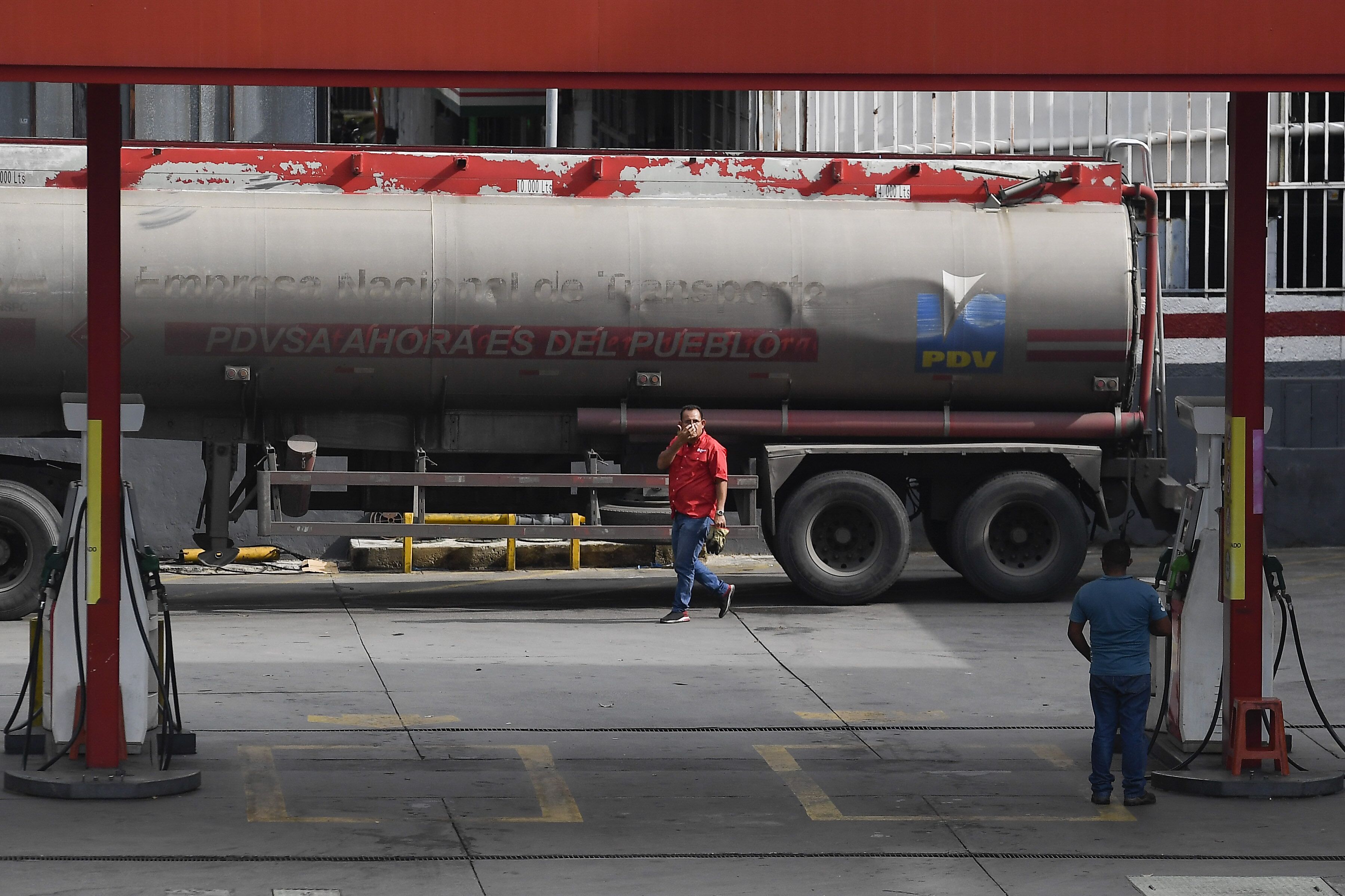
(Bloomberg) -- The US just took the first steps in pulling back on a four-year-old sanction policy that had strangled oil exports out of Venezuela, home to world-class crude reserves. The major reversal signals that the Latin American country's industry is on the brink of being able to pump 200,000 more barrels of crude a day — a roughly 25% jump in production.
That figure, a consensus outlook among several analysts, is based on the assumption that the sanctions will largely be done away with. For now, the relief is temporary: a six-month license authorizing transactions involving the oil and gas sector in Venezuela. Still, that's a big step that will allow US entities to buy oil from the nation for the first time in years and make its shipments more palatable to global trade more generally.
Questions remain, though, about how quickly the nation's production can ramp up and what effect it will have on the global market, which is desperate for barrels as geopolitical tensions mount.
Some analysts predict output can increase rapidly in 2024 — with the most buillish forecasting a ramp up within six months. Quick imports of diluents, the condensate the country needs to mix with its heavy crude, are key to helping Venezuela ramp up output. The ultimate pace, however, will depend “on what the sanctions easing package ends up looking like,” said Fernando Ferreira, director of geopolitical risk service at Rapidan.
Read More: Venezuela Oil, Bond Sanctions Eased in US Bet on Free Elections
The US Treasury Department announced its easing of sanctions late Wednesday, in response to the signing of an electoral roadmap agreement between the government of President Nicolas Maduro and the opposition. Venezuela's oil exports to the US were halted in early 2019 when the Treasury imposed sanctions on state oil company Petróleos de Venezuela SA. Back then, Venezuela exported nearly 365,000 barrels a day from its ports to the US, twice as much as in September.

The reprieve is the latest step in a nascent, but significant, rebound for Venezuela's oil industry. Current output stands at roughly between 750,00 and 800,000 barrels a day. It's not the 3 million barrels a day that made Venezuela a global energy force in the 1990s, but neither is it the 374,000 it hit when the country was at rock bottom in June 2020.
That Venezuelan recovery, along with a more vigorous rebound in Iran, has helped moderate futures prices this year and helped to offset some of the impact of curtailments by Saudi Arabia and Russia. US President Joe Biden has political interest in keeping the global barrels flowing, since that can help to keep fuel inflation at bay domestically.
An additional of 250,000 to 300,000 barrels a day can be added in 2025 if all restrictions end up being lifted, said Francisco Monaldi, a fellow in Latin American energy policy at Rice University's Baker Institute for Public Policy. The figure would notch down to 170,000 barrels a day to 200,000 barrels a day if only some sanctions are lifted, he said.
To be sure, the global oil market by some estimates is facing such a significant deficit that even an extra 300,000 more barrels of crude a day from Venezuela won't do much to ease the pain. New York futures have rallied about 9% this year amid the supply concerns.
Read More: OPEC Data Show 3 Million-Barrel Shortfall as Saudis Extend Cuts
The added barrels would be “a relative drop in the ocean on the global stage,” said Sofia Guidi Di Sante, a senior oil market analyst at Rystad Energy.
On the ground in Venezuela, contractors working with global oil majors and PDVSA, as the state producer is known, are still optimistic about their prospects. Some see an increase of 200,000 to 250,000 barrels a day added as soon as next year. They say that the rebound will depend more on a revival for infrastructure around existing wells, rather than jump to drill more.
“We can easily add 200,000 barrels a day to 250,000 barrels a day, because we have the infrastructure already in place,” said Alexis Medina, a PDVSA contractor and member of Venezuela Oil Chamber. “History proves this.”
In the 1960s, Western Venezuela, and in the 1990s, the producing region known as the Orinoco Belt, each had annual growth rates of 200,000 barrels a day, with additional barrels coming from new drilling and the recovery of oil infrastructure.
The optimists point to the return of Chevron Corp., the only US oil company with operations in Venezuela and which restarted some output last year after an initial easing of sanctions from the Biden administration.
The company has more than doubled its production in the country since January, reaching 135,000 barrels a day from 47,000. Production has been forecast to hit 250,000 barrels a day by 2025 after a new drilling plan in a underdeveloped oil field starts in January.
Read More: Venezuela's Government Resumes Talks With Maduro's Opposition
The restart of PDVSA sales to American buyers would further increase exports to the US. Until now, Chevron was the only company allowed to carry out such transactions and the shipments stand at about 160,000 barrels a day.
Other producers will now start the race to increase their output.
Even before the sanctions news was announced, France's Maurel et Prom was planning to double its production of 16,000 barrels a day within 6 months, pending an ability to use the US financial system without fear of being penalized, according to a person familiar with the matter. Maurel et Prom didn't immediately reply to request for comment.
For Venezuela to meet its full potential, it will take more than just the removal of sanctions. After years of steps that hobbled the industry, many agree that moves toward privatization and changes in the legal framework are needed to keep the production recovery going.
Cesar Parra, an oil contractor in Zulia state, predicts with the right changes and no sanctions, his region could pump an additional 134,000 barrels a day in 18 months and 400,000 more in three years.
“That can only happen with legal and economic reassurances for the private business in the oil industry,” he said
--With assistance from Grant Smith.
More stories like this are available on bloomberg.com
©2023 Bloomberg L.P.

-
Indians Are Travelling, But Not Every Journey Is A Holiday | The Week In Whys

Pilgrims, patients and working women are the real travellers, and the system hasn't quite caught up with them.
-
Getting To Work Costs Women More | The Reason Why
It is not just about women paying more than men. It is about women paying much more in cities than in villages.
-
AI Bias In Investing Cannot Be Eliminated, But It Can Be Governed
Framing is a particularly important example as identical financial information presented in terms of gains rather than losses can lead an LLM to reach a different assessment.
-
Joining The Dots | Dark Skies, Steady Diya: Why Hope Holds This Diwali
With war, a weak rupee and foreign outflows weighing on sentiment, policymakers at the NDTV World Summit and market veterans at NDTV Profit Ignite: Diwali Edition offered the same advice: stay invested and filter out the noise.
-
The Curious Case of Equitas Small Finance Bank And A CEO Who Quit For Stock
PN Vasudevan believes persistent investor concerns over a perceived conflict of interest had become a governance overhang on Equitas Small Finance Bank's stock, even as the lender improved profitability and asset quality.
-
Talking Points This Week: AI Cash Burn, A Tiger Comeback And An India That Still Finds Its Own Path
India is not immune to higher oil or tighter global liquidity, yet its earnings base is broader, its domestic policy levers are still available.
-
Foreign Investors Own Half Of HDFC Bank and ICICI Bank. An LTCG Cut Could Matter Most Here
Foreign portfolio investors have US$115 billion parked in HDFC Bank, ICICI Bank. If the government cuts long-term capital gains tax, Jefferies says returning foreign money could land here first.
-
'Never Seen This Level Of Negativity': Sandeep Tandon Says The Next Rally May Be Closer Than You Think
Veteran investor Sandeep Tandon says foreign selling is easing, large-caps are due a comeback and mid-caps are crowded, while he turns positive on gold, power and pharma this Diwali.
-
Indians Stay With Family, Not In Hotels | The Reason Why
India still lacks enough clean, reliable and affordable hotels for budget-conscious travellers.
-
The Economic Imperative: Analysing The Material Driving Force Behind India-Canada Strategic Reset
This economic complementarity is further reinforced by deep institutional investment ties and talent mobility, which form the bedrock of the bilateral framework.










