Vaccine Partners Turn Rivals With First Shot For Advancing Virus
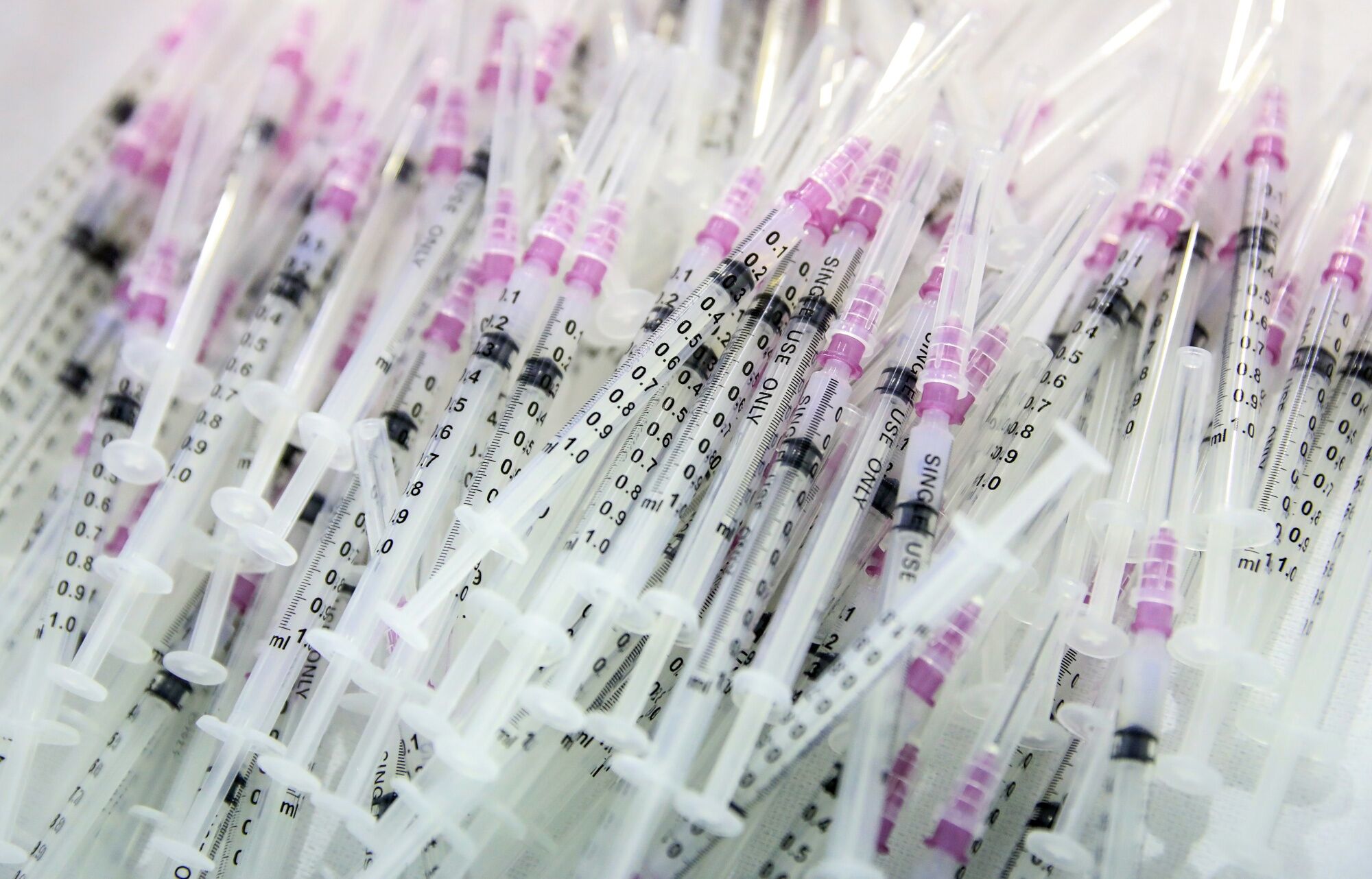
(Bloomberg) -- Two European partners will soon be vying for dominance in a new battleground: vaccines to protect travelers against a painful viral illness transmitted by mosquitoes.
Valneva SE became the first company to win clearance late last year to sell a shot for chikungunya, a disease that can cause fever and severe joint pain. Bavarian Nordic A/S is some months behind, awaiting approval in the European Union and starting a submission in the US.
The companies have marketed and distributed each other's products since 2020, a collaboration due to wind down next year — just as the two start competing to carve a new market for their rival chikungunya shots.
Valneva's lead will undoubtedly translate into “a much more significant market share,” according to Chief Executive Officer Thomas Lingelbach.
His counterpart at Bavarian Nordic, meantime, discounts the importance of timing alone. “Given it's a new disease area in terms of travel health, I don't think it's that big of an advantage for Valneva to be first,” CEO Paul Chaplin said in an interview.
The companies are competing for a market estimated to exceed $500 million annually by 2032. The value could be more with potential government stockpiles, according to Valneva. The biotech firm recently estimated that the travel market opportunity alone could be worth as much as €400 million ($431 million).
“It's unchartered territory, so it's anyone's guess how quickly this new travel vaccine gets adopted,” Suzanne van Voorthuizen, an analyst at Van Lanschot Kempen, wrote in an email. She has buy ratings on both stocks.
The virus, originally identified in the tropics, has been found in more than a hundred countries including Italy. With global temperatures on the rise — last year was the hottest year on record — mosquitoes carrying the chikungunya and other viruses could become more prevalent in Europe, putting millions more people at risk.
Competitive Benefits
Denmark's Bavarian Nordic expects to start selling its shot next year. Valneva's has already been given to more than two hundred people in the US. The French firm also awaits regulatory decisions in Europe, Canada and Brazil, the country most affected in the Americas.
There are benefits to the competitive situation, according to Lingelbach. The companies' efforts will help to raise awareness about the disease, “which is the key issue for something that you are doing in a brand new indication,” he said in an interview.
Chikungunya is usually spread through the same two species of mosquitoes that can transmit dengue. Most patients make a full recovery, but some develop arthritis, with the pain lasting for years. Researchers from the University of Cambridge's Department of Genetics argue the risk of death from the virus has been under-appreciated.

“It's a devastating disease,” Bavarian Nordic's Chaplin said.
The virus can spread quickly once an outbreak occurs. One-third of the entire population in the Reunion Island was affected by an outbreak roughly two decades ago, according to a presentation at Bavarian Nordic's capital markets day in London earlier this year. Meanwhile, international vaccine alliance Gavi points out that just four Latin American countries — Argentina, Bolivia, Brazil and Paraguay — made up the bulk of last year's cases.
Analysts said Valneva's vaccine appears more durable but may also trigger more side effects than Bavarian Nordic's, which is quicker acting in late-stage studies, making it convenient for travelers. The French firm says the side effects are due to the type of vaccine, which uses a live form of the virus. Meanwhile, Bavarian Nordic's shot is easier to administer, because there's no need to mix it with water.
While travelers are the initial target for the new shots, the products could be crucial for people living in countries where chikungunya is endemic. Bavarian Nordic's Chaplin said the company is in talks with potential partners in those regions to sell and distribute their shot. Eventually, the goal is to produce the vaccine locally as well.
“We will have to rely on partners who are active in those areas,” Chaplin said. “That's the most efficient way of providing access to those endemic regions.”
Here, Valneva has an edge. It got funding from the Coalition for Epidemic Preparedness Innovations for its shot, called Ixchiq, and has partnered with Brazil's Instituto Butantan, which produces immunobiological products and vaccines in the country.

When asked about the ethics of selling the vaccine to US travelers before affected local populations, Valneva's Lingelbach noted the “significant level of disease awareness” in the US as well as the economic benefit of seeking regulatory approval there. The company received a priority-review voucher from the Food and Drug Administration, which it sold for $103 million in February, giving it funds to plow back into research and development.
Lingelbach also pointed to the need for “experienced and very well-developed regulatory agencies” to evaluate vaccines for new diseases.
“An investment of any new vaccine costs hundreds of millions of dollars, sometimes more,” Lingelbach said. “Without the prospect of higher-price markets paying part of the bill, you will never be able to introduce the vaccine.”
--With assistance from Eamon Akil Farhat.
More stories like this are available on bloomberg.com
©2024 Bloomberg L.P.

-
We May Need Another Tukaram Mundhe To Fight Air Pollution | The Reason Why

Developers may install basic measures such as sprinklers and green nets, resume work, and continue violating rules when this equipment stops working.
-
Extracting Value From Battery Scrap Could Be Challenging For India | The Reason Why
A discarded lithium-ion battery still contains valuable materials such as lithium, nickel and cobalt. These can be recovered and reused. When such batteries are crushed and shredded, they produce a dark powder called black mass.
-
One El Nino, India Can Handle. Two Could Break The Granary
India's grain stocks can absorb one bad year, but a second El Nino could drain the buffer in two to three years, economists say.
-
India's Troika Of Good Luck | Joining The Dots
As Jensen Huang's exit drags Nvidia down, a cooling AI trade and resilient earnings have revived investor interest in India. A likely RBI rate hike looms.
-
Talking Points This Week: Leadership Shock At Nvidia, Earnings Strength, And The Fog Over Hormuz
The Anthropic IPO pricing and first trading day, Nvidia's upcoming earnings, and any fresh signals from Iran will set the tone for the following week.
-
Signature Play: The Classic Cocktail Is Dead. Or Is It?
Classic cocktails are disappearing from India's cocktail menus. But they're still being ordered, taught to bartenders and borrowed from. So, who's really having the last drink?
-
A New Samvat Wishlist: Inclusive Prosperity And Human Development
India has strengthened its economic foundations through infrastructure, digital access and enterprise. Its next growth chapter must deepen productivity, create better livelihoods and widen participation in prosperity.
-
Love, Sex Aur Dhokha: The Audacious Plot To Spy On Jensen Huang
A Taipei dinner, a Singapore chip buyer and a suspected Chinese asset: inside the alleged spy operation that got close to NVIDIA's Jensen Huang.
-
Ten Things I Learnt This Samvat
Patience can be a trap. Cheap stocks can stay cheap. Leverage can wipe you out. What did Samvat 2082 teach us? Niraj Shah writes on 10 lessons from the year gone by.
-
Talking Points This Week: Tech Nerves, FII Buying, And A Faraway Banking Shock
The global markets are not shining this Diwali. The exception in the large markets is, India.









