U.S. Manufacturing Growth Unexpectedly Firms On Stronger Orders
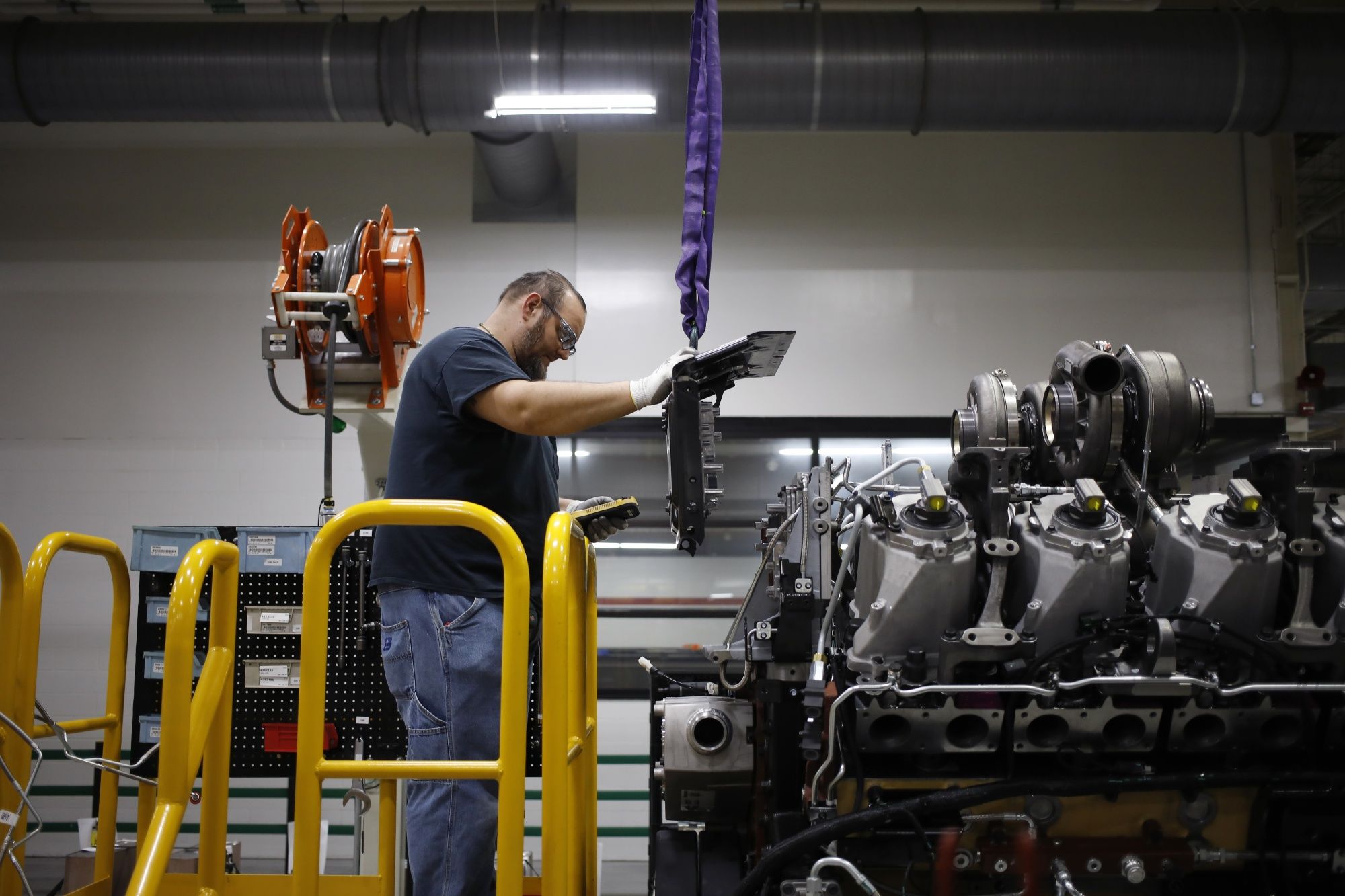
(Bloomberg) -- US manufacturing activity unexpectedly advanced in May as new orders and output growth quickened, suggesting underlying demand remains solid.
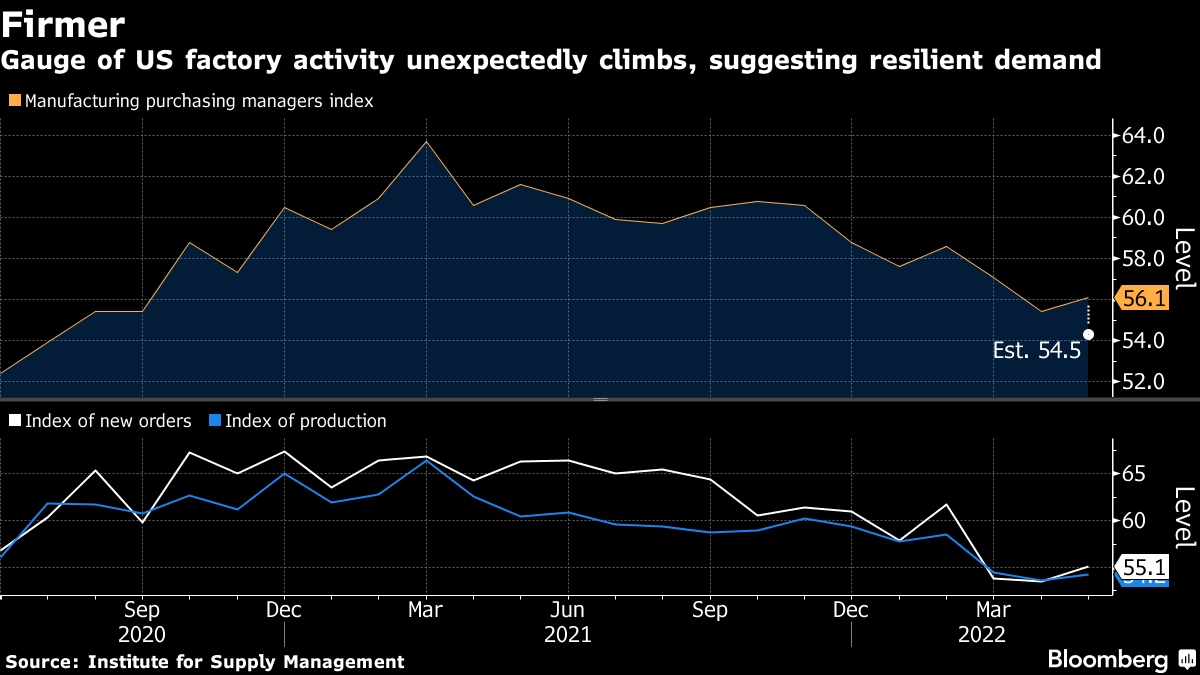
The Institute for Supply Management's gauge of factory activity increased to 56.1 last month from 55.4 in April, according to data released Wednesday. Readings above 50 indicate expansion. The figure exceeded most economists' estimates in a Bloomberg survey, which had a median projection of 54.5.
“The US manufacturing sector remains in a demand-driven, supply chain-constrained environment,” Timothy Fiore, chair of ISM's Manufacturing Business Survey Committee, said in a statement. He added that “sentiment remained strongly optimistic regarding demand, with five positive growth comments for every cautious comment.”
The report also points to lingering capacity constraints related to labor, shipping delays and materials shortages. ISM's measure of factory employment drifted into contraction territory for the first time since November 2020, and the group's gauge of delivery performance, despite settling back some, remained elevated.
“Employment levels, driven primarily by turnover and a smaller labor pool, remain the top issue affecting further output growth,” Fiore said.
In a sign that overall labor demand is still robust, a separate report on Wednesday showed job openings in April remained close to a record.
While the ISM index of new orders at factories hit a three-month high, the production gauge was up more modestly. Backlogs also increased.
Average lead times for capital expenditures grew to 178 days, the highest in data back to 1987. Production materials lead times eased to 99 days from a record 100 days a month earlier.
Fifteen manufacturing industries reported overall growth last month, led by apparel, printing and machinery.
The ISM index of factory inventories advanced to the highest since November, as purchasing managers strive to ensure their firms have enough finished product on hand in a still-challenging logistics environment.
Select ISM Industry Comments
“The challenge with semiconductors hasn't softened; the situation is worsening due to Chinese Covid-19 lockdowns.” - Transportation Equipment
“Input costs, particularly grain, oil, dairy and protein, are rising faster than can be passed along at retail and food service, with no relief in sight.” - Food, Beverages & Tobacco
“Our order books are still strong. Material prices continue to rise, with energy and freight noted as the underlying influences on increased costs.” - Machinery
“While orders remain strong and backlogs exist, there's a softening in forecasted orders for leading indicator-type customers and business units.” - Chemical Products
“Supply chain issues are causing us to dramatically extend our lead times. Our production lines have (run) low on or out of parts needed to complete rates every week this month.” - Miscellaneous Manufacturing
“Price increases haven't let up. I thought 2022 was going to be better, but it hasn't been. Shortages (among other issues) are still disrupting the supply chain.” - Plastics & Rubber
The customer inventories gauge, meanwhile, showed stocks shrank at the fastest rate in three months. That may help explain the pickup in orders to manufacturers as well as ease concerns about the inventory overhang at some retailers.
A measure of prices paid by producers slipped from the prior month but remains historically high. The costs of crude oil and petroleum products continue to climb, while prices of some other commodities such as aluminum and steel have softened.
The ISM results stand in contrast to several regional Federal Reserve bank surveys that showed a clear pullback in factory activity. Gauges of manufacturing in New York state and Texas, along with the Richmond and Philadelphia Fed regions, all declined in May from the prior month.
(Adds industry comments)
More stories like this are available on bloomberg.com
©2022 Bloomberg L.P.

-
Talking Points This Week: Leadership Shock At Nvidia, Earnings Strength, And The Fog Over Hormuz

The Anthropic IPO pricing and first trading day, Nvidia's upcoming earnings, and any fresh signals from Iran will set the tone for the following week.
-
Signature Play: The Classic Cocktail Is Dead. Or Is It?
Classic cocktails are disappearing from India's cocktail menus. But they're still being ordered, taught to bartenders and borrowed from. So, who's really having the last drink?
-
A New Samvat Wishlist: Inclusive Prosperity And Human Development
India has strengthened its economic foundations through infrastructure, digital access and enterprise. Its next growth chapter must deepen productivity, create better livelihoods and widen participation in prosperity.
-
Love, Sex Aur Dhokha: The Audacious Plot To Spy On Jensen Huang
A Taipei dinner, a Singapore chip buyer and a suspected Chinese asset: inside the alleged spy operation that got close to NVIDIA's Jensen Huang.
-
Ten Things I Learnt This Samvat
Patience can be a trap. Cheap stocks can stay cheap. Leverage can wipe you out. What did Samvat 2082 teach us? Niraj Shah writes on 10 lessons from the year gone by.
-
Talking Points This Week: Tech Nerves, FII Buying, And A Faraway Banking Shock
The global markets are not shining this Diwali. The exception in the large markets is, India.
-
Midterm Rally Lasted A Day. The Hard Reality Of A Divided US May Last Two Years | Opinion
Between a contested AI boom, a debt ceiling that arrives in 2027 and a president with every incentive to act alone, the next two years may prove more volatile than the first day's rally suggests.
-
Blue Wave Will Derail the AI Trade but Won't Dismantle the AI Era | Unhedged Position
The Democrats' sweep of the US Congress will see politics collide with economic forces both over the long and short term.
-
It's Time To Take The GST Council's Bet On Trust Global
Payment records can prove India's services exports, and clear, proportionate rules can bring foreign digital sellers into the tax net.
-
Opinion | India at 38: From Innovation Overperformer to Innovation Powerhouse
India now has 453 VC-backed deep science startups, 18 of them late-stage, after 117 percent growth since 2020. Laurus Labs, at USD 9.3 billion, is the most valuable deep science company in any middle-income economy outside China.









