U.S. Manufacturing Activity Contracts For A Ninth-Straight Month
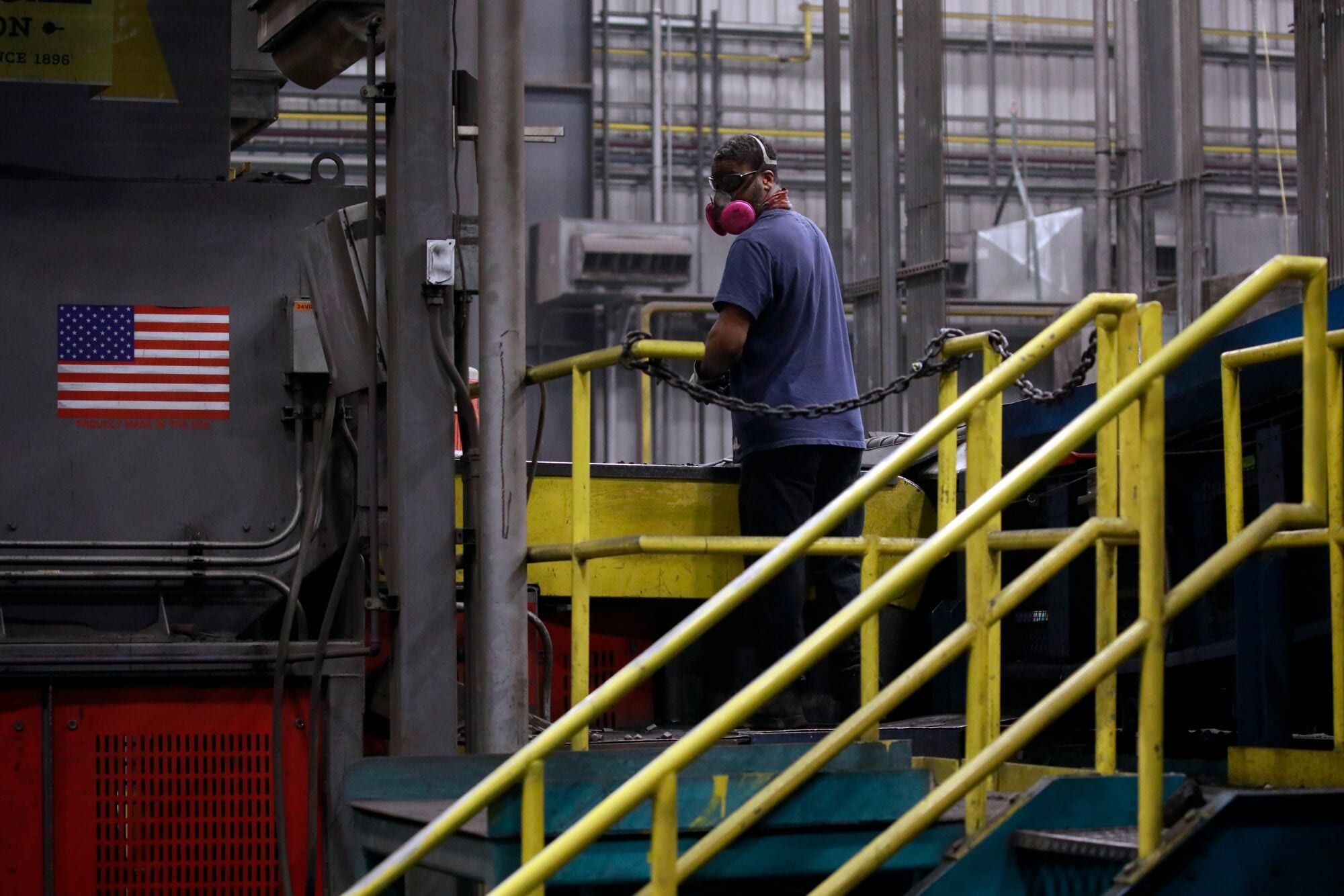
(Bloomberg) -- US factory activity contracted in July for a ninth-straight month, reflecting tepid demand for American merchandise at home and abroad.
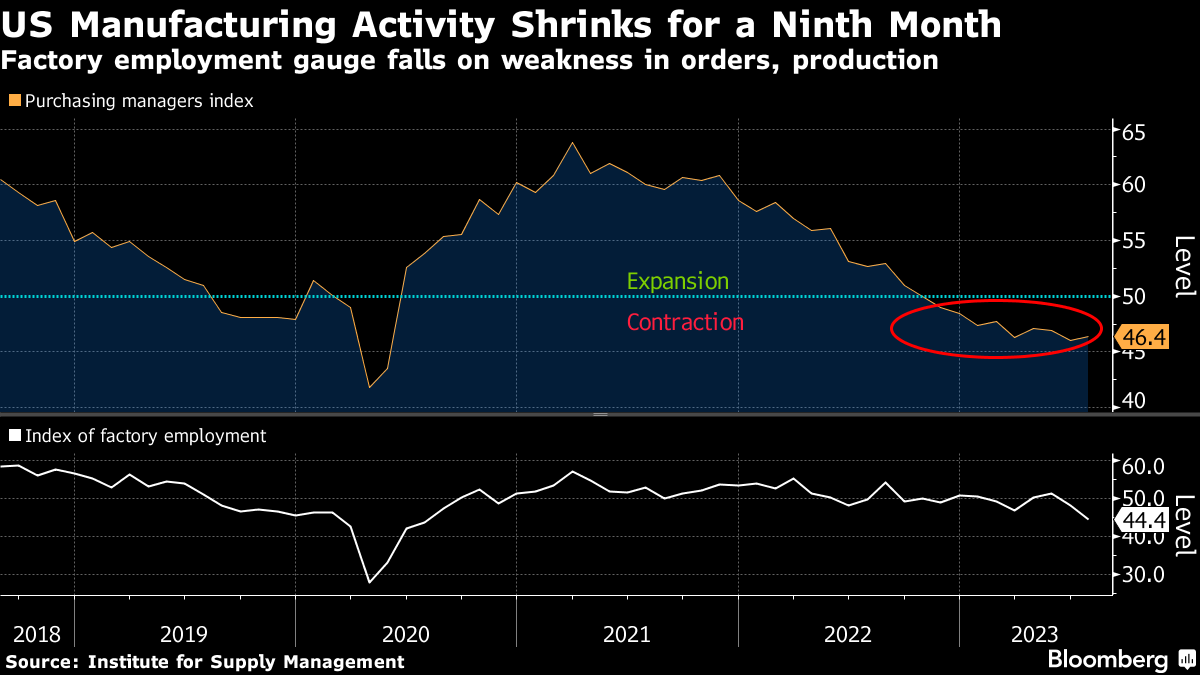
The Institute for Supply Management's gauge of factory activity edged up to 46.4 last month, according to data released Tuesday. Readings less than 50 indicate contraction, and the latest figure came in just below expectations.
Measures of new orders and production improved in July, with the former rebounding to a nine-month high. Even so, both remained in contractionary territory. The group's gauge of exports, meanwhile, fell to its lowest level this year as outbound shipments of US goods continued to decline.
While other parts of the economy remain firm, high interest rates paired with an ongoing rotation in consumer preferences toward services have stifled the manufacturing sector. Sluggish demand abroad has proved to be an additional headwind.
Just two manufacturing industries — petroleum products and furniture — registered overall growth in July. Apparel, plastics and paper led the 16 industries that reported shrinking activity.
The widespread weakness in the sector has forced factories to reduce headcount. The group's gauge of employment tumbled to 44.4, the lowest reading since July 2020.
“Demand remains weak but marginally better compared to June, production slowed due to lack of work, and suppliers continue to have capacity,” Timothy Fiore, chair of the ISM manufacturing business survey committee, said in a statement. “There are signs of more employment reduction actions in the near term to better match production output.”
The broader labor market, however, remains strong. The government's monthly jobs report, out Friday, is expected to show US employers added 200,000 jobs last month.
The ISM report showed raw materials prices fell for a third-straight month in July, reflecting normalizing supply chains. Inventories contracted at a slower pace, while supplier deliveries quickened.
Select ISM Industry Comments
“Current U.S. market conditions of inflationary and recessionary tactics affecting overall business. Customers are reducing or not placing orders as forecast, (putting) internal focus on reducing financial liabilities and overhead costs.” - Computer & Electronic Products
“Sales in our industry are extremely slow entering into the second half of the year, and no upturn is expected until at least the fourth quarter.” - Chemical Products
“Demand is softening. Some pricing starting to decrease. Back orders mostly resolved.” - Transportation Equipment
“Stable demand for the next four to six months, but longer-term uncertainty. While customer growth is projected, we cannot point to fundamentals that sustain it.” - Fabricated Metals
“Suppliers are starting to reach out looking for new business. Softening is occurring in the China markets.” - Machinery
“June was a strong month, but July has been way off for construction.” - Nonmetallic Minerals Products
“Order book continues to be strong. Working overtime to complete orders. Labor availability is still the number one constraint impacting production. Cannot find qualified salaried or skilled trades people to hire.” - Primary Metals
The near-term manufacturing outlook remains bleak, but federal investment is poised to bolster the sector in coming years. Legislation championed by the Biden administration, like the infrastructure bill, the Inflation Reduction Act and the CHIPS Act, has already led to a wave of investment in construction and manufacturing, boosting economic growth in the second quarter.
Read more: Even as Biden Touts New Factories, Weak Orders Dog Existing Ones
--With assistance from Kristy Scheuble.
(Adds ISM industry comments)
More stories like this are available on bloomberg.com
©2023 Bloomberg L.P.

-
Signature Play: The Classic Cocktail Is Dead. Or Is It?

Classic cocktails are disappearing from India's cocktail menus. But they're still being ordered, taught to bartenders and borrowed from. So, who's really having the last drink?
-
A New Samvat Wishlist: Inclusive Prosperity And Human Development
India has strengthened its economic foundations through infrastructure, digital access and enterprise. Its next growth chapter must deepen productivity, create better livelihoods and widen participation in prosperity.
-
Love, Sex Aur Dhokha: The Audacious Plot To Spy On Jensen Huang
A Taipei dinner, a Singapore chip buyer and a suspected Chinese asset: inside the alleged spy operation that got close to NVIDIA's Jensen Huang.
-
Ten Things I Learnt This Samvat
Patience can be a trap. Cheap stocks can stay cheap. Leverage can wipe you out. What did Samvat 2082 teach us? Niraj Shah writes on 10 lessons from the year gone by.
-
Talking Points This Week: Tech Nerves, FII Buying, And A Faraway Banking Shock
The global markets are not shining this Diwali. The exception in the large markets is, India.
-
Midterm Rally Lasted A Day. The Hard Reality Of A Divided US May Last Two Years | Opinion
Between a contested AI boom, a debt ceiling that arrives in 2027 and a president with every incentive to act alone, the next two years may prove more volatile than the first day's rally suggests.
-
Blue Wave Will Derail the AI Trade but Won't Dismantle the AI Era | Unhedged Position
The Democrats' sweep of the US Congress will see politics collide with economic forces both over the long and short term.
-
It's Time To Take The GST Council's Bet On Trust Global
Payment records can prove India's services exports, and clear, proportionate rules can bring foreign digital sellers into the tax net.
-
Opinion | India at 38: From Innovation Overperformer to Innovation Powerhouse
India now has 453 VC-backed deep science startups, 18 of them late-stage, after 117 percent growth since 2020. Laurus Labs, at USD 9.3 billion, is the most valuable deep science company in any middle-income economy outside China.









