U.S. Job Openings Unexpectedly Rise A Second Month To 9.6 Million
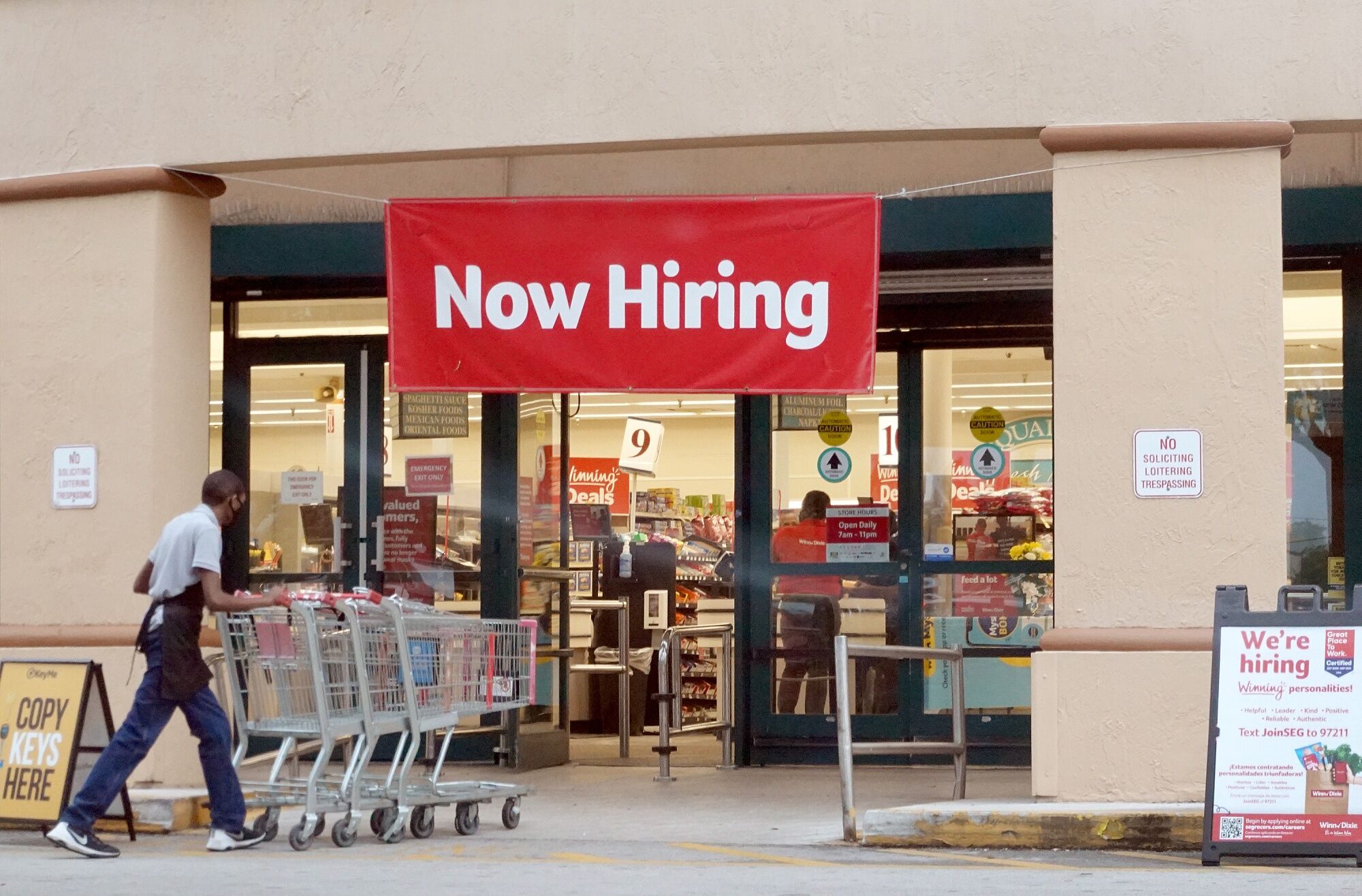
(Bloomberg) -- US job openings unexpectedly climbed in September for a second month, underscoring the persistent strength of labor demand in various pockets of the economy.
The number of available positions increased to 9.6 million from a downwardly revised 9.5 million in August, the Bureau of Labor Statistics' Job Openings and Labor Turnover Survey showed Wednesday. Hiring edged up, while layoffs declined.
The level of openings exceeded the median estimate of 9.4 million in a Bloomberg survey of economists.

Stocks rose while Treasuries rallied as investors parsed through a variety of fresh economic data, as well as the US Treasury's announcement to slow the pace of increases in quarterly long-term debt sales.
The so-called quits rate, which measures voluntary job leavers as a share of total employment, held steady at 2.3% for a third month, the lowest since the start of 2021. A more moderate level of quits implies Americans are less confident in their ability to find another job in the current market.
While the September advance wasn't particularly large, it added to a more than half a million surge in the prior month. The latest pickup — which was fueled by a jump in openings at accommodation and food services — points to the resilience of the labor market.
Such strength has underpinned consumer spending, kept a lid on unemployment and helped the economy weather high interest rates and rising prices.
Policymakers at the Federal Reserve are expected to leave interest rates unchanged at the end of their meeting this afternoon. While a pickup in the supply of workers has helped the jobs market become more balanced, elevated labor demand risks keeping upward pressure on inflation.
Read More: Fed's ‘Hawkish Pause' to Keep Option to Hike: Decision-Day Guide
What Bloomberg Economics Says...
“With demand for skilled workers cooling, and the September uptick in job openings and hiring likely representing temporary factors, labor-market loosening ahead could be more turbulent than what we've seen to date.”
— Stuart Paul. To read the full note, click here
The ratio of openings to unemployed people held at 1.5, matching the lowest level in about two years. While still indicative of a tight labor market, the figure has eased substantially over the past year. At its peak in 2022, the ratio was 2 to 1.
The JOLTS report paints a more detailed picture of September hiring. Compared to the latest government employment report, which showed the fastest pace of payroll growth since the start of the year, Wednesday's report showed hiring was largely flat.
While it picked up in accommodation and food services as well as retail trade, the pace of hiring ebbed in construction, finance and transportation and warehousing.
The data come just a few days before the latest monthly jobs report, which is currently forecast to show employers added 180,000 jobs in October. The unemployment rate is seen holding steady as monthly wage growth picks up slightly.
A report earlier Wednesday showed private payrolls posted the weakest back-to-back advances in more than two years, according to ADP Research Institute. Separate data showed the Institute for Supply Management's measure of factory employment slipped back into contraction territory.
Read More: US Manufacturing Gauge Contracts at Fastest Pace in Three Months
Some economists have questioned the reliability of the JOLTS statistics given the survey's low response rate. That skepticism has been compounded by stories of employers “ghosting” jobseekers, a function of firms posting jobs they don't actually intend to fill.
--With assistance from Kristy Scheuble and Augusta Saraiva.
(Adds Bloomberg Economics comment)
More stories like this are available on bloomberg.com
©2023 Bloomberg L.P.

-
Talking Points This Week: Leadership Shock At Nvidia, Earnings Strength, And The Fog Over Hormuz

The Anthropic IPO pricing and first trading day, Nvidia's upcoming earnings, and any fresh signals from Iran will set the tone for the following week.
-
Signature Play: The Classic Cocktail Is Dead. Or Is It?
Classic cocktails are disappearing from India's cocktail menus. But they're still being ordered, taught to bartenders and borrowed from. So, who's really having the last drink?
-
A New Samvat Wishlist: Inclusive Prosperity And Human Development
India has strengthened its economic foundations through infrastructure, digital access and enterprise. Its next growth chapter must deepen productivity, create better livelihoods and widen participation in prosperity.
-
Love, Sex Aur Dhokha: The Audacious Plot To Spy On Jensen Huang
A Taipei dinner, a Singapore chip buyer and a suspected Chinese asset: inside the alleged spy operation that got close to NVIDIA's Jensen Huang.
-
Ten Things I Learnt This Samvat
Patience can be a trap. Cheap stocks can stay cheap. Leverage can wipe you out. What did Samvat 2082 teach us? Niraj Shah writes on 10 lessons from the year gone by.
-
Talking Points This Week: Tech Nerves, FII Buying, And A Faraway Banking Shock
The global markets are not shining this Diwali. The exception in the large markets is, India.
-
Midterm Rally Lasted A Day. The Hard Reality Of A Divided US May Last Two Years | Opinion
Between a contested AI boom, a debt ceiling that arrives in 2027 and a president with every incentive to act alone, the next two years may prove more volatile than the first day's rally suggests.
-
Blue Wave Will Derail the AI Trade but Won't Dismantle the AI Era | Unhedged Position
The Democrats' sweep of the US Congress will see politics collide with economic forces both over the long and short term.
-
It's Time To Take The GST Council's Bet On Trust Global
Payment records can prove India's services exports, and clear, proportionate rules can bring foreign digital sellers into the tax net.
-
Opinion | India at 38: From Innovation Overperformer to Innovation Powerhouse
India now has 453 VC-backed deep science startups, 18 of them late-stage, after 117 percent growth since 2020. Laurus Labs, at USD 9.3 billion, is the most valuable deep science company in any middle-income economy outside China.









