US Inflation, Labour Market Data Bolster Fed December Rate Hike Prospects
Washington: US consumer prices recorded their biggest increase in six months in October on rising gasoline costs and rents, suggesting a pickup in inflation that potentially clears the way for the Federal Reserve to raise interest rates in December.
Prospects for a rate hike next month also got a boost from other data on Thursday showing first-time applications for unemployment benefits tumbling to a 43-year low last week and housing starts surging to a nine-year high in October.
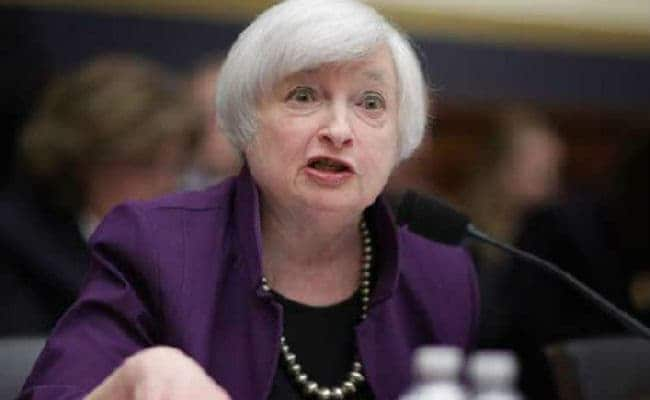
The reports painted an upbeat picture of the economy early in the fourth quarter and came as Fed Chair Janet Yellen said the US central bank could raise borrowing costs "relatively soon."
The Labor Department said its Consumer Price Index increased 0.4 per cent last month after rising 0.3 per cent in September. In the 12 months through October, the CPI advanced 1.6 per cent, the biggest year-on-year increase since October 2014. The CPI increased 1.5 per cent in the year to September.
Underlying inflation continued to slow last month as healthcare costs moderated after recent hefty gains. But with rents pushing higher, that trend is unlikely to be sustained.
The so-called core CPI, which strips out food and energy costs, climbed 0.1 per cent last month after a similar gain in September. That slowed the year-on-year increase in the core CPI to 2.1 per cent from a 2.2 per cent rise in September.
The Fed has a 2 per cent inflation target and tracks an inflation measure which is currently at 1.7 percent.
The dollar pared losses against a basket of currencies after the data, while prices for longer-dated US government bonds fell sharply. US stock index futures rose.
In another report, the Labor Department said initial claims for state unemployment benefits dropped 19,000 to a seasonally adjusted 235,000 for the week ended November 12, the lowest level since November 1973.
Claims have now been below 300,000, a threshold associated with a healthy labour market, for 89 straight weeks. That is the longest run since 1970, when the labour market was much smaller.
Inflation poised to rise
The firming inflation backdrop and labour market that is approaching full employment are likely to encourage the US central bank to raise borrowing costs at its December 13-14 policy meeting. In prepared remarks to lawmakers on Thursday, Ms Yellen said a rate hike would be appropriate if economic data kept pointing to an improving labour market and rising inflation.
"Such an increase could well become appropriate relatively soon," Ms Yellen said.
The Fed this month left interest rates unchanged. The bank lifted its benchmark overnight interest rate last December for the first time in nearly a decade.
Inflation could push higher in the coming years if president-elect Donald Trump's proposal to boost infrastructure and defense spending is implemented. The fiscal stimulus, against the backdrop of full employment, would entail a much faster pace of interest rate hikes than currently anticipated.
Last month, gasoline prices jumped 7.0 per cent after rising 5.8 per cent in September. Gasoline accounted for more than half of the increase in the CPI last month. But households got respite from food prices, which were unchanged for a fourth straight month.
Food consumed at home declined for a sixth consecutive month. Medical care costs were unchanged for a second month as a rise in hospital services was offset by a decline in the cost of doctor visits. Prescription medicine price increases also moderated from September's strong gain.
Rents increased 0.4 per cent last month after rising 0.3 per cent. Owners' equivalent rent of primary residence rose 0.3 per cent after gaining 0.4 per cent in September. Households also paid more for a range of other goods and services last month, including new motor vehicles, apparel, education and tobacco.
The firming labour market and rising rents are boosting the housing sector. In a third report, housing starts jumped 25.5 per cent to a seasonally adjusted annual pace of 1.32 million units last month, the highest level since August 2007.
The per cent increase was the biggest since July 1982. Starts increased in all four regions last month. Single-family homebuilding, which accounts for the largest share of the residential housing market, jumped 10.7 per cent to an 869,000-unit pace in October, the highest in nine years.
Housing starts for the volatile multi-family segment soared 68.8 per cent to a 454,000-unit pace. Starts for buildings with five units or more hit their highest level since June 2015.

-
Indians Are Travelling, But Not Every Journey Is A Holiday | The Week In Whys

Pilgrims, patients and working women are the real travellers, and the system hasn't quite caught up with them.
-
Getting To Work Costs Women More | The Reason Why
It is not just about women paying more than men. It is about women paying much more in cities than in villages.
-
AI Bias In Investing Cannot Be Eliminated, But It Can Be Governed
Framing is a particularly important example as identical financial information presented in terms of gains rather than losses can lead an LLM to reach a different assessment.
-
Joining The Dots | Dark Skies, Steady Diya: Why Hope Holds This Diwali
With war, a weak rupee and foreign outflows weighing on sentiment, policymakers at the NDTV World Summit and market veterans at NDTV Profit Ignite: Diwali Edition offered the same advice: stay invested and filter out the noise.
-
The Curious Case of Equitas Small Finance Bank And A CEO Who Quit For Stock
PN Vasudevan believes persistent investor concerns over a perceived conflict of interest had become a governance overhang on Equitas Small Finance Bank's stock, even as the lender improved profitability and asset quality.
-
Talking Points This Week: AI Cash Burn, A Tiger Comeback And An India That Still Finds Its Own Path
India is not immune to higher oil or tighter global liquidity, yet its earnings base is broader, its domestic policy levers are still available.
-
Foreign Investors Own Half Of HDFC Bank and ICICI Bank. An LTCG Cut Could Matter Most Here
Foreign portfolio investors have US$115 billion parked in HDFC Bank, ICICI Bank. If the government cuts long-term capital gains tax, Jefferies says returning foreign money could land here first.
-
'Never Seen This Level Of Negativity': Sandeep Tandon Says The Next Rally May Be Closer Than You Think
Veteran investor Sandeep Tandon says foreign selling is easing, large-caps are due a comeback and mid-caps are crowded, while he turns positive on gold, power and pharma this Diwali.
-
Indians Stay With Family, Not In Hotels | The Reason Why
India still lacks enough clean, reliable and affordable hotels for budget-conscious travellers.
-
The Economic Imperative: Analysing The Material Driving Force Behind India-Canada Strategic Reset
This economic complementarity is further reinforced by deep institutional investment ties and talent mobility, which form the bedrock of the bilateral framework.










