2024 Will Mark The End Of The Post-Pandemic Economy
(Bloomberg Opinion) -- Economists did not believe it was possible, but they've been wrong a lot lately, and in their defense it has only ever happened once (or maybe twice) before: We may be witnessing that rare achievement known as a soft landing. The US Federal Reserve's latest forecast expects the inflation rate to slide back down to 2% without much job loss or economic slowdown.
But before we celebrate this bravura monetary performance, or decide unemployment and growth aren't sensitive to inflation or interest rates after all, allow me to offer two observations, one looking backward and one forward. First, the last few years have been highly unusual. Second, this year will mark the end of the free-lunch economy.
The post-pandemic economy was marked by several unlikely factors. Shortages coming out of the pandemic sparked inflation, which was then exacerbated by unnecessarily expansionary monetary and fiscal policy. Just as the economy was poised to recover, in other words, policymakers gave it rocket fuel.
All that stimulus money increased household savings. Savings-rich households kept spending, and firms desperate for workers faced an exceptionally tight labor market. Meanwhile the Fed not only pursued nominal zero rates, it tried to bring down longer term rates and mortgages — and did so well after the pandemic had ended.
The result was that even as rates increased, the economy stayed somewhat resilient. During the long period of low interest rates that preceded the post-pandemic, many firms, investors and households locked in low rates. Thus they were relatively unaffected by rising rates.
Now, as we head into 2024, it's increasingly clear that America has spent its post-pandemic dividend. Households in the bottom half of the income distribution don't have so much extra savings, and some are even going into debt. Debt-dependent firms and investors are approaching their maturity wall and will have to refinance at a higher rate soon.
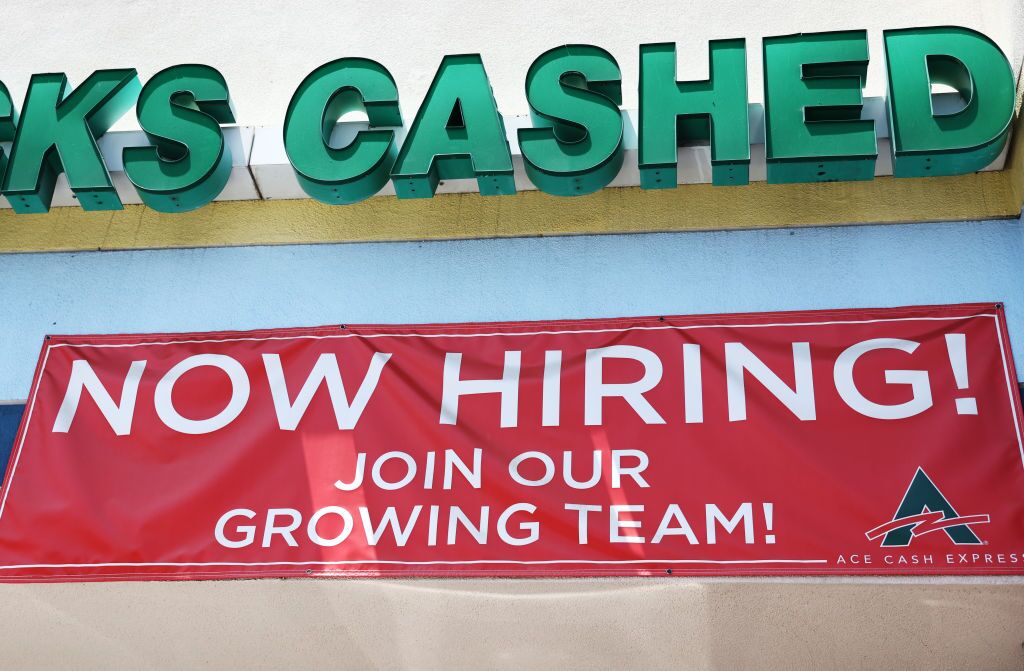
Even the unshakable labor market may be weaker than it appears. Coming out of the pandemic, job vacancies were historically high because firms needed workers and could not find them. They have since fallen, though they are still high from a historical standpoint — suggesting room for a soft landing.

But maybe those vacancy numbers are less meaningful than they used to be. Economists at the Minneapolis Fed speculate that technology has changed the relationship between vacancies and the employment market — making it easier to post, recruit and evaluate applicants — so they devised a better way to measure vacancies. When they did, they found that vacancies are back to their old level. They argue that higher rates could bring higher unemployment.
If the Fed does go forward with its planned rate cuts for next year, maybe the US economy can avoid the costs normally associated with inflation reduction. But if the inflation rate does not continue to decline — or worse, starts rising again — the Fed will face actual trade-offs. Bringing inflation down to 2% will mean inflicting damage to the economy, in 2024 and beyond.
That's one conclusion from research by Jean Boivin, head of the BlackRock Investment Institute (and my macro professor in grad school) and Alex Brazier. For the last few decades, the Fed had only two speeds: expansionary or neutral. It has not directly caused a recession in decades.
Those days are coming to an end — because recent economic shocks have been mostly demand-driven. The only supply shock was a 30-year deflationary one, also known as the China shock. Prices stayed low and the Fed had lots of leeway to juice the economy without having to face the choice between inflation and growth. But in a world with an aging population and less scope for increased trade, the Fed's long free lunch is over too. In fact, the last few years might have been its last hurrah.
There is a chance that, like a lot of my fellow economists, I am wrong. Perhaps the Fed will be able to reduce rates without much damage to the economy or the labor market; immaculate disinflation, so tantalizingly close, may actually happen. Whatever happens, however, the end of the pandemic dividend will make it harder for central bankers. For the first time in recent memory, the people who try to manage the US economy — not to mention the considerably larger group of us who participate in it — will have to navigate some difficult trade-offs.
Elsewhere in Bloomberg Opinion:
- The Year There Was No Recession: Nir Kaissar and Jessica Karl
- What Recession? How So Many Economists Got It So Wrong: Tyler Cowen
- America Is Finally Losing That ‘Vibecession' Feeling: Conor Sen
Want more Bloomberg Opinion? Subscribe to our newsletter.
This column does not necessarily reflect the opinion of the editorial board or Bloomberg LP and its owners.
Allison Schrager is a Bloomberg Opinion columnist covering economics. A senior fellow at the Manhattan Institute, she is author of “An Economist Walks Into a Brothel: And Other Unexpected Places to Understand Risk.”
More stories like this are available on bloomberg.com/opinion
©2024 Bloomberg L.P.

-
Getting To Work Costs Women More | The Reason Why

It is not just about women paying more than men. It is about women paying much more in cities than in villages.
-
AI Bias In Investing Cannot Be Eliminated, But It Can Be Governed
Framing is a particularly important example as identical financial information presented in terms of gains rather than losses can lead an LLM to reach a different assessment.
-
Joining The Dots | Dark Skies, Steady Diya: Why Hope Holds This Diwali
With war, a weak rupee and foreign outflows weighing on sentiment, policymakers at the NDTV World Summit and market veterans at NDTV Profit Ignite: Diwali Edition offered the same advice: stay invested and filter out the noise.
-
The Curious Case of Equitas Small Finance Bank And A CEO Who Quit For Stock
PN Vasudevan believes persistent investor concerns over a perceived conflict of interest had become a governance overhang on Equitas Small Finance Bank's stock, even as the lender improved profitability and asset quality.
-
Talking Points This Week: AI Cash Burn, A Tiger Comeback And An India That Still Finds Its Own Path
India is not immune to higher oil or tighter global liquidity, yet its earnings base is broader, its domestic policy levers are still available.
-
Foreign Investors Own Half Of HDFC Bank and ICICI Bank. An LTCG Cut Could Matter Most Here
Foreign portfolio investors have US$115 billion parked in HDFC Bank, ICICI Bank. If the government cuts long-term capital gains tax, Jefferies says returning foreign money could land here first.
-
'Never Seen This Level Of Negativity': Sandeep Tandon Says The Next Rally May Be Closer Than You Think
Veteran investor Sandeep Tandon says foreign selling is easing, large-caps are due a comeback and mid-caps are crowded, while he turns positive on gold, power and pharma this Diwali.
-
Indians Stay With Family, Not In Hotels | The Reason Why
India still lacks enough clean, reliable and affordable hotels for budget-conscious travellers.
-
The Economic Imperative: Analysing The Material Driving Force Behind India-Canada Strategic Reset
This economic complementarity is further reinforced by deep institutional investment ties and talent mobility, which form the bedrock of the bilateral framework.
-
Medicine Pricing: Where Must Profit Stop?
India must confront excessive margins, hidden incentives and regulatory gaps that threaten the integrity of medicine.










