Americans Are Finally Turning Frugal After Splurging Over Summer
(Bloomberg) -- The long-awaited US economic slowdown has begun.
Signs are piling up — in recent data, in warnings from top retailers such as Walmart Inc. and in anecdotes from local businesses across the country — that after defying expectations all year and splurging over the summer, American households are starting to pull back.
A burnt-out consumer, weighed down by high interest rates and dwindling savings, is the surest sign that economic growth is gliding lower heading into 2024. The economy may face additional challenges in the new year as the labor market cools and wage growth moderates.

“The household disposable income side isn't looking great — jobs growth is slowing, wages are slowing,” said James Knightley, chief international economist at ING. “We're seeing a weaker consumer, and that's significant.”
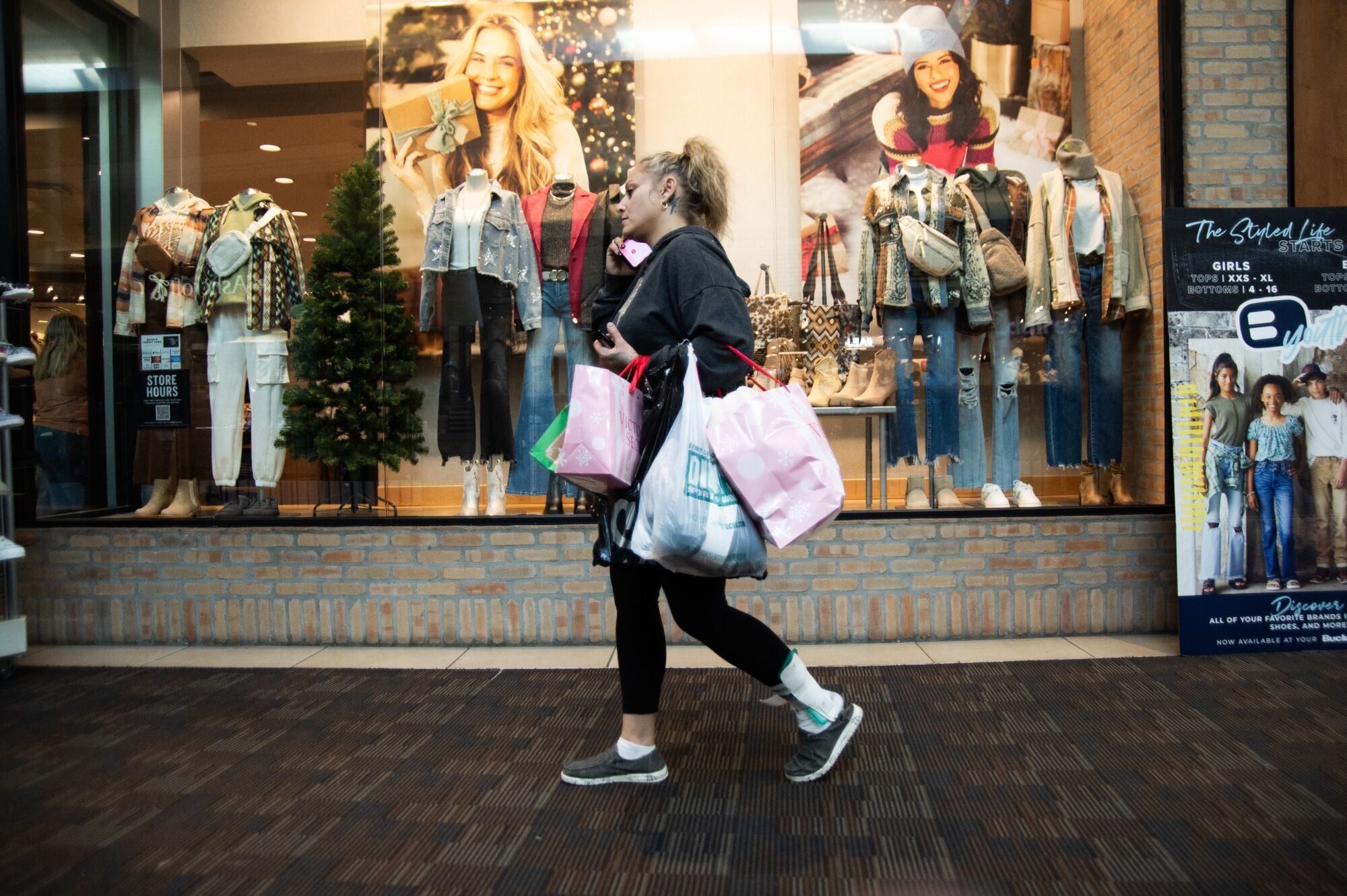
Monthly government data on personal spending published Thursday showed a cutback in discretionary categories like cars, furniture and gym memberships to begin the fourth quarter. Holiday shopping was also less festive, with Black Friday spending down at a number of the country's largest chains and a record amount of online purchases made using buy-now-pay-later schemes on Cyber Monday.
The slowdown in spending — which remains fairly resilient, all things considered — will be welcomed by Federal Reserve officials, who've been concerned that a strong consumer could keep inflation elevated. Investors are now pricing in about 120 basis points of rate cuts in 2024, according to futures — nearly double what they were expecting as recently as mid-October.
“Consumer spending accounts for roughly two-thirds of GDP, so less shopping will mean slower economic growth,” Atlanta Fed President Raphael Bostic said Wednesday, referring to the gross domestic product. In an October survey conducted by the Atlanta Fed, companies said they see sales increasing about 3% over the next year, the lowest reading in almost a decade aside from the pandemic lows.
Third-quarter earnings from the country's largest retailers suggest the pullback is well under way. Walmart said there was a “sharper falloff” in sales during the last two weeks of October. Target Corp.'s comparable sales declined for the second straight quarter as buyers were more careful. And Dollar Tree Inc.'s executives flagged the “increasing financial stress” among lower-income households.
The Fed's “Beige Book” survey of regional business contacts this week hinted at the slowdown in spending and hiring across the country. Here is a sample of anecdotes:
- Philadelphia Fed: “Electric vehicles were accumulating on dealer lots as high prices, high interest rates, and consumer hesitancy curbed demand.”
- Dallas Fed: “The pace of hiring decelerated broadly, and some freight carriers, high-tech, and manufacturing companies reported layoffs.”
- Minneapolis Fed: A northern Wisconsin banker said that “People are mad about eggs costing more, but they'll still buy a car.” Other banking contacts noted that consumers were using credit cards and HELOCs to maintain spending.
- Kansas City Fed: Consumers are increasingly likely to “share a roof and share meals” to manage household budget challenges. Restaurateurs noted that revenues fell as more customers split dishes and eschewed expensive items.
Economists typically view consumer consumption as primarily driven by labor-market conditions — as long as people have a job, they keep spending. There's evidence the job market, until now remarkably robust, is cooling too. Wages and salaries rose just 0.1% in October, according to Thursday's data, marking the smallest advance this year. Separate data show out-of-work Americans are having a tougher time securing another job, with continuing weekly jobless claims climbing to a two-year high.
The closely-watched government jobs report out next Friday is projected to show a 4% rise in average hourly earnings versus a year earlier, which would amount to the smallest annual increase since mid-2021.
Read More: Americans Earning at Least $100,000 Begin to Curb Their Shopping
Though the economy is decelerating, few forecasters see a crash ahead. Growth is seen moderating to 1.1% in the fourth quarter before sliding to as low as 0.2% in the second quarter of 2024, according to median estimates in a Bloomberg survey.
“Certainly things are moderating, but we continue to see signs of forward momentum and progress,” Heather Boushey, a member of President Joe Biden's Council of Economic Advisers, said in a phone interview. “We couldn't have those blockbuster paces going on forever. We really needed things to stabilize.”
The economy has been resilient so far. That could be changing heading into 2024, according to Veronica Clark, an economist at Citigroup Inc.
“If we're in a recession six months from now, which we believe we will be, we could look back on this period and say this was the earliest sign of it,” she said.
--With assistance from Mark Niquette and Vince Golle.
More stories like this are available on bloomberg.com
©2023 Bloomberg L.P.

-
The Curious Case of Equitas Small Finance Bank And A CEO Who Quit For Stock

PN Vasudevan believes persistent investor concerns over a perceived conflict of interest had become a governance overhang on Equitas Small Finance Bank's stock, even as the lender improved profitability and asset quality.
-
Talking Points This Week: AI Cash Burn, A Tiger Comeback And An India That Still Finds Its Own Path
India is not immune to higher oil or tighter global liquidity, yet its earnings base is broader, its domestic policy levers are still available.
-
Foreign Investors Own Half Of HDFC Bank and ICICI Bank. An LTCG Cut Could Matter Most Here
Foreign portfolio investors have US$115 billion parked in HDFC Bank, ICICI Bank. If the government cuts long-term capital gains tax, Jefferies says returning foreign money could land here first.
-
'Never Seen This Level Of Negativity': Sandeep Tandon Says The Next Rally May Be Closer Than You Think
Veteran investor Sandeep Tandon says foreign selling is easing, large-caps are due a comeback and mid-caps are crowded, while he turns positive on gold, power and pharma this Diwali.
-
Indians Stay With Family, Not In Hotels | The Reason Why
India still lacks enough clean, reliable and affordable hotels for budget-conscious travellers.
-
The Economic Imperative: Analysing The Material Driving Force Behind India-Canada Strategic Reset
This economic complementarity is further reinforced by deep institutional investment ties and talent mobility, which form the bedrock of the bilateral framework.
-
Medicine Pricing: Where Must Profit Stop?
India must confront excessive margins, hidden incentives and regulatory gaps that threaten the integrity of medicine.
-
Why Amazon And Flipkart Are Struggling To Beat Meesho In India's Smaller Cities
With 274 million users and lowest-cost logistics, Meesho is defending its value commerce crown against giants like Amazon and Flipkart.
-
High US Salaries, No Green Card Certainty: The Financial Calculation Facing Indian H-1B Families
The suspension of PERM processing at eight technology employers does not cancel existing H-1B visas. What it does is force a question many Indian families have been avoiding: is the US salary worth tying your career and family plans to one employer?
-
Swiggy vs Eternal: Food Delivery's Two Rivals Are No Longer In The Same Race
Eternal is building a private AI assistant, dark.ai. Swiggy is still working out how to make Instamart pay, with an operating loss of Rs 895 crore in the July-September quarter while Blinkit stayed profitable.










