US Defended Amazon After Article Showed Company Bypassed Indian Law
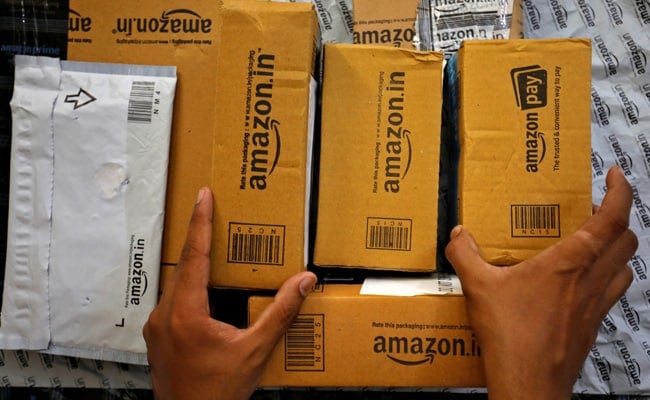
U.S. officials rushed to defend Amazon's business practices in India after Reuters reported in February that the company had favored certain sellers on its website and bypassed local law that requires foreign e-commerce companies to treat all vendors equally, documents obtained by the news agency show. Emails obtained through the U.S. Freedom of Information Act from the Office of the United States Trade Representative (USTR) showed that U.S. officials prepared a note for John Kerry, a top envoy of President Joe Biden, about the Feb. 17 Reuters report.
The note, contained in an email dated Feb. 18, said that India's antitrust watchdog had reviewed many such allegations against U.S. e-commerce companies and found nothing wrong. Biden's envoy, former U.S. Secretary of State Kerry, is in charge of climate change policy. He was scheduled to speak that day with India's Commerce Minister Piyush Goyal. The U.S. government was concerned that Goyal would bring up the Reuters story, so it hastily drafted a note about the article in case he did, the emails show.
"This could come up in the call since as you know Minister Goyal is prone to bring up tangential topics," Thomas Carnegie, a U.S. embassy official in New Delhi, emailed an official at the USTR. Philip M. Ingeneri, another U.S. embassy official, also told the USTR official in an email on Feb. 18 that he had "verified" the contents of the note prepared for Kerry with Amazon India's government affairs chief as "true and accurate." The emails do not describe what ultimately happened during the Kerry-Goyal call.
The U.S. embassy in New Delhi referred questions to the U.S. Department of State in Washington, which said it expected that any issues regarding U.S. e-commerce companies' practices in India would be reviewed by the Competition Commission of India (CCI) "with the same level of independence, transparency, and professionalism it has demonstrated in the past." Spokespeople for Kerry, the USTR and Goyal did not respond to Reuters queries.
The Reuters report in February, based on internal Amazon documents, revealed that the U.S. firm has for years given preferential treatment to a small group of sellers on its India platform, circumventing the country's tough foreign investment rules that are aimed at protecting small Indian brick-and-mortar retailers.
The article stirred up weeks of controversy in India, sparking calls from traders to ban Amazon. The CCI said in March that the story corroborated evidence it had received against Amazon, while the Enforcement Directorate, India's financial-crime fighting agency, asked Amazon for information and documents related to the company's Indian operations, Reuters has reported. The CCI enforces India's antitrust laws.
'Sensationalist Language'
In a March 16 email to U.S. officials, including at the USTR's office, Ingeneri wrote, in an apparent reference to the February article, that a Reuters reporter had used "sensationalist language" and relied on Amazon's "activity before 2018 that was aggressive but not illegal at the time." The next sentence in the email was redacted.
In response to questions from Reuters, a spokeswoman for Amazon in India said the company had no comment. Amazon has previously told Reuters it "does not give preferential treatment to any seller on its marketplace," and that it "treats all sellers in a fair, transparent, and non-discriminatory manner."
But internal Amazon documents show that the e-commerce giant discounted its fees to certain sellers on its platform, and that a few dozen of Amazon's more than 400,000 sellers in early 2019 accounted for about two-thirds of the e-commerce site's online sales.
The note prepared for Kerry summarized the Reuters story's findings. Among them: that Amazon senior executive Jay Carney had been advised by colleagues in 2019 not to disclose to India's ambassador in Washington that two sellers on Amazon's Indian website accounted for a large chunk of its sales. Amazon holds indirect equity stakes in those sellers.
From 2009 to 2011, Carney served as President Biden's communications director when Biden was vice president, before going on to serve as press secretary to President Barack Obama. The note for Kerry identified Carney as "Amazon Senior Vice President and former Obama Administration spokesman." Carney had no comment for this article, the Amazon spokeswoman said.
Under the headline "If Asked: Allegations of Amazon E-Commerce Violations," the note stated: "We have seen a February 17 Reuters report raising concerns about U.S. e-commerce companies' practices in India and note many of the allegations have been previously reviewed by the Competition Commission of India without any negative findings." The email with the note was marked "SENSITIVE BUT UNCLASSIFIED."
"The Reuters article repeated prior allegations made by small traders," the note stated. The partially redacted note also stated that "since 2013, Amazon has invested over $5.5 billion in India, employs 100,000 Indians, and supports 400,000 vendors on its market."
India's strict foreign investment rules for e-commerce have caused friction between Washington and New Delhi, and frustrated U.S. firms with online businesses in India, such as Amazon and Walmart Inc.
The CCI in January 2020 launched a probe into Amazon on allegations it was favoring certain sellers, but the investigation has been on hold as the company mounted a court challenge. A separate antitrust complaint by a group of online sellers filed against Amazon is currently pending review by the CCI.

-
We May Need Another Tukaram Mundhe To Fight Air Pollution | The Reason Why

Developers may install basic measures such as sprinklers and green nets, resume work, and continue violating rules when this equipment stops working.
-
Extracting Value From Battery Scrap Could Be Challenging For India | The Reason Why
A discarded lithium-ion battery still contains valuable materials such as lithium, nickel and cobalt. These can be recovered and reused. When such batteries are crushed and shredded, they produce a dark powder called black mass.
-
One El Nino, India Can Handle. Two Could Break The Granary
India's grain stocks can absorb one bad year, but a second El Nino could drain the buffer in two to three years, economists say.
-
India's Troika Of Good Luck | Joining The Dots
As Jensen Huang's exit drags Nvidia down, a cooling AI trade and resilient earnings have revived investor interest in India. A likely RBI rate hike looms.
-
Talking Points This Week: Leadership Shock At Nvidia, Earnings Strength, And The Fog Over Hormuz
The Anthropic IPO pricing and first trading day, Nvidia's upcoming earnings, and any fresh signals from Iran will set the tone for the following week.
-
Signature Play: The Classic Cocktail Is Dead. Or Is It?
Classic cocktails are disappearing from India's cocktail menus. But they're still being ordered, taught to bartenders and borrowed from. So, who's really having the last drink?
-
A New Samvat Wishlist: Inclusive Prosperity And Human Development
India has strengthened its economic foundations through infrastructure, digital access and enterprise. Its next growth chapter must deepen productivity, create better livelihoods and widen participation in prosperity.
-
Love, Sex Aur Dhokha: The Audacious Plot To Spy On Jensen Huang
A Taipei dinner, a Singapore chip buyer and a suspected Chinese asset: inside the alleged spy operation that got close to NVIDIA's Jensen Huang.
-
Ten Things I Learnt This Samvat
Patience can be a trap. Cheap stocks can stay cheap. Leverage can wipe you out. What did Samvat 2082 teach us? Niraj Shah writes on 10 lessons from the year gone by.
-
Talking Points This Week: Tech Nerves, FII Buying, And A Faraway Banking Shock
The global markets are not shining this Diwali. The exception in the large markets is, India.









