UPI Transactions Surge But Only 15% Come From Merchants
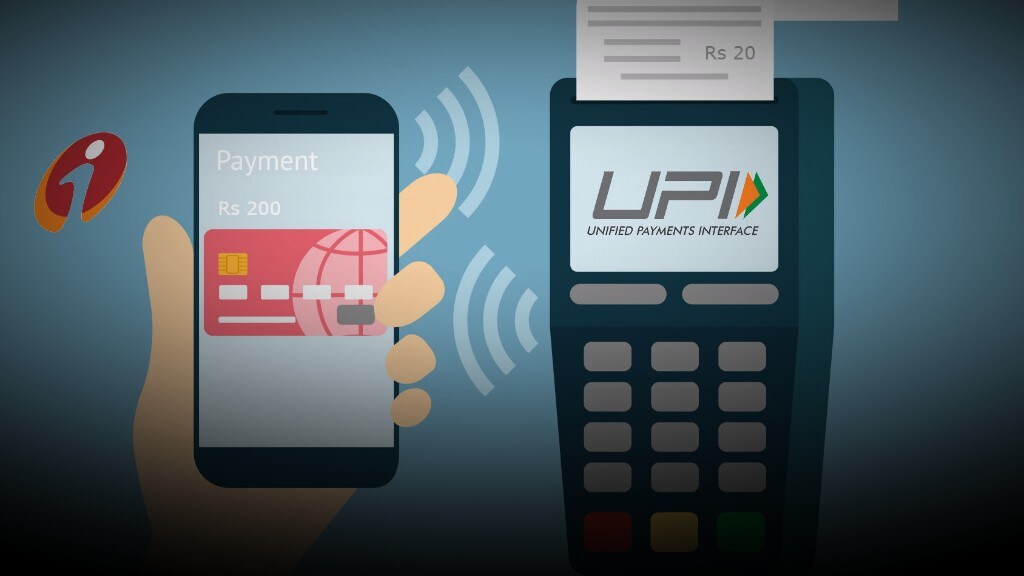
After a quiet start, the government's app-based payments platform – the unified payments interface (UPI) – seems to be picking up.
The real-time transaction platform launched in August last year, has recorded “exponential” growth in both number and value of transactions following demonetisation, AP Hota, chief executive officer of National Payments Corporation of India (NPCI) told BloombergQuint on Monday. Merchants, however, are conspicuous by their absence from the network, he added.
UPI transactions touched Rs 1,660 crore in value and 18 lakh in volume in the month of January, according to data released by the Reserve Bank of India (RBI). This implies a 18 times jump in transaction value and a six-time jump in volumes in a matter of three months following demonetisation.
About 2 lakh transaction take place daily on the UPI platform and the number will only increase as more banks participate, Hota said. Besides demonetisation, another fillip to UPI came from the launch of the BHIM app which allows customers to use the platform without going through a bank's app.
Out of 2 lakh transactions, about one lakh are coming from BHIM and the rest one lakh from different banking apps. BHIM has provided a big boost because about 35 lakh people are using this app regularly.AP Hota, CEO, NCPI
Also Read: Expensive Or Just Cumbersome? Why UPI Has Had A Slow Start
But since most of these transactions are not coming from merchants, the NPCI has reasons to worry. Hota said that only a fraction of total volumes on UPI currently are commercial payments.
“Most of these transactions are peer-to-peer transfers as of now. We have been thinking about it too. We want more merchants to sign up for UPI as the default mode of payment but those transactions are hardly 15 percent of all transactions at the moment,” he added.
.jpg)
Retailers, on their part, claim that the government has not done enough to bring them on the UPI platform and private players like Paytm seem to be racing ahead.
Merchants are choosing Paytm over other modes because of the merchant discount rate (MDR) that banks levy on digital transactions, said Kumar Rajagopalan, chief executive officer of Retailers' Association of India, an industry body that has more than five lakh stores under its purview.
While the RBI has proposed bringing down MDR substantially for small retailers with a turnover of less than Rs 20 lakh per annum, as of now, it stands at 0.85 percent of the transaction value even for UPI transactions which makes it relatively unattractive, according to Rajagopalan.
I don't think the customers are paying with it. For retailers, it doesn't make sense even now to get on to UPI. The biggest requirement is to completely do away with MDR to boost digital transactions. Customers are using Paytm because there are all kinds of offers and incentives, and a great support system. Banks are not doing anything to push UPI in the market.Kumar Rajagopalan, CEO, Retailers' Association of India
Rajagopalan added that banks are not aggressive in getting merchants on board platforms such as UPI which require some technical handholding to begin with.
“Merchants need to be onboarded on these systems that the government keeps launching but they're not doing anything to help merchants get acquainted with these technologies. We are hoping that BharatQR changes things but it's unlikely that the government will bring down cost of transaction for us,” he said.
Meanwhile, the NPCI is brainstorming ways to boost these transactions and bring more merchants on board by the end of the year. One way to do this is likely to be the integration with Bharat QR, a QR code-based payment method jointly developed by major card networks. Bharat QR is likely to be linked with UPI in its next iteration, according to Hota.
“The volumes [for merchants] will eventually pick up. We are confident,” he added.

-
One Battle After Another: India's Corporate Dynasties Battle For Control

2026 could go down as Corporate India's year of succession wars, governance battles and family fault lines.
-
Rs 50-Lakh Gold In Bank Locker, Rs 3 Lakh Of Protection: The Gap Most Families Don't Know About
The RBI ties a bank's liability to the annual locker rent and families who want to insure their jewellery face a separate question about how to prove what was inside.
-
The More Food Turns Into Fuel, The Harder It Is To Read Agricultural Markets | The Reason Why
A policy designed to reduce dependence on imported fuel can create new pressures elsewhere in the food economy.
-
Your iPhone Costs 12 Grams Of Gold, A Car About 100. What Does Your Life Weigh?
Measured in rupees, almost everything looks more expensive than it did a generation ago. Measured in grams of gold, a lot of it has become cheaper.
-
Gold Is Rs 22,000 Cheaper Than A Month Ago. Should You Buy Amid The Wedding Season?
Gold's potential slide to $3,500 could save around Rs 4,700 per 10 grams, but a soft inflation print could just as easily push prices back up. One way to split the risk is to buy in parts, some now and the rest after the Fed's Dec. 9 decision.
-
AI Agents Are Gaining Power. Who Governs Them?
Artificial intelligence agents promise to transform productivity by moving machines from assisting decisions to executing them. But as organisations delegate greater authority to these AI-agents, they must first establish who controls that authority and who remains accountable when things go wrong.
-
Why Swapping Your Old Gold Can Trigger A Rs 5 Lakh Tax Bill, And How You Can Avoid It Legally
Swapping old gold for new is taxed as a sale and a fresh purchase. Getting your own gold remade can cut most of that bill, though it has its own costs.
-
The AI Trade is Done. The Real Opportunity for Investors Starts in 2027 | Unhedged Position
As pureplay AI stocks plunge and circular, capex-led financing unwinds, 2027 is set to be a year of reckoning for AI companies. Yet the bust clears the way for a better opportunity for investors in 2027 -- shifting the spotlight from AI builders to the companies using AI.
-
Leadership As Mission: Why The Age Of AI Demands More Human Leadership
Debjani Ghosh examines how AI is changing leadership, arguing that its success must be measured by its impact on people and the accountability of those guiding its use.
-
We May Need Another Tukaram Mundhe To Fight Air Pollution | The Reason Why
Developers may install basic measures such as sprinklers and green nets, resume work, and continue violating rules when this equipment stops working.









