Union Budget Presentation: History And Facts
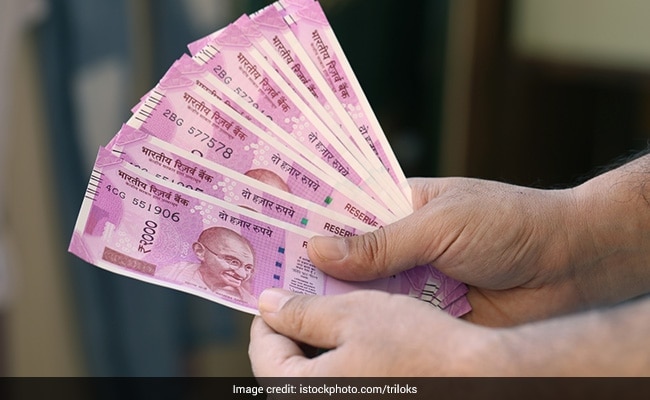
Finance Minister Nirmala Sitharaman will on February 1 present her fourth straight Union Budget when she presents financial statements and tax proposals for fiscal year 2022-23 (April 2022 to March 2023).
Here are some budget trivia:
* INDIA'S FIRST BUDGET: The Budget was first introduced in India on April 7, 1860 when Scottish economist and politician James Wilson from East India Company presented it to the British Crown.
Independent India's first budget was presented on November 26, 1947 by the then Finance Minister R K Shanmukham Chetty.
* LONGEST BUDGET SPEECH: Sitharaman holds the record for delivering the longest speech when she spoke for 2 hours and 42 minutes while presenting the Union Budget 2020-21 on February 1, 2020. With two pages still remaining, she had to cut short her speech as she felt unwell. She asked the Speaker to consider the remaining part of the speech as read.
During the course of this speech, she broke her own record of July 2019 - her maiden Budget - when she had spoken for 2 hours and 17 minutes.
* MOST WORDS IN BUDGET SPEECH: At 18,650 words, Manmohan Singh delivered the longest Budget speech in terms of words in 1991 under the Narasimha Rao government.
In 2018, then Finance Minister Arun Jaitley's speech with 18,604 words was the second longest in terms of word count. Jaitley spoke for 1 hour and 49 minutes.
* SHORTEST BUDGET SPEECH: 800 words was all that the then finance minister Hirubhai Mulljibhai Patel delivered in 1977.
* MOST NUMBER OF BUDGETS: Former Prime Minister Moraraji Desai holds the record of presenting the most number of budgets in the history of the country. He had presented 10 budgets during his stint as finance minister during 1962-69, followed by P Chidambaram (9), Pranab Mukherjee (8), Yashwant Sinha (8) and Manmohan Singh (6).
* TIME : Until 1999, the Union Budget was presented at 5 pm on the last working day of February as per British era practice. Former Finance Minister Yashwant Sinha in 1999 changed the budget presentation timing to 11 am.
Arun Jaitley started presenting the Union Budget on February 1 in 2017, departing from the colonial-era tradition of using the last working day of that month.
* LANGUAGE: Until 1955, the Union Budget was presented in English. However, the Congress-led government later decided to print the Budget papers in both Hindi and English.
* PAPERLESS: Covid-19 pandemic turned the Budget for 2021-22 was paperless - a first in Independent India.
* FIRST WOMAN: In 2019, Sitharaman became the second woman to have presented the budget after Indira Gandhi, who had presented the budget for the financial year 1970-71.
That year, Sitharaman did away with the traditional budget briefcase and instead went for a traditional 'bahi-khata' with the National Emblem to carry the speech and other documents.
* RAILWAY BUDGET: Till 2017, railway budget and Union Budget were presented separately. After being presented separately for 92 years, the Railway budget was merged in the Union Budget in 2017 and presented together.
* PRINTING: Till 1950, the budget was printed at Rashtrapati Bhavan till it got leaked and the venue of printing had to be shifted to a press at the Minto Road in New Delhi. In 1980, a government press was set up in the North Block - the seat of the finance ministry.
* ICONIC BUDGETS: The Black Budget: The 1973-74 Budget presented by Yashwantrao B Chavan in the Indira Gandhi government was called the Black Budget as the fiscal deficit during that year was Rs 550 crore. It was a time when India was going through acute financial distress.
Carrot & Stick Budget: The Union budget presented by VP Singh for the Congress government on February 28, 1986, was the first step towards dismantling licence raj in India. It was called the 'Carrot and Stick' budget as it offered both rewards and punishment. It introduced MODVAT (Modified Value Added Tax) credit for lowering the cascading effect of tax that consumers had to pay while also launching an intense drive against smugglers, black marketers, and tax evaders.
Epochal Budget: Manmohan Singh's landmark 1991 budget under the PV Narasimha Rao government that ended licence raj and began the era of economic liberalisation, is known as 'Epochal Budget'. Presented at a time when India was on the brink of an economic collapse, it among other things slashed customs duty from 220 per cent to 150 per cent and took steps to promote exports.
Dream Budget: P Chidambaram in the 1997-98 budget used the Laffer Curve principle to lower tax rates to increase collections. He slashed maximum marginal income tax rate for individuals from 40 per cent to 30 per cent and that for domestic companies to 35 per cent besides unleashing a number of major tax reforms including a voluntary disclosure of income scheme to recover black money. Referred to as the 'Dream Budget', it also slashed customs duty to 40 per cent and simplified excise duty structure.
Millennium Budget: Yashwant Sinha's Millennium Budget in 2000 laid the road map for the growth of India's Information Technology (IT) industry as it phased out incentives on software exporters and lowered customs duty on 21 items such as the computer and computer accessories.
Rollback Budget: Yashwant Sinha's 2002-03 budget for the NDA government headed by Atal Bihari Vajpayee is popularly remembered as the Rollback Budget as several proposals in it were withdrawn or rolled back.
Once-in-a-Century Budget: Nirmala Sitharaman on February 1, 2021 presented what she called was 'once-in-a-century budget' as it looked to revive Asia's third-largest economy via investing in infrastructure and healthcare while relying on an aggressive privatisation strategy and robust tax collections.

-
Getting To Work Costs Women More | The Reason Why

It is not just about women paying more than men. It is about women paying much more in cities than in villages.
-
AI Bias In Investing Cannot Be Eliminated, But It Can Be Governed
Framing is a particularly important example as identical financial information presented in terms of gains rather than losses can lead an LLM to reach a different assessment.
-
Joining The Dots | Dark Skies, Steady Diya: Why Hope Holds This Diwali
With war, a weak rupee and foreign outflows weighing on sentiment, policymakers at the NDTV World Summit and market veterans at NDTV Profit Ignite: Diwali Edition offered the same advice: stay invested and filter out the noise.
-
The Curious Case of Equitas Small Finance Bank And A CEO Who Quit For Stock
PN Vasudevan believes persistent investor concerns over a perceived conflict of interest had become a governance overhang on Equitas Small Finance Bank's stock, even as the lender improved profitability and asset quality.
-
Talking Points This Week: AI Cash Burn, A Tiger Comeback And An India That Still Finds Its Own Path
India is not immune to higher oil or tighter global liquidity, yet its earnings base is broader, its domestic policy levers are still available.
-
Foreign Investors Own Half Of HDFC Bank and ICICI Bank. An LTCG Cut Could Matter Most Here
Foreign portfolio investors have US$115 billion parked in HDFC Bank, ICICI Bank. If the government cuts long-term capital gains tax, Jefferies says returning foreign money could land here first.
-
'Never Seen This Level Of Negativity': Sandeep Tandon Says The Next Rally May Be Closer Than You Think
Veteran investor Sandeep Tandon says foreign selling is easing, large-caps are due a comeback and mid-caps are crowded, while he turns positive on gold, power and pharma this Diwali.
-
Indians Stay With Family, Not In Hotels | The Reason Why
India still lacks enough clean, reliable and affordable hotels for budget-conscious travellers.
-
The Economic Imperative: Analysing The Material Driving Force Behind India-Canada Strategic Reset
This economic complementarity is further reinforced by deep institutional investment ties and talent mobility, which form the bedrock of the bilateral framework.
-
Medicine Pricing: Where Must Profit Stop?
India must confront excessive margins, hidden incentives and regulatory gaps that threaten the integrity of medicine.










