As Budget Falls Short, RBI May Focus On US-Style Operation Twist
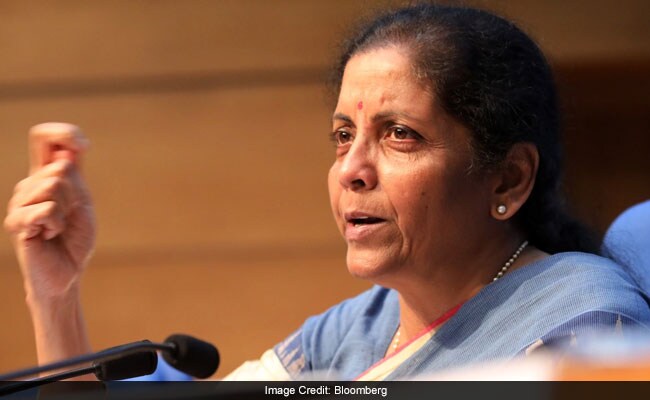
Prime Minister Narendra Modi's second budget in seven months disappointed investors who were hoping for big-bang stimulus to revive growth in Asia's third-largest economy.
The fiscal plan -- delivered by Finance Minister Nirmala Sitharaman on Saturday -- proposed tax cuts for individuals and wider deficit targets, but failed to provide specific steps to fix a struggling financial sector, improve infrastructure and create jobs. Stocks slumped, reflecting the subdued sentiment.
"Far from being a game changer, the budget provides little in terms of short-term growth stimulus," said Priyanka Kishore, head of India and South East Asia economics at Oxford Economics Ltd. in Singapore. "While income tax cuts will provide some relief on the consumption front, the multiplier effect is low and the overall stance of the budget is not expansionary."
The focus now shifts to the Reserve Bank of India's interest rate decision on February 6. However, having already cut interest rates five times last year and with inflation exceeding 7 per cent, well above the central bank's target, there's limited scope for Governor Shaktikanta Das to ease more.
What Bloomberg's Economists Say:
The burden of recovery now falls solely on the Reserve Bank of India. With inflation breaching RBI's target at present, any rate cuts by the central bank are likely to be delayed and contingent upon inflation falling below the upper end of its 2-6 per cent target range.
-- Abhishek Gupta, India economist
Ms Sitharaman didn't have much room to deliver a big stimulus in the budget. A revenue shortfall prompted her to invoke a never-used provision in fiscal laws, allowing the government to exceed the budget gap by 0.5 percentage points. As a result, the budget deficit in the year through March will widen to 3.8 per cent of gross domestic product from a planned 3.3 per cent.
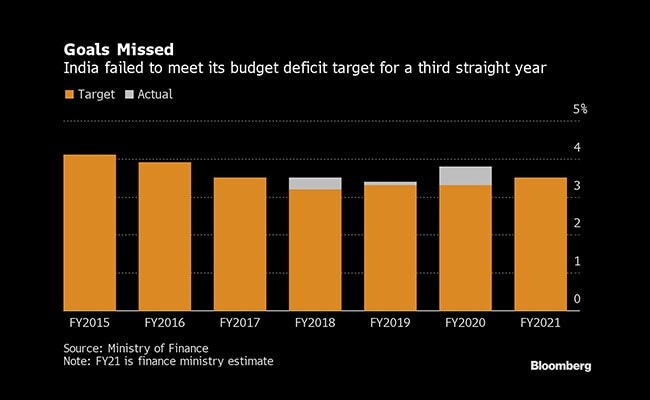
While the government has taken a number of steps in recent months to spur growth, they've fallen short of boosting demand in the consumption-driven economy. Growth is set to slow to 5 per cent this fiscal year, the weakest performance in more than a decade.
The Economic Survey, published by the Ms Sitharaman's chief economic adviser last week, estimated growth will rebound to 6-6.5 per cent in the year starting April.
"It's an okay budget but not firing on all cylinders that the market was hoping for," said Andrew Holland, chief executive officer at Avendus Capital Alternate Strategies in Mumbai.
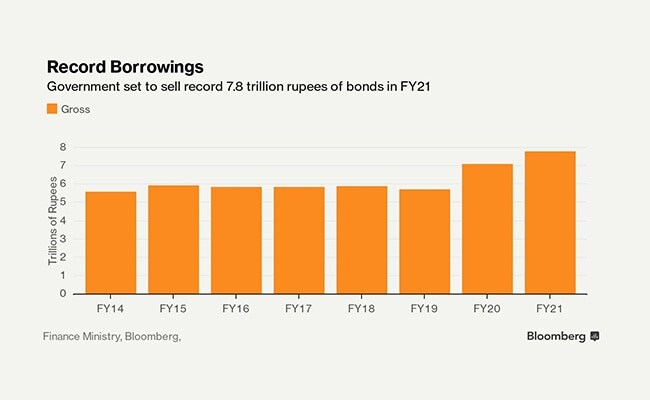
The fiscal gap will narrow to 3.5 per cent next year, with the government budgeting for an increase in gross market borrowing to Rs 7.8 lakh crore from Rs 7.1 lakh crore in the current year. It also plans to earn Rs 2.1 lakh crore by selling state-owned assets in the coming fiscal year to help plug the deficit.
Total spending will rise to Rs 30.4 lakh crore, a 13 per cent increase from the current year's budget, according to latest data.
Key highlights from the budget:
- Personal income tax rates cut
- Government to sell stakes in IDBI Bank Ltd. and Life Insurance Corp. of India
- Dividend distribution tax to be levied on investors, instead of companies
- Farm sector budget raised 28 per cent, transport infrastructure gets 7 per cent more
- Spending on education raised 5 per cent
- Fertilizer subsidy cut 10 per cent
Analysts didn't have much confidence the muted spending plan would spur growth or said deficit goals will be difficult to reach.
"It is very doubtful that the increase in expenditure will push demand much," Chakravarthy Rangarajan, former governor at the Reserve Bank of India told BloombergQuint, adding that achieving next year's budget deficit goal of 3.5 per cent of GDP was doubtful.
All of the economists in a Bloomberg survey so far predict the RBI will keep its benchmark interest rate unchanged at 5.15 per cent this week. Inflation surged to a five-year high of 7.35 per cent in December, well above the central bank's 2-6 per cent target.
Governor Mr Das may instead focus on unconventional policy tools such as the Federal Reserve-style Operation Twist -- buying long-end debt while selling short-tenor bonds -- to keep borrowing costs down.

-
Gold Is Rs 22,000 Cheaper Than A Month Ago. Should You Buy Amid The Wedding Season?

Gold's potential slide to $3,500 could save around Rs 4,700 per 10 grams, but a soft inflation print could just as easily push prices back up. One way to split the risk is to buy in parts, some now and the rest after the Fed's Dec. 9 decision.
-
AI Agents Are Gaining Power. Who Governs Them?
Artificial intelligence agents promise to transform productivity by moving machines from assisting decisions to executing them. But as organisations delegate greater authority to these AI-agents, they must first establish who controls that authority and who remains accountable when things go wrong.
-
Why Swapping Your Old Gold Can Trigger A Rs 5 Lakh Tax Bill, And How You Can Avoid It Legally
Swapping old gold for new is taxed as a sale and a fresh purchase. Getting your own gold remade can cut most of that bill, though it has its own costs.
-
The AI Trade is Done. The Real Opportunity for Investors Starts in 2027 | Unhedged Position
As pureplay AI stocks plunge and circular, capex-led financing unwinds, 2027 is set to be a year of reckoning for AI companies. Yet the bust clears the way for a better opportunity for investors in 2027 -- shifting the spotlight from AI builders to the companies using AI.
-
Leadership As Mission: Why The Age Of AI Demands More Human Leadership
Debjani Ghosh examines how AI is changing leadership, arguing that its success must be measured by its impact on people and the accountability of those guiding its use.
-
We May Need Another Tukaram Mundhe To Fight Air Pollution | The Reason Why
Developers may install basic measures such as sprinklers and green nets, resume work, and continue violating rules when this equipment stops working.
-
Extracting Value From Battery Scrap Could Be Challenging For India | The Reason Why
A discarded lithium-ion battery still contains valuable materials such as lithium, nickel and cobalt. These can be recovered and reused. When such batteries are crushed and shredded, they produce a dark powder called black mass.
-
One El Nino, India Can Handle. Two Could Break The Granary
India's grain stocks can absorb one bad year, but a second El Nino could drain the buffer in two to three years, economists say.
-
India's Troika Of Good Luck | Joining The Dots
As Jensen Huang's exit drags Nvidia down, a cooling AI trade and resilient earnings have revived investor interest in India. A likely RBI rate hike looms.
-
Talking Points This Week: Leadership Shock At Nvidia, Earnings Strength, And The Fog Over Hormuz
The Anthropic IPO pricing and first trading day, Nvidia's upcoming earnings, and any fresh signals from Iran will set the tone for the following week.









