With Next Month's Budget, Will PM Modi Betray Convention?
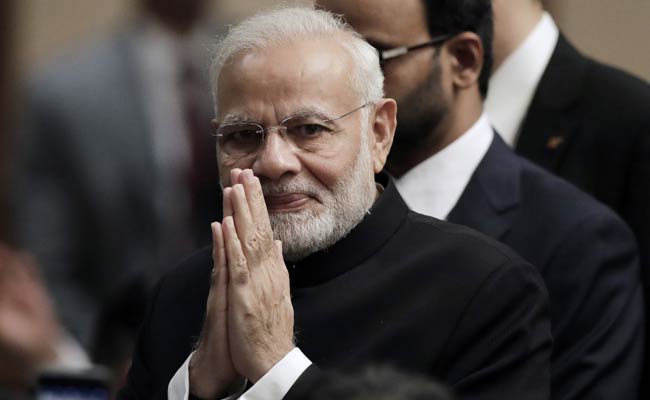
As Prime Minister Narendra Modi's government prepares to present its last spending plan on February 1 before general election, the main question on people's minds is: will it be a lame duck budget or a populist one?
Convention demands that the outgoing administration present an interim budget to secure parliament's approval for expenses for a part of the financial year starting April until a new government is in place. The rules also allow for the spending plan to be passed by parliament's lower house without any discussion.
Watchers are waiting to see if PM Modi will announce tax concessions to win favor with voters after defeats for his Bharatiya Janata Party in key state polls last month.
Given those risks, here's a look at how the last three interim budgets panned out:
Interim Budget, Fiscal Year 2015
Then Finance Minister Palaniappan Chidambaram didn't give in to the temptation of increasing spending to boost economic growth before elections, and stuck to the budget deficit goal. He, however, slashed excise levies on capital goods, the automobile industry and some other items.
Interim Budget, Fiscal Year 2010
Finance Minister Pranab Mukherjee refrained from making any major announcements, saying "constitutional propriety requires that new government formulates the tax and expenditure policies for 2009-10."But that was only after the government had already announced a nationwide farm loan waiver, which eventually helped the Indian National Congress party-led alliance in elections that followed, giving it a successive second term in office.
Interim Budget, Fiscal Year 2005
Finance Minister Jaswant Singh widened coverage of some of the existing programs to take the benefits to more people. While he didn't introduce any new tax concessions, he did extend the scope of some of the existing ones and simplified tax procedures. One measure that directly benefited the rising middle-class was an increase in free baggage allowance at airports and a reduction in customs duty on that.

-
AI Bias In Investing Cannot Be Eliminated, But It Can Be Governed

Framing is a particularly important example as identical financial information presented in terms of gains rather than losses can lead an LLM to reach a different assessment.
-
Joining The Dots | Dark Skies, Steady Diya: Why Hope Holds This Diwali
With war, a weak rupee and foreign outflows weighing on sentiment, policymakers at the NDTV World Summit and market veterans at NDTV Profit Ignite: Diwali Edition offered the same advice: stay invested and filter out the noise.
-
The Curious Case of Equitas Small Finance Bank And A CEO Who Quit For Stock
PN Vasudevan believes persistent investor concerns over a perceived conflict of interest had become a governance overhang on Equitas Small Finance Bank's stock, even as the lender improved profitability and asset quality.
-
Talking Points This Week: AI Cash Burn, A Tiger Comeback And An India That Still Finds Its Own Path
India is not immune to higher oil or tighter global liquidity, yet its earnings base is broader, its domestic policy levers are still available.
-
Foreign Investors Own Half Of HDFC Bank and ICICI Bank. An LTCG Cut Could Matter Most Here
Foreign portfolio investors have US$115 billion parked in HDFC Bank, ICICI Bank. If the government cuts long-term capital gains tax, Jefferies says returning foreign money could land here first.
-
'Never Seen This Level Of Negativity': Sandeep Tandon Says The Next Rally May Be Closer Than You Think
Veteran investor Sandeep Tandon says foreign selling is easing, large-caps are due a comeback and mid-caps are crowded, while he turns positive on gold, power and pharma this Diwali.
-
Indians Stay With Family, Not In Hotels | The Reason Why
India still lacks enough clean, reliable and affordable hotels for budget-conscious travellers.
-
The Economic Imperative: Analysing The Material Driving Force Behind India-Canada Strategic Reset
This economic complementarity is further reinforced by deep institutional investment ties and talent mobility, which form the bedrock of the bilateral framework.
-
Medicine Pricing: Where Must Profit Stop?
India must confront excessive margins, hidden incentives and regulatory gaps that threaten the integrity of medicine.
-
Why Amazon And Flipkart Are Struggling To Beat Meesho In India's Smaller Cities
With 274 million users and lowest-cost logistics, Meesho is defending its value commerce crown against giants like Amazon and Flipkart.










