Budget 2019: Here Are Some Of The Important Terms You Should Know
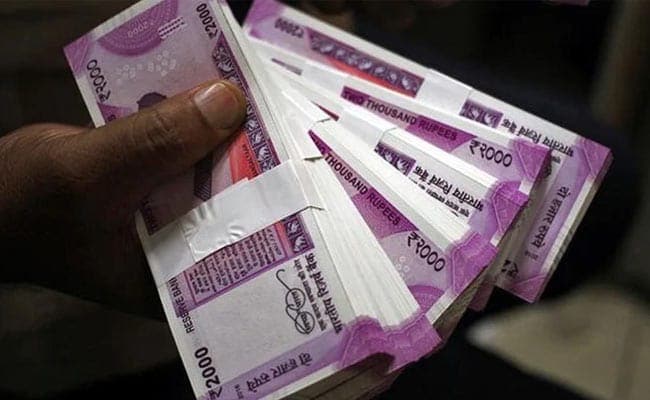
Union Budget is the most comprehensive report of the government's finances in which revenues from all sources and outlays for all activities are consolidated. The interim budget is scheduled to be presented on February 1, 2019, by the government in the Parliament. Interim budget contains key details such as where money comes from and where it is spent, as well as projections of growth and fiscal position. Ahead of the presentation of Union Budget in Parliament, the Ministry of Finance has used social media platforms to explain some of the key terms related to the key event.
Here are some of the important Budget terms explained by the ministry:
Excess Grants: If the total expenditure under a grant exceeds the provision allowed through its orginal grant and supplementary grant, then, the excess requires regularization by obtaining the excess grant from the Parliament under Article 115 of the Constitution of India. It will have to go through the whole process as in the case of annual budget i.e. through presentation of Demands for Grants and passing of Appropriation Bills.
What happens when the total expenditure under a Grant is in excess of what was originally sanctioned by the Parliament?
January 23, 2019
Do you know how is it funded?#Budget2019 pic.twitter.com/SaKCiZnxvtFinance Bill: The bill produced immediately after the presentation of the Union Budget detailing the imposition, abolition, alteration or regulation of taxes proposed in the Budget.
Inflation: A sustained increase in the general level is known as inflation. The inflation rate is the percentage rate of change in the price level.
Capital Budget: The capital budget consists of capital receipts and payments. It includes investments in shares, loans and advances granted by the central government to state governments, government companies, corporations and other parties.
Vote on account: The Vote on Account is a grant made in advance by the parliament, in respect of the estimated expenditure for a part of new financial year, pending the completion of procedure relating to the voting on the Demand for Grants and the passing of the Appropriation Act.
Direct and Indirect Taxes: Direct taxes are the one that fall directly on individuals and corporations. For example, income tax, corporate tax etc. Indirect taxes are imposed on goods and services. They are paid by consumers when they buy goods and services. These include excise duty, customs duty etc.
Tax structure in India is divided mainly into Direct & Indirect Taxes. In the last 4 years, the present Government has undertaken multiple Tax Policy & Process Simplification Reforms to have greater predictability, transparency, fairness & automation among others. #Budget2019 pic.twitter.com/OT06OsPwfL
January 17, 2019Revenue Budget: Revenue Budget consists of revenue receipts of the government and its expenditure. Revenue receipts are divided into tax and non-tax revenue. Tax revenues constitute taxes like income tax, corporate tax, excise, customs, service and other duties that the government levies. The non-tax revenue sources include interest on loans, dividends on investments.
The Union Budget comprises of the detailed Statement by the Government regarding its Estimated Expenditure and Receipts for the next Financial Year. Today let us see what a ‘Budget Estimate' is.#Budget2019 pic.twitter.com/lVTbWDUpki
January 24, 2019Budget estimates: The amount of money allocated in the Budget to any ministry or scheme for any financial year.
Outcome Budget: From the fiscal year 2006-07, every Ministry presents a preliminary outcome budget to the ministry of finance, which is responsible for compiling them. The outcome budget is a progress card on what various Ministries and Departments have done with the outlays in the previous annual budget. It measures the development outcomes of all government programs and whether the money has been spent for the purpose it was sanctioned including the outcome of the fund usage.

-
Getting To Work Costs Women More | The Reason Why

It is not just about women paying more than men. It is about women paying much more in cities than in villages.
-
AI Bias In Investing Cannot Be Eliminated, But It Can Be Governed
Framing is a particularly important example as identical financial information presented in terms of gains rather than losses can lead an LLM to reach a different assessment.
-
Joining The Dots | Dark Skies, Steady Diya: Why Hope Holds This Diwali
With war, a weak rupee and foreign outflows weighing on sentiment, policymakers at the NDTV World Summit and market veterans at NDTV Profit Ignite: Diwali Edition offered the same advice: stay invested and filter out the noise.
-
The Curious Case of Equitas Small Finance Bank And A CEO Who Quit For Stock
PN Vasudevan believes persistent investor concerns over a perceived conflict of interest had become a governance overhang on Equitas Small Finance Bank's stock, even as the lender improved profitability and asset quality.
-
Talking Points This Week: AI Cash Burn, A Tiger Comeback And An India That Still Finds Its Own Path
India is not immune to higher oil or tighter global liquidity, yet its earnings base is broader, its domestic policy levers are still available.
-
Foreign Investors Own Half Of HDFC Bank and ICICI Bank. An LTCG Cut Could Matter Most Here
Foreign portfolio investors have US$115 billion parked in HDFC Bank, ICICI Bank. If the government cuts long-term capital gains tax, Jefferies says returning foreign money could land here first.
-
'Never Seen This Level Of Negativity': Sandeep Tandon Says The Next Rally May Be Closer Than You Think
Veteran investor Sandeep Tandon says foreign selling is easing, large-caps are due a comeback and mid-caps are crowded, while he turns positive on gold, power and pharma this Diwali.
-
Indians Stay With Family, Not In Hotels | The Reason Why
India still lacks enough clean, reliable and affordable hotels for budget-conscious travellers.
-
The Economic Imperative: Analysing The Material Driving Force Behind India-Canada Strategic Reset
This economic complementarity is further reinforced by deep institutional investment ties and talent mobility, which form the bedrock of the bilateral framework.
-
Medicine Pricing: Where Must Profit Stop?
India must confront excessive margins, hidden incentives and regulatory gaps that threaten the integrity of medicine.










