Unichem’s Shareholders Will Be Rewarded Adequately, Says Chairman And MD
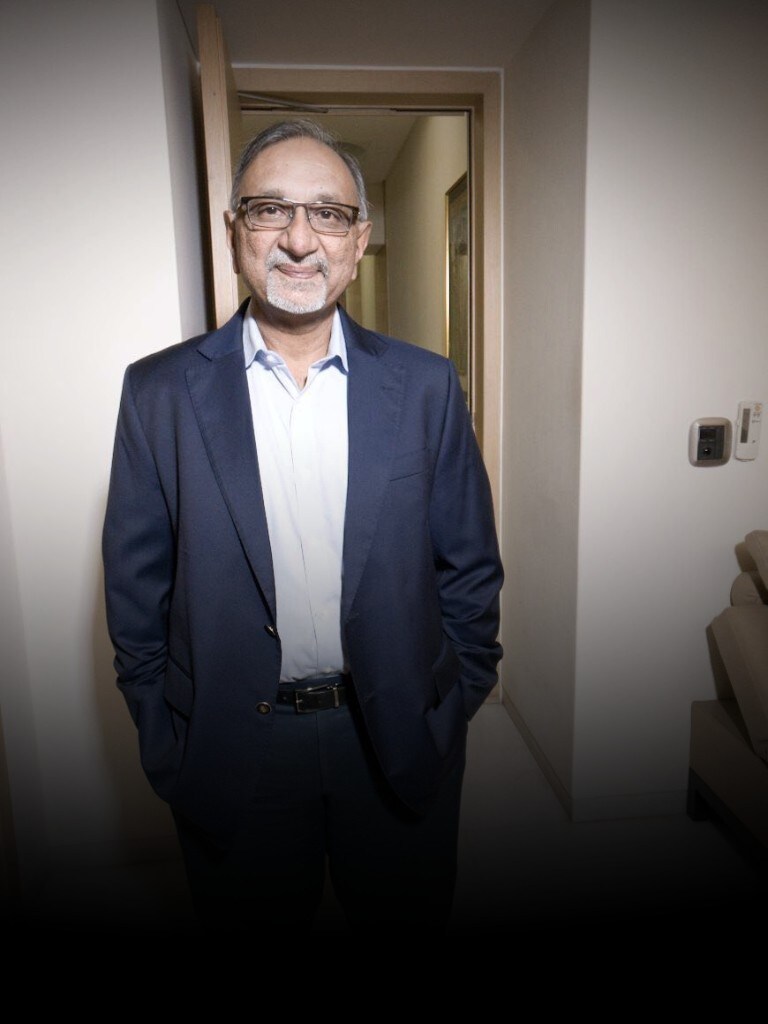
Unichem Laboratories Ltd.'s shareholders will be rewarded for being patient with the company, the drugmaker's chairman and managing director Prakash Mody told BloombergQuint.
While the board will take a final call on the quantum of the dividend pay out, Mody said nearly 50 percent of the Rs 3,600 crore Unichem Laboratories receives from Torrent Pharmaceuticals Ltd. will be passed on to the shareholders via dividend payout or share buybacks. The remaining amount will be used to ramp up Unichem's international business. The company entered into an agreement with Torrent Pharmaceuticals to sell its India and Nepal business on Friday.
Here is an edited transcript of Prakash Mody's interview to BloombergQuint.
Are you relieved now as the deal is finally over?
I think all of us are banyaas. The deal is not over till the money comes into the bank. The work actually starts now, because, after the binding agreement is signed, we have to make sure that the deal gets closed and we have set an ambitious target of completing it by December 2017.
What are the formalities left before you get the money?
Basically, they (Torrent Pharma) has said we would like to check and understand the business. It is going to be procedural.
Are you confident that the deal will be closed by end of this year?
That's the intention on both sides. But as you know, there is always an issue in terms of anything can happen. The good part about this is that there are no regulatory approvals involved.
Why sell the India and Nepal business? What was the reason?
Even today, I always say that India is a growing pharmaceutical market. We were very well positioned as far this was concerned. The question is basically, after our brand had reached a particular level, I felt that they have to be managed with a different mindset and skills to take them to a different orbit. There is a lot of competition in the industry and the challenges are becoming interesting for larger players. The plan is to take the business to the next level with out exiting in totality. We can now play a meaningful game on the international space.
There were a lot of speculations on why you are selling. The first one is you are selling it because there were succession issues. What do you have to say about that?
Not really. Because the point is that I think that the mindset of only promoters running businesses is not true. Although most pharmaceutical companies are run by promoters, I feel that there is scope for professional managers to take over. We at Unichem always had professional management. I think that I have completed one aspect of the opportunity and I still have another aspect, which I am going to spearhead and make it benefit for the organisation and for the shareholders.
Is your successor in place for international operations?
Of course. We have a lot of professional managers and we are grooming quite a few people. As territorial expansion takes place, people's experience is getting added to it. Our biggest vertical is research and development. At our centre of excellence in Goa, we have more than 400 scientists. From generics, we have reached to a point where we are now intellectual property. There is a lot of intellectual values which is being added, which is definitely going to benefit the organisation.
Will your family members be part of the international business or will it be just you and the professional team?
We have already got a part of international business which we call the pharma emerging markets, under my daughter. But there is no guarantee that she will takeover the whole business. The skill set required may be different. And secondly, the mindset in our days was that, my father did this business and I am expected to do the same. Today, the youngsters have other opportunities to do what they want and it is not fair to expect them to continue the chain.
The second speculation or the word in the market was that you are selling this on account of there being a significant slowdown in molecules business. The government policies that have now come out are also a deterrent. What's your take on this?
Ever since I have been in this business, the pharma industry has always been subjected to price control. If you remember, since 1963, there was a price control in various forms. The classical example is three or four years ago, our flagship brand Losar came under the national list of essential medicines. That was the time we got affected both volume wise and contribution wise. But today, we have bounced back.
Therefore, today, Losar is a very important part of domestic portfolio, which I am glad that Torrent Pharma is going to inherit. So, there is no question of distress here. Everything is planned and strategised in terms of what I think is best for the future. First, we need to think of how to reward our shareholders and then taking it to the next level.
What are shareholders going to get?
This is a slump sale, you have to pay the tax and the company has the proceeds. Those proceeds will get divided into two things. One is to develop the business, which I think is a great opportunity and whatever is not required will be returned to shareholders.
How much? You are getting 3,600 crore. What are the calculations at the back of your mind? Because without that you wouldn't get into this deal. You will have to pay tax.
I can tell you that more than 50 percent of what we are able to retain will be given back to the shareholders.
But what will the shareholders get?
Once this deal is done and dusted, by the next quarter, we have aboard meeting, the board must give its go ahead. Once the board finalizes, we will make the information public.
But will shareholders surely get a dividend?
They have to. Not only a dividend, we will look at other ways of returning, including buybacks.
How much, approximately, would you look at? Because you are saying that you are bullish on the international operations. They would be a significant amount of capex required. Because, as of now, in the international market, Unichem's footprint is not very big compared to the giants. Obviously, you will need to scale-up significantly.
Our plants have adequate capacity and the regulatory approvals - all of them. Whether it is our formulations unit or API units. What is required is to increase the speed of filings. And those are revenue expenditures, huge expenditures. Because, today, we have nearly 52 ANDAs filed and we intend to take it to about 100 in the next three years. But, at the same time, with those investments, I still feel that a good portion will be there to return back to the shareholders.
Is there any contingent liability or an escrow account you have to create before this deal is fully executed?
No. That is the special part of this. There is no escrow account. There is total trust and understanding between the two companies. Obviously, there will be a CP - condition precedents, which is part of any deal. We have to fulfill the obligations so that the entire proceeds come to us.
What about retention in terms of employee bonus? Will that be a significant part of it?
The very good thing about this deal is all our marketing employees are being re-employed by Torrent Pharma. So there is not a single layoff.
You are getting these funds, how will the employees be rewarded? In most slump sales, there is an employee bonus that happens. So, in a Rs 3,600 crore deal, there will be a substantial portion which the employees will get. Is that happening or not?
Those are issues which we need to sort out. Which we shall do so and come back to it at a later time.
How many employees did Unichem have before this deal? What will be the numbers post the deal?
We had more than 5,000 employees before this deal. Today, what would remain with us is around 1,500.
In terms of the book value, you are selling a plant?
Only the domestic plant.
How much does the book value comes approximately?
I have no idea about the figures. Please meet my CFO.
Why Torrent Pharma?
Torrent is hungry for acquisitions. They believe that they need to consolidate to get into the top numbers in the Indian pharma space. Two things: one, I think, they have the bandwidth to nurture the brands and take them to the next level. Secondly, they also have much lesser overlap between the brands they are acquiring and with their own brands. And, most importantly, the value and the ethics of the promoters.
When did you start for looking to sell your company?
We have never looked to sell our company. Opportunities have come to us. We have just evaluated and we felt that it was the right time to go ahead.
So Torrent Pharma approached you?
Let's not go into who approached whom. The point is that it is not a one-off thing. There were opportunities where every different type of investor has approached us and we thought this was the right fit.
Are you happy with Rs 3,600 crore? Because the street might believe that a multi national company would have offered you much more.
When you want to sell something, any price you are getting less, the buyer always feels that he is paying more. As long as two of us are happy with the deal, how does it matter who got what.
Were there other companies in the fray?
I will not get into those details. Today, this deal is what we are focussed on. This is the deal I hope will get consummated.
What is the broad plan now? What will happen with the international business? How much R&D will happen there? According to your press release, majority of the divisions want to grow significantly and you will put in a lot of money towards R&D. What is the plan now?
Certainly there is a setup on the R&D plan and they are being identified, whether it is complex generics or biological entity, we would be making sure that we would step up R&D spend and we will benefit from that.
Is there a potential that you would put your international business on sale?
If I wanted to sell it, I would have sold the entire thing, right? I feel there is a lot of value to be unlocked in the international business. That's why I am prepared to take the situation where I have the confidence that I can build that up. That's why I am not talking of doing anything right now. Let me build some value and then we will see.
Can you give us more details of the international business? In terms of financials, we know that the revenue is almost 40 percent of the total and the operating margins are much lower than the domestic business. Is it profitable?
The operating margins are lower because there are lot of costs which are absorbed. Now, we have started getting a break-even situation in our subsidiaries. Some of those subsidiaries are purely for having registrations in those countries, what is called as virtual subsidiaries. America is doing well for us and is doing profitable year after year. Europe still has few issues. Brazil will be turning around this year. We are very clear that we are not having any sort of loss making situations.
Is the international subsidiary loss making or is it profitable? Financial health of the international business?
There is no one subsidiary. International business is on gestation and ramp-up mode. May be, in the next two years, in order to support our international business, we would also be selling a lot of APIs in the market, which we have not done until now. Until now, we were supporting our captive part. Those plants are also going to take care of the API needs. We also have a lot of contract research opportunities. We have contract manufacturing. So, it's not just one business we are talking about. Certainly, we feel it is going to be profitable.
R&D makes a significant part of your cost. Now since the businesses will be split, R&D will also be split. What happens with R&D now? What kind of cost ramp up are you seeing?
Frankly speaking, there has not been much investment for R&D in the local market. So there will be renewed focus on the R&D effort.
How much of a capex will you employ for international business?
Those plans are being worked out. If tomorrow, we get an opportunity to pick up something abroad, which is going to add to our strength, we may look at that also. You can't pin me down for a number right now. After taking care of R&D and capex needs, whatever is retained will be returned to the shareholders.
There have been numerous occasions when the slump sales have happened. The expenses many times were not clear and the shareholders were worried.
There are no such plans. We are are not going to get into other businesses.
Are you assuring your shareholders that they are going to get a substantial amount of dividend? Be it dividend or buyback, will they be rewarded?
More than 50 percent by way of benefit to the shareholders.

-
One Battle After Another: India's Corporate Dynasties Battle For Control

2026 could go down as Corporate India's year of succession wars, governance battles and family fault lines.
-
Rs 50-Lakh Gold In Bank Locker, Rs 3 Lakh Of Protection: The Gap Most Families Don't Know About
The RBI ties a bank's liability to the annual locker rent and families who want to insure their jewellery face a separate question about how to prove what was inside.
-
The More Food Turns Into Fuel, The Harder It Is To Read Agricultural Markets | The Reason Why
A policy designed to reduce dependence on imported fuel can create new pressures elsewhere in the food economy.
-
Your iPhone Costs 12 Grams Of Gold, A Car About 100. What Does Your Life Weigh?
Measured in rupees, almost everything looks more expensive than it did a generation ago. Measured in grams of gold, a lot of it has become cheaper.
-
Gold Is Rs 22,000 Cheaper Than A Month Ago. Should You Buy Amid The Wedding Season?
Gold's potential slide to $3,500 could save around Rs 4,700 per 10 grams, but a soft inflation print could just as easily push prices back up. One way to split the risk is to buy in parts, some now and the rest after the Fed's Dec. 9 decision.
-
AI Agents Are Gaining Power. Who Governs Them?
Artificial intelligence agents promise to transform productivity by moving machines from assisting decisions to executing them. But as organisations delegate greater authority to these AI-agents, they must first establish who controls that authority and who remains accountable when things go wrong.
-
Why Swapping Your Old Gold Can Trigger A Rs 5 Lakh Tax Bill, And How You Can Avoid It Legally
Swapping old gold for new is taxed as a sale and a fresh purchase. Getting your own gold remade can cut most of that bill, though it has its own costs.
-
The AI Trade is Done. The Real Opportunity for Investors Starts in 2027 | Unhedged Position
As pureplay AI stocks plunge and circular, capex-led financing unwinds, 2027 is set to be a year of reckoning for AI companies. Yet the bust clears the way for a better opportunity for investors in 2027 -- shifting the spotlight from AI builders to the companies using AI.
-
Leadership As Mission: Why The Age Of AI Demands More Human Leadership
Debjani Ghosh examines how AI is changing leadership, arguing that its success must be measured by its impact on people and the accountability of those guiding its use.
-
We May Need Another Tukaram Mundhe To Fight Air Pollution | The Reason Why
Developers may install basic measures such as sprinklers and green nets, resume work, and continue violating rules when this equipment stops working.









