Unease grows among US doctors over Indian medicines
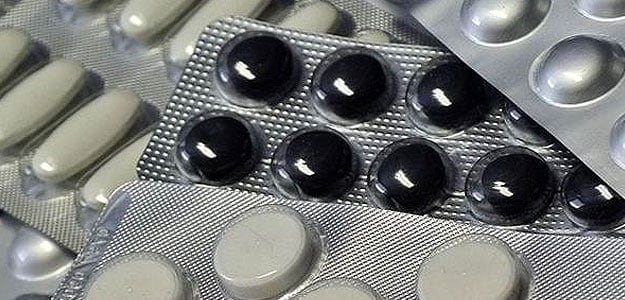
Some U.S. doctors are becoming concerned about the quality of generic drugs supplied by Indian manufacturers following a flurry of recalls and import bans by the Food and Drug Administration.
India supplies about 40 per cent of generic and over-the-counter drugs used in the United States, making it the second-biggest supplier after Canada.
In recent months, the FDA, citing quality control problems ranging from data manipulation to sanitation, has banned the importation of products from Ranbaxy Laboratories Ltd , Wockhardt Ltd and, most recently, Sun Pharmaceutical Industries Ltd .
"I'm just beginning to realize the gravity of the problem," said Dr. Steven Nissen, head of cardiology at the Cleveland Clinic. "It's terrible and it is starting to get a lot of traction among physicians."
Indian drugmakers are by no means the only companies to recall products or be warned by the FDA about manufacturing problems. For instance, quality control failures at Johnson & Johnson forced the company to recall dozens of products over the past five years, ranging from artificial hips to children's Tylenol.
India's drugmakers, a $14 billion, or Rs 85,400 crore industry, reject any criticism that their products are inferior to drugs made in other countries.
"We have heard doctors making generalized statements, without being specific on any product or company," said D.G. Shah, Secretary General of the Indian Pharmaceutical Alliance, a trade group representing large Indian drugmakers. "This is a deliberate and serious campaign to malign the Indian generic industry."
Generic drugs account for nearly 85 per cent of medicines prescribed in the United States and the government is relying on them to help rein in healthcare costs.
"We are losing control over what people are swallowing," said Dr. Harry Lever, a cardiologist at the Cleveland Clinic who is trying raise awareness of the matter among U.S. lawmakers. "Now, when a patient comes in who is not doing well, the first thing I do is look at their drugs and find out who makes it."
Increasingly, Lever said, he is recommending patients seek out generic drugs from specific manufacturers outside India.
"I'm tending to stay away from India," he said. "There's something wrong. Too many things are happening."
Indian physicians do not share the concerns.
"Our drugs are being sold in many countries and being accepted, so we have no issues," said Narendra Saini, Secretary General of the Indian Medical Association, a voluntary body of 215,000 doctors. "How do I know that Western drugs are better than our drugs?"
A 2012 report by the Indian parliament alleged collusion between pharmaceutical firms and officials at the Central Drugs Standard Control Organization (CDSCO), the country's drugs regulator, and described an agency that was both understaffed and underqualified.
Saini said physicians trust that the CDSCO is taking care of the quality and the standard of the drugs made in India.
Representatives of Ranbaxy, Sun and Wockhardt were not immediately available to comment.
FDA Commissioner Margaret Hamburg, who recently returned from her first official visit to India, is urging greater collaboration between the two countries. During her visit, the FDA and India's Ministry of Health and Family Welfare signed a statement of intent to cooperate to prevent the distribution of unsafe drugs.
Shortly afterwards, India's drug controller general, G.N. Singh, said in an interview that the country will follow its own quality standards.
"The FDA may regulate its country, but it can't regulate India on how India has to behave or how to deliver," he said.
The array of recalls and warning letters can be dizzying.
Ranbaxy recently recalled more than 64,000 bottles of a generic cholesterol-lowering drug after doses were mixed up in a bottle, and Sun began recalling 2,528 bottles of a diabetes drug after a bottle was found to contain an epilepsy treatment.
Those mix-ups follow a recall in January by Dr. Reddy's Laboratories Ltd of more than 58,000 bottles of its heartburn drug lansoprazole due to a microbial contamination.
Copyright: Thomson Reuters 2014

-
Gold Is Rs 22,000 Cheaper Than A Month Ago. Should You Buy Amid The Wedding Season?

Gold's potential slide to $3,500 could save around Rs 4,700 per 10 grams, but a soft inflation print could just as easily push prices back up. One way to split the risk is to buy in parts, some now and the rest after the Fed's Dec. 9 decision.
-
AI Agents Are Gaining Power. Who Governs Them?
Artificial intelligence agents promise to transform productivity by moving machines from assisting decisions to executing them. But as organisations delegate greater authority to these AI-agents, they must first establish who controls that authority and who remains accountable when things go wrong.
-
Why Swapping Your Old Gold Can Trigger A Rs 5 Lakh Tax Bill, And How You Can Avoid It Legally
Swapping old gold for new is taxed as a sale and a fresh purchase. Getting your own gold remade can cut most of that bill, though it has its own costs.
-
The AI Trade is Done. The Real Opportunity for Investors Starts in 2027 | Unhedged Position
As pureplay AI stocks plunge and circular, capex-led financing unwinds, 2027 is set to be a year of reckoning for AI companies. Yet the bust clears the way for a better opportunity for investors in 2027 -- shifting the spotlight from AI builders to the companies using AI.
-
Leadership As Mission: Why The Age Of AI Demands More Human Leadership
Debjani Ghosh examines how AI is changing leadership, arguing that its success must be measured by its impact on people and the accountability of those guiding its use.
-
We May Need Another Tukaram Mundhe To Fight Air Pollution | The Reason Why
Developers may install basic measures such as sprinklers and green nets, resume work, and continue violating rules when this equipment stops working.
-
Extracting Value From Battery Scrap Could Be Challenging For India | The Reason Why
A discarded lithium-ion battery still contains valuable materials such as lithium, nickel and cobalt. These can be recovered and reused. When such batteries are crushed and shredded, they produce a dark powder called black mass.
-
One El Nino, India Can Handle. Two Could Break The Granary
India's grain stocks can absorb one bad year, but a second El Nino could drain the buffer in two to three years, economists say.
-
India's Troika Of Good Luck | Joining The Dots
As Jensen Huang's exit drags Nvidia down, a cooling AI trade and resilient earnings have revived investor interest in India. A likely RBI rate hike looms.
-
Talking Points This Week: Leadership Shock At Nvidia, Earnings Strength, And The Fog Over Hormuz
The Anthropic IPO pricing and first trading day, Nvidia's upcoming earnings, and any fresh signals from Iran will set the tone for the following week.









