UltraTech Cement May Part Fund Its Rs 32,400 Crore Capex With Debt
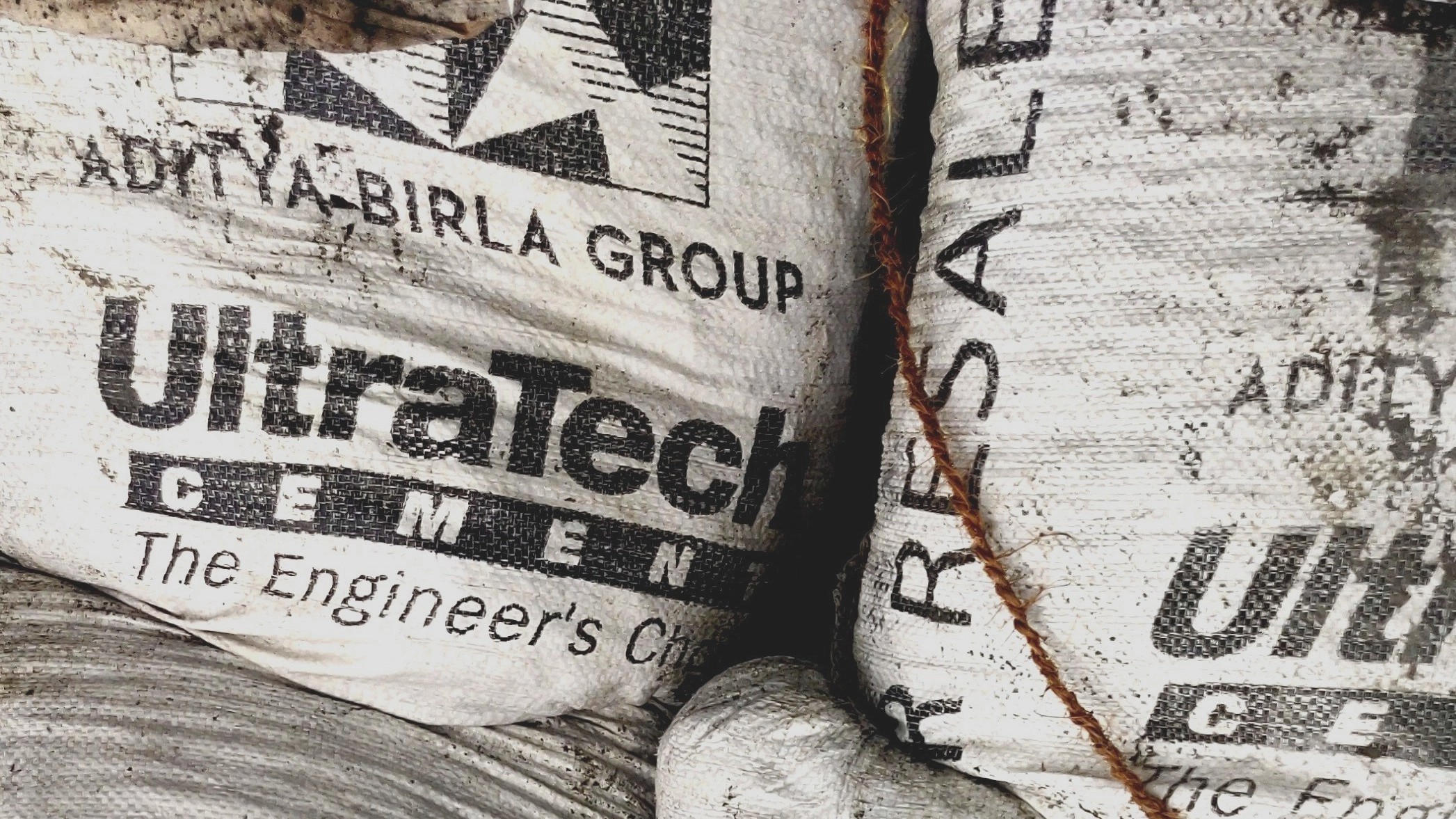
UltraTech Cement Ltd., over the next three years, will invest Rs 32,400 crore in capital expenditure or capex to increase capacity to 200 million tonne or MTPA per year by 2028.
An analysis of the market dynamics and financial performance of the Aditya Birla-owned cement manufacturer shows the capex could be debt-led.
First, lets look at the company's current capacity and expansion plans.
Current Capacity
UltraTech Cement recently commissioned two greenfield capacities: a 2.7 MTPA cement grinding unit at Karur in Tamil Nadu and a 2.7 MTPA integrated cement plant at Kukurdih in Chhattisgarh.
The greenfield capacities were part of the 22.6 MTPA capacity expansion announced in June 2022, according to the company.
The new additions bring the total domestic grey cement manufacturing capacity to 146.2 MTPA. When combined with its existing capacity of 5.4 MTPA in the UAE, UltraTech Cement's total capacity now stands at 151.6 MTPA , 14% higher than its capacity of 133 MTPA as of December 2023.
Capacity Expansion
The company targets to increase its capacity to 157.4 MTPA by fiscal 2025 and 200 MTPA by 2028.
Over the last 12 months, the cement manufacturer has expanded its capacity 18.7 MTPA and has ongoing expansion of 35.5 MTPA actively being implemented across 16 locations.
With the process of closing its proposed acquisition of Kesoram Cement, UltraTech's grey cement capacity is set to expand to 198.2 MTPA.
How Can The Company Fund Its Capex?
To fund this aggressive capacity expansion plan, the company plans to invest Rs 32,400 towards maintenance and capacity expansion.
UltraTech Cement has cash and cash equivalents to the tune of Rs 4,196 crore as of last 12 months, according to Bloomberg data. As of FY23, cash and cash equivalents were at Rs 6,986 crore, the data showed.
The cement manufacturer reports its retained earnings on an annual basis; with retained earnings at Rs 9,046.3 crore as of FY23.
Cash Flows
The company's free cash flow in the last two years has decreased significantly from its FY21 level, operating in the Rs 2,000-3,000 crore range.
The company's cash flow from operations have been in the range of Rs 8,000-8,600 crore, also mirroring the same pattern.
Prabhudas Lilladher expects UltraTech Cement to become a net cash entity by FY26, despite its expansion plans, thanks to its robust operating cash flows. The brokerage projects a net cash position of Rs 700 crore by FY26, considering a Rs 25,000 crore capital expansion spanning FY24–26.
This financial strength bolsters the company's balance sheet for potential inorganic growth opportunities in the future, according to Prabhudas Lilladher.
Additionally, the brokerage anticipates strong free cash flow in the next two to three years, citing expected improvements in pricing and capacity utilisation. UltraTech Cement's capacity utilisation reached 77%, surpassing the FY23 average of 70% in the third quarter ended December 2023.
However, on the pricing front, all average India cement prices have remained flat at Rs 384 per bag as of April 2024, compared to Rs 385 in May 2023, according to Anand Rathi. The sharp rise in prices during August–September 2023 has reversed since, with prices in the last five months consecutively declining.
All India average pricing dropped 9% in the fourth quarter ended March 2024 itself, the brokerage said. This could impact the company's unit realisations due to its pan-India presence.
Debt Profile
Given the limited cash flows and retained earnings, one of the likely options to fund the heavy capex is to take on more debt.
The company has significantly lowered its leverage over the last four years. Total debt as of FY23 stood at Rs 11,058 crore, down 54% from Rs 24,180 crore in FY20.
However, the cement maker said its net debt position has marginally increased as of December 2023 due to an increase in capex cash flow and working capital.

-
One Battle After Another: India's Corporate Dynasties Battle For Control

2026 could go down as Corporate India's year of succession wars, governance battles and family fault lines.
-
Rs 50-Lakh Gold In Bank Locker, Rs 3 Lakh Of Protection: The Gap Most Families Don't Know About
The RBI ties a bank's liability to the annual locker rent and families who want to insure their jewellery face a separate question about how to prove what was inside.
-
The More Food Turns Into Fuel, The Harder It Is To Read Agricultural Markets | The Reason Why
A policy designed to reduce dependence on imported fuel can create new pressures elsewhere in the food economy.
-
Your iPhone Costs 12 Grams Of Gold, A Car About 100. What Does Your Life Weigh?
Measured in rupees, almost everything looks more expensive than it did a generation ago. Measured in grams of gold, a lot of it has become cheaper.
-
Gold Is Rs 22,000 Cheaper Than A Month Ago. Should You Buy Amid The Wedding Season?
Gold's potential slide to $3,500 could save around Rs 4,700 per 10 grams, but a soft inflation print could just as easily push prices back up. One way to split the risk is to buy in parts, some now and the rest after the Fed's Dec. 9 decision.
-
AI Agents Are Gaining Power. Who Governs Them?
Artificial intelligence agents promise to transform productivity by moving machines from assisting decisions to executing them. But as organisations delegate greater authority to these AI-agents, they must first establish who controls that authority and who remains accountable when things go wrong.
-
Why Swapping Your Old Gold Can Trigger A Rs 5 Lakh Tax Bill, And How You Can Avoid It Legally
Swapping old gold for new is taxed as a sale and a fresh purchase. Getting your own gold remade can cut most of that bill, though it has its own costs.
-
The AI Trade is Done. The Real Opportunity for Investors Starts in 2027 | Unhedged Position
As pureplay AI stocks plunge and circular, capex-led financing unwinds, 2027 is set to be a year of reckoning for AI companies. Yet the bust clears the way for a better opportunity for investors in 2027 -- shifting the spotlight from AI builders to the companies using AI.
-
Leadership As Mission: Why The Age Of AI Demands More Human Leadership
Debjani Ghosh examines how AI is changing leadership, arguing that its success must be measured by its impact on people and the accountability of those guiding its use.
-
We May Need Another Tukaram Mundhe To Fight Air Pollution | The Reason Why
Developers may install basic measures such as sprinklers and green nets, resume work, and continue violating rules when this equipment stops working.









