UK Confronts 1970s-Style Problems With Strikes And Inflation

(Bloomberg) -- The UK this week will face up to surging inflation and labor strikes as well as a rising risk of recession in a series of setbacks that have echoes of the 1970s.
Strikes are likely to halt at least half of all trains for three days in the worst disruption to mass transit since Margaret Thatcher was prime minister. The teachers union also is set to ballot its members on a strike, adding to the list of professions considering action.
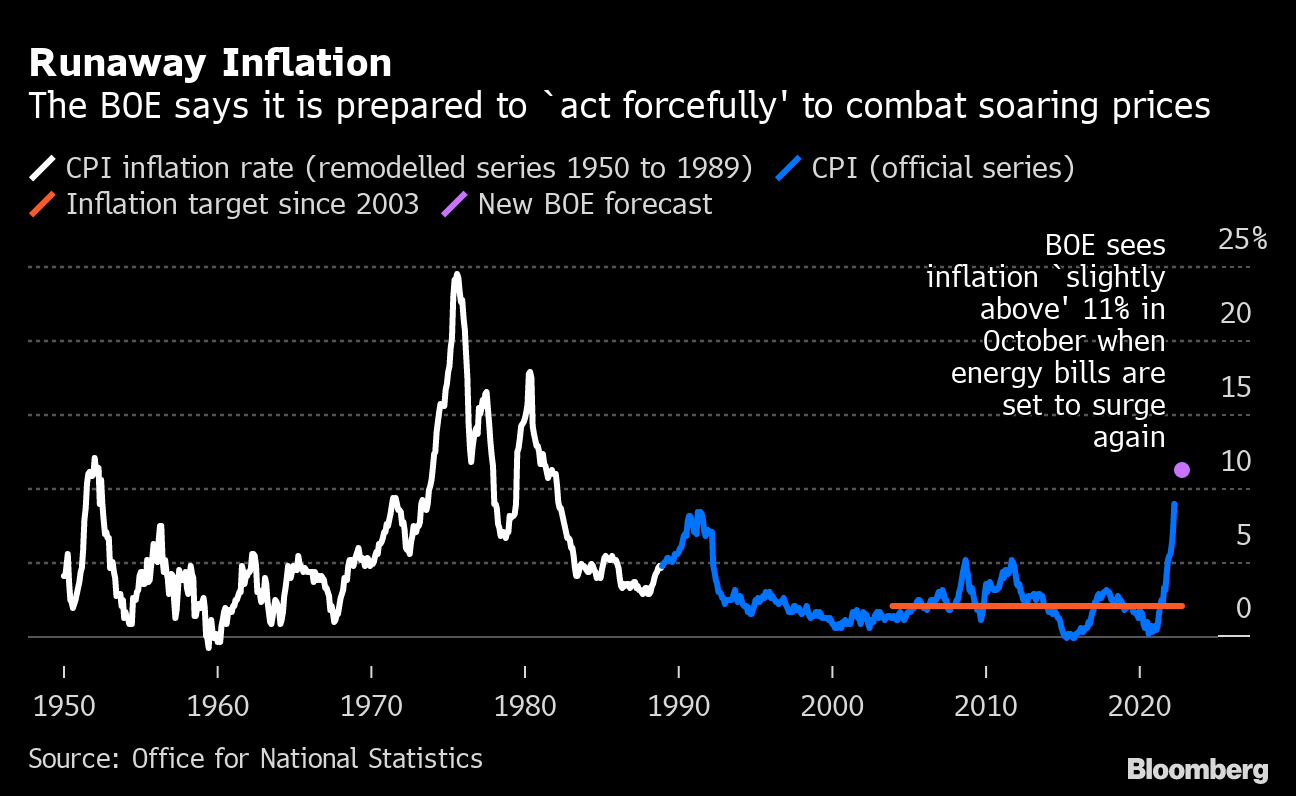
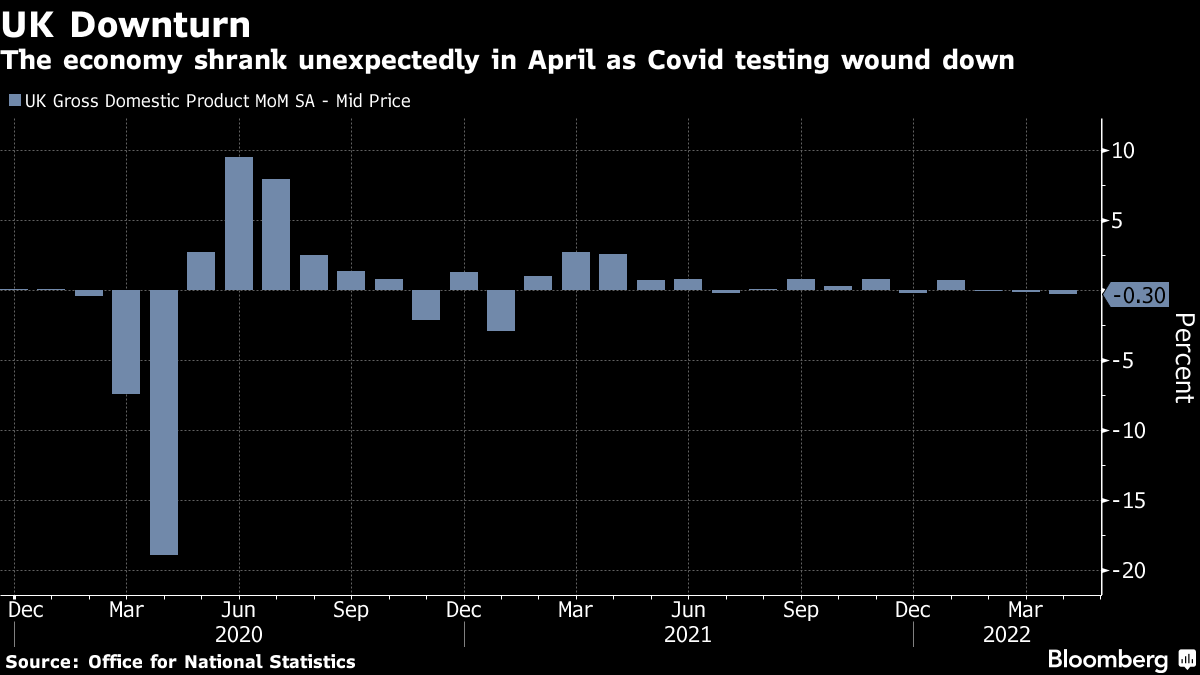
On Wednesday, inflation is set to rocket to a new 40-year high with the cost of goods leaving factories already racing ahead at a double-digit pace. Last week, the government confirmed the economy shrank in the three months through April, the weakest performance since a coronavirus lockdown.
Prime Minister Boris Johnson's government and the Bank of England are confronting the deteriorating outlook by keeping tight control on pay and signaling quicker interest-rate increases. That could tip the economy into a more protracted downturn.
The BOE “may have to force a recession in order to get inflation out of the economy,” Paul Johnson, director of the Institute for Fiscal Studies, said on Times Radio on Sunday.
City of London financiers are worried about a damaging recession, the Financial Times reported, citing its network of 50 senior executives. “It's not pretty,” Amanda Blanc, CEO of the insurer Aviva, told the newspaper. “The risk of a recession looks real . We see a weak outlook for growth. Stagnation is a clear possibility.”
The backdrop increasingly recalls the 1970s, when strikes, inflation and energy shortages put industry on a three-day week. The malaise culminated in a bailout of the public finances by the International Monetary Fund in 1976 and the “winter of discontent” where trash piled up in streets in 1979 shortly before Thatcher took office.
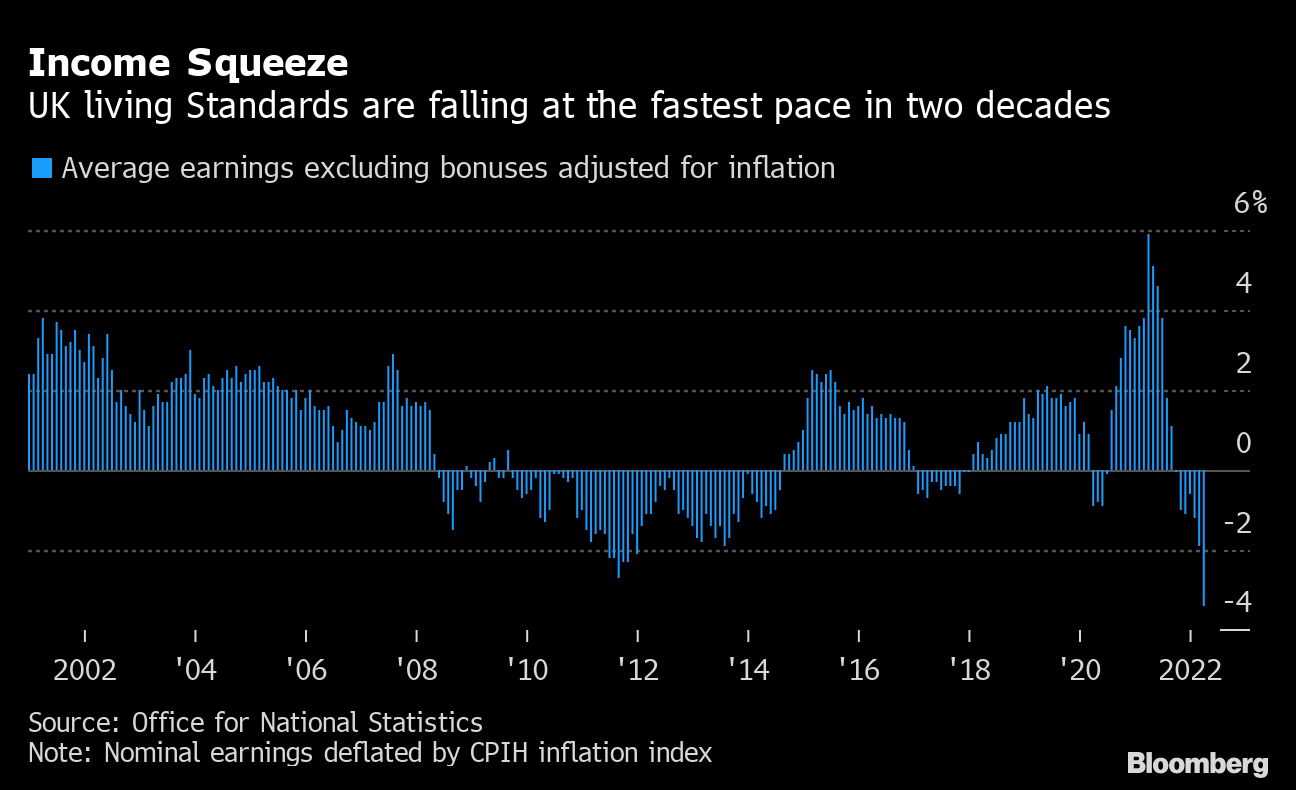
The biggest feature of the current bout of misery is wages growing more slowly than the cost of goods and services across the economy.
That's prompted the biggest fall in real incomes in two decades and reawakened union anger about low pay settlements. The sentiment is widely held across the public services, with junior doctors, postal workers and traffic wardens also considering action.
Mick Lynch, the head of the RMT union coordinating the train strikes, urged broader action across the economy and raised the possibility of the first nationwide strike since 1926.
“I would take a general strike if we could get one,” Lynch told BBC radio on Sunday.
Transport Secretary Grant Shapps rejected comparisons with the 1970s, noting that unemployment is much lower now than it was then.
“What we've got now is an economy which is fortunately with very high levels of employment and very low unemployment,” Shapps said on Sky News.
The opposition Labour Party said Johnson's government is trying to distract voters from its ineptitude in dealing with the problems at hand.
“The government has got to get round the table with the cleaners and the ticket office staff and the station workers to resolve this,” Lisa Nandy, the Labour member of Parliament who speaks on “leveling up” policies, said on Sky News. “The biggest problem that this country has is not militant workers. It's a militant government.”
The Treasury on Monday will announce two new measures aimed at softening the impact of surging prices, which have led to a the biggest drop in real wages in two decades.
It's tightening rules on buy-now-pay-later financing to make loan promotions more transparent. And it's starting an online tool to help workers see the impact of a £6 billion ($7.3 billion) tax cut coming into effect in July.
“This new tool will show hard-working Brits how much more of their pay will be going directly into their pockets,” Chancellor of the Exchequer Rishi Sunak. “The tax cut, combined with £400 off energy bills and direct payments of £1,200 to 8 million families will help shield people from rising prices.”
Overshadowing that aid is the government's increasingly acrimonious dispute with rail unions. Shapps blamed “militant” unions for rebuffing talks and efforts to modernize the rail network.
Lynch said rising inflation means worker pay is falling behind and that most of his members haven't had a raise in at least two years. He's also upset about plans to extend the working week from 35 hours to 40.
“They told our maintenance staff that 3,000 jobs will go,” Lynch said on Sky News. “You have more hours for less money. We've got a real crisis. They are trying to restore profit in a way that makes workers pay.”
Inflation figures on Wednesday are set to underscore the scale of the problem. Economists expect a reading of 9.1% for May, and the BOE says that will accelerate past 11% later this year -- more than five times the 2% target.
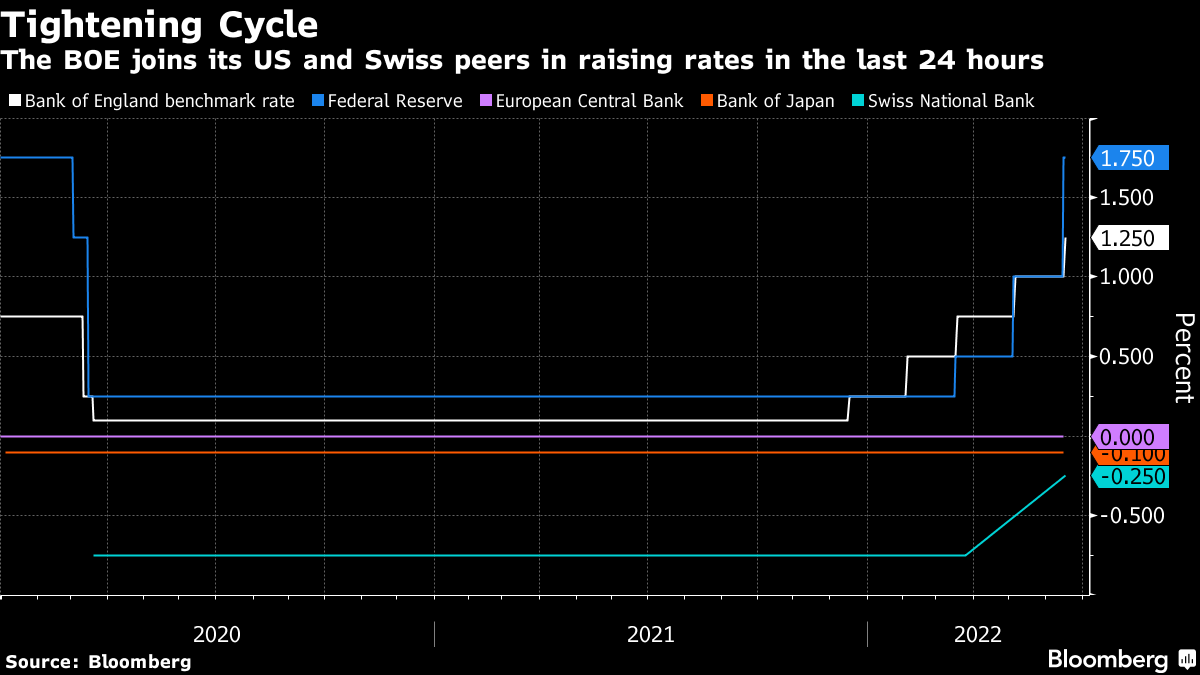
The central bank has responded by lifting interest rates to the highest since 2009. Last week, Chief Economist Huw Pill signaled policy makers could move rates higher in half-point steps if they see signs of price pressures seeping into wages.
The National Education Union is pressing for higher pay and plans to ballot its 460,000 members if the government doesn't come up with a higher offer by Wednesday, the Observer newspaper reported.
“Teachers are suffering, not only from the cost-of-living crisis, which the whole country is grappling with, but 12 years of real terms pay cuts,” Patrick Roach, general secretary of the teaching union NASUWT, said in a statement.
Read more:
- UK Braces for Travel Chaos From Biggest Rail Strike in Decades
- Wounded Johnson Seeks to Direct UK Tory Ire Onto Common Enemies
- Bank of England and Sunak Set to Step Up Fight Against Inflation
- UK Jobs Market May Be Loosening With Surprise Drop in Median Pay
- UK Real Wages Post Their Biggest Drop in Two Decades
- UK Economy Shrinks Unexpectedly as Covid Testing Winds Down
More stories like this are available on bloomberg.com
©2022 Bloomberg L.P.

-
One Battle After Another: India's Corporate Dynasties Battle For Control

2026 could go down as Corporate India's year of succession wars, governance battles and family fault lines.
-
Rs 50-Lakh Gold In Bank Locker, Rs 3 Lakh Of Protection: The Gap Most Families Don't Know About
The RBI ties a bank's liability to the annual locker rent and families who want to insure their jewellery face a separate question about how to prove what was inside.
-
The More Food Turns Into Fuel, The Harder It Is To Read Agricultural Markets | The Reason Why
A policy designed to reduce dependence on imported fuel can create new pressures elsewhere in the food economy.
-
Your iPhone Costs 12 Grams Of Gold, A Car About 100. What Does Your Life Weigh?
Measured in rupees, almost everything looks more expensive than it did a generation ago. Measured in grams of gold, a lot of it has become cheaper.
-
Gold Is Rs 22,000 Cheaper Than A Month Ago. Should You Buy Amid The Wedding Season?
Gold's potential slide to $3,500 could save around Rs 4,700 per 10 grams, but a soft inflation print could just as easily push prices back up. One way to split the risk is to buy in parts, some now and the rest after the Fed's Dec. 9 decision.
-
AI Agents Are Gaining Power. Who Governs Them?
Artificial intelligence agents promise to transform productivity by moving machines from assisting decisions to executing them. But as organisations delegate greater authority to these AI-agents, they must first establish who controls that authority and who remains accountable when things go wrong.
-
Why Swapping Your Old Gold Can Trigger A Rs 5 Lakh Tax Bill, And How You Can Avoid It Legally
Swapping old gold for new is taxed as a sale and a fresh purchase. Getting your own gold remade can cut most of that bill, though it has its own costs.
-
The AI Trade is Done. The Real Opportunity for Investors Starts in 2027 | Unhedged Position
As pureplay AI stocks plunge and circular, capex-led financing unwinds, 2027 is set to be a year of reckoning for AI companies. Yet the bust clears the way for a better opportunity for investors in 2027 -- shifting the spotlight from AI builders to the companies using AI.
-
Leadership As Mission: Why The Age Of AI Demands More Human Leadership
Debjani Ghosh examines how AI is changing leadership, arguing that its success must be measured by its impact on people and the accountability of those guiding its use.
-
We May Need Another Tukaram Mundhe To Fight Air Pollution | The Reason Why
Developers may install basic measures such as sprinklers and green nets, resume work, and continue violating rules when this equipment stops working.









