Uganda Hikes Rates First Time Since 2018 To Tame Inflation

(Bloomberg) -- Uganda increased interest rates for the first time since October 2018 to counter accelerating inflation and support the weakening shilling.
The monetary policy committee raised the benchmark rate to 7.5% from 6.5%, Deputy Governor Michael Atingi-Ego told reporters Thursday.
“Inflation is increasing rapidly and is spreading broadly across the basket of consumer goods and services,” Atingi-Ego said. “The BoU will continue to raise the CBR until inflation is firmly contained around the medium-term target.”
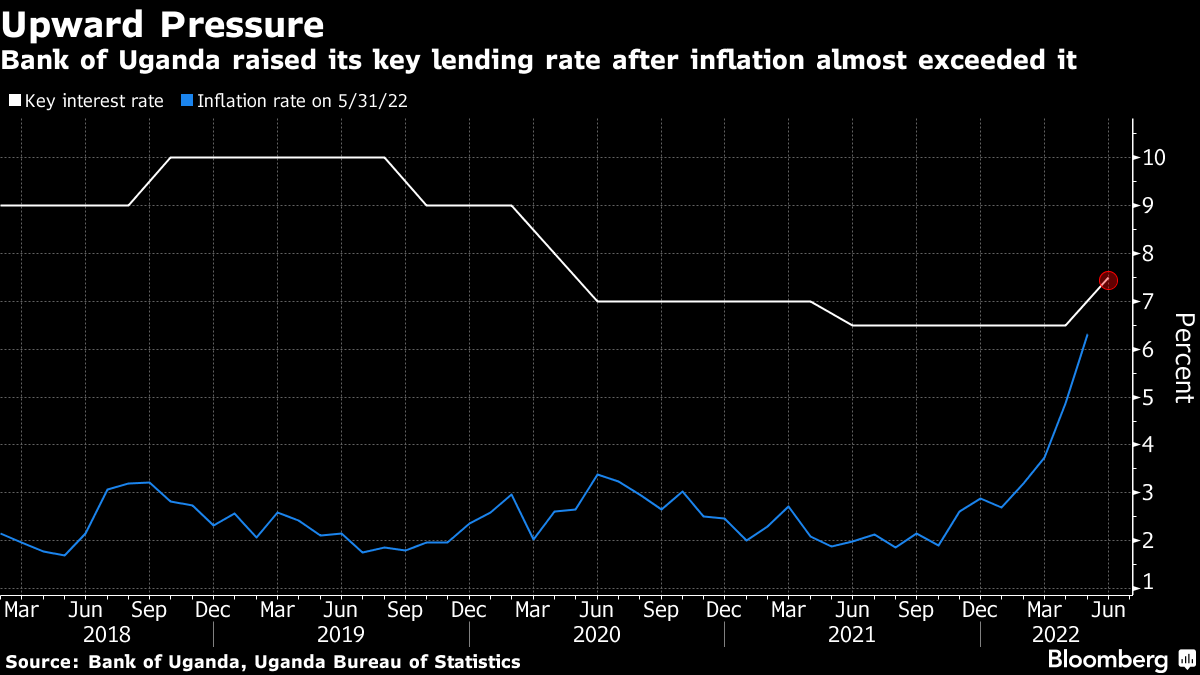
Uganda's core inflation rate rose to the highest in five years last month, exceeding the central bank's 5% medium-term target for the first time since May 2017. Annual headline inflation is forecast to average 7%, and core inflation 6.1% this year, higher than earlier projections, Atingi-Ego said.
Food and fuel prices are surging because of Russia's war in Ukraine, while import costs are increasing as an investor exit from emerging markets dents the shilling.
“The weakening of the Uganda shilling against the US dollar coupled with rising food and energy prices have worsened the inflation outlook,” Atingi-Ego said.
The currency extended gains after the decision was announced and traded 0.9% stronger at 3,756.40 per dollar by 1:53 p.m. in Kampala, the capital.
Read: Central Bank Intervention Fails to Halt Ugandan Shilling Fall
The hike unwinds some of the 250 basis points of easing announced since 2020 to prop up the coronavirus-ravaged economy and is a further blow to consumers after President Yoweri Museveni ruled out cutting taxes or subsidizing imports.
Read: Tax Cuts, Subsidies on Fuel, Wheat Suicidal, Ugandan Leader Says
The central bank cut its economic growth forecast for Uganda this year to a range of 4.5% to 5%, compared with 5.5% to 6% earlier. The central bank will phase out the remaining credit-relief benefits for the education and hospitality sectors Sept. 30, and announced the end of pandemic-induced measures, including restrictions on dividend payments.
“Weaker external demand coupled with surging commodity prices, and the resultant high domestic inflation will lead to tighter monetary conditions, thereby constraining aggregate demand,” Atingi-Ego said.
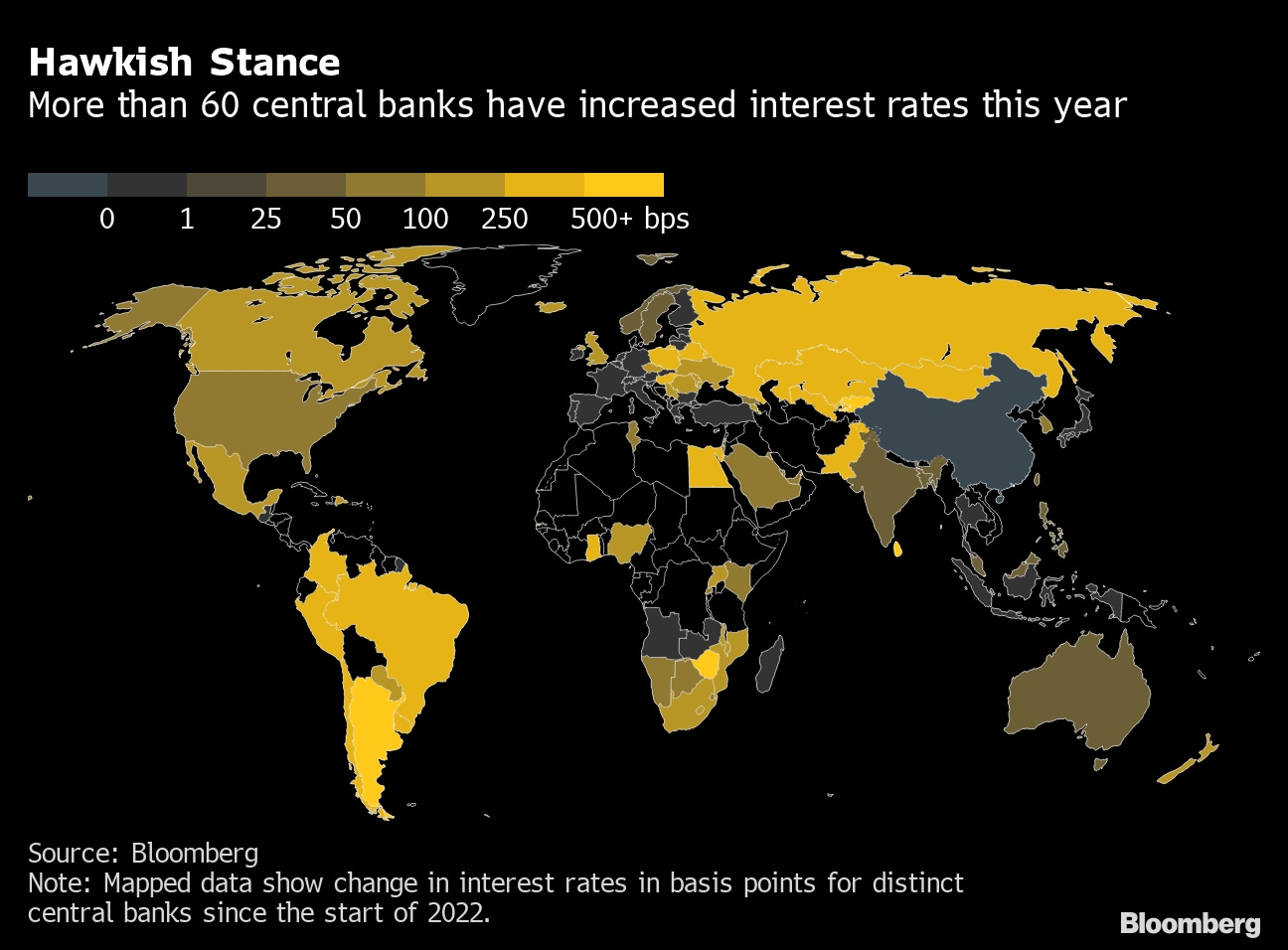
Central bankers in emerging markets including Egypt and Kenya have been tightening monetary policy to anchor inflation expectations and attract investors seeking higher yields as the US, European and other central banks in developed markets tighten too.
Museveni has yet to name a new head of the Bank of Uganda after Emmanuel Tumusiime-Mutebile, Africa's longest-serving central bank governor, died in January.
(Updates with deputy governor's comments throughout)
More stories like this are available on bloomberg.com
©2022 Bloomberg L.P.

-
Talking Points This Week: Leadership Shock At Nvidia, Earnings Strength, And The Fog Over Hormuz

The Anthropic IPO pricing and first trading day, Nvidia's upcoming earnings, and any fresh signals from Iran will set the tone for the following week.
-
Signature Play: The Classic Cocktail Is Dead. Or Is It?
Classic cocktails are disappearing from India's cocktail menus. But they're still being ordered, taught to bartenders and borrowed from. So, who's really having the last drink?
-
A New Samvat Wishlist: Inclusive Prosperity And Human Development
India has strengthened its economic foundations through infrastructure, digital access and enterprise. Its next growth chapter must deepen productivity, create better livelihoods and widen participation in prosperity.
-
Love, Sex Aur Dhokha: The Audacious Plot To Spy On Jensen Huang
A Taipei dinner, a Singapore chip buyer and a suspected Chinese asset: inside the alleged spy operation that got close to NVIDIA's Jensen Huang.
-
Ten Things I Learnt This Samvat
Patience can be a trap. Cheap stocks can stay cheap. Leverage can wipe you out. What did Samvat 2082 teach us? Niraj Shah writes on 10 lessons from the year gone by.
-
Talking Points This Week: Tech Nerves, FII Buying, And A Faraway Banking Shock
The global markets are not shining this Diwali. The exception in the large markets is, India.
-
Midterm Rally Lasted A Day. The Hard Reality Of A Divided US May Last Two Years | Opinion
Between a contested AI boom, a debt ceiling that arrives in 2027 and a president with every incentive to act alone, the next two years may prove more volatile than the first day's rally suggests.
-
Blue Wave Will Derail the AI Trade but Won't Dismantle the AI Era | Unhedged Position
The Democrats' sweep of the US Congress will see politics collide with economic forces both over the long and short term.
-
It's Time To Take The GST Council's Bet On Trust Global
Payment records can prove India's services exports, and clear, proportionate rules can bring foreign digital sellers into the tax net.
-
Opinion | India at 38: From Innovation Overperformer to Innovation Powerhouse
India now has 453 VC-backed deep science startups, 18 of them late-stage, after 117 percent growth since 2020. Laurus Labs, at USD 9.3 billion, is the most valuable deep science company in any middle-income economy outside China.









