Swiss Prosecutors Probe Credit Suisse Deal, Job Cuts Seen

(Bloomberg) -- Switzerland's top prosecutor opened a probe to gather information into potential crimes that may have taken place around UBS Group AG's takeover of Credit Suisse Group AG, while the emergency combination of the nation's two biggest banks begins to take shape.
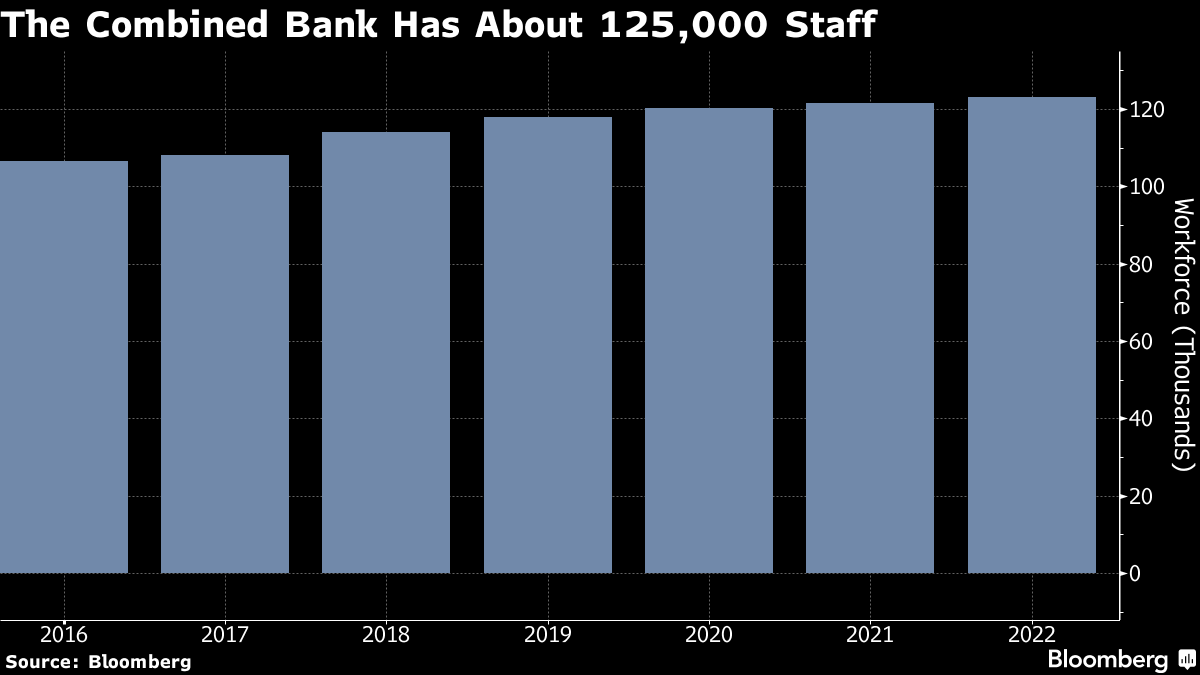
The deal signed last month may reduce the overall workforce by up to 30%, with as many as 11,000 cuts in Switzerland and another 25,000 worldwide, Swiss newspaper SonntagsZeitung reported on Sunday, citing an unidentified senior manager at UBS. Executives at the Swiss bank said last week that they're looking to provide clarity on job cuts as soon as possible but that it was too early to give firm numbers.
A spokesperson for UBS declined to comment on the report.
Read More: Credit Suisse's 9,000 Job Cuts Are Foretaste of UBS Takeover
Switzerland's Office of the Attorney General said Sunday it was working to gather information on “numerous aspects” linked to the takeover, without specifying further what it was looking for. The top federal prosecutor ordered national and regional authorities to investigate, according to a statement.
Years of scandals at Credit Suisse fueled an accelerated collapse in confidence at Credit Suisse last month that culminated in the government-brokered $3.3 billion takeover by its long-time rival. UBS has said it estimates that savings of about $6 billion are possible from reducing headcount.
UBS shares were down 3.1% at 18.68 Swiss francs as of 2:10 p.m..
Read More: Credit Suisse's Fate Sealed by Regulators Days Before UBS Deal
“In view of the relevance of the events,” the top federal prosecutor “intends to pro-actively fulfill its mandate and responsibility to contribute to a clean Swiss financial center and has set up a monitoring system in order to take immediate action in the event of any circumstances that fall within its jurisdiction,” the office said.
The attorney general ordered national and regional authorities “to investigate and compile information” in order to “analyze and identify possible offenses,” according to the statement. Swiss newspaper NZZ am Sonntag had previously speculated the investigation might focus on who passed on information about the takeover before it was completed.
Talent Retention
On the job cuts, UBS has said it will give clarity as soon as it can. While it was clear that major layoffs were coming, the lender sees retention of talent as a significant part of the takeover's execution risk.
Firms such as Deutsche Bank AG, Citigroup Inc. and JPMorgan Chase & Co. are gearing up to recruit some of the investment bankers and wealth managers likely to be let go. Already, headhunters saw themselves swarmed by Credit Suisse bankers seeking new jobs, as people from more than a dozen firms told Bloomberg last month.
Limited Impact
The government resorted to emergency law to push through the deal without having to seek shareholder approval. So while the annual general meetings of the two lenders — coming up this week — are expected to be an outlet for angry investors, they otherwise have limited opportunity to affect the deal.
Shareholder advisers have recommended investors to vote against discharging the bank's top executives, a step which potentially leaves members open to legal claims. Major shareholder Norges Bank Investment Management, the sovereign wealth fund of Norway, has announced it will vote against the reelection of several Credit Suisse directors, including chair Axel Lehmann.
Separately, the Financial Times reported on Saturday that UBS has a short-list of four management consultants to advise on integrating Credit Suisse. The bank is soon to decide between Bain & Company, the Boston Consulting Group Inc., McKinsey & Co Inc and Oliver Wyman Inc, the newspaper reported, citing people familiar with the process who weren't identified.
Read More: The Triumph of UBS Is Also the Humbling of Swiss Banking
It's expected to be one of the most lucrative contracts in years for dispensing financial services advice due to the complex, years-long process needed to meld the banks, according to the report.
UBS, Bain, BCG, McKinsey and Oliver Wyman didn't immediately respond to requests for comment outside of ordinary office hours.
--With assistance from Thomas Seal and Steven Arons.
(Updates UBS shares in fifth paragraph)
More stories like this are available on bloomberg.com
©2023 Bloomberg L.P.

-
The Economic Imperative: Analysing The Material Driving Force Behind India-Canada Strategic Reset

This economic complementarity is further reinforced by deep institutional investment ties and talent mobility, which form the bedrock of the bilateral framework.
-
Medicine Pricing: Where Must Profit Stop?
India must confront excessive margins, hidden incentives and regulatory gaps that threaten the integrity of medicine.
-
Why Amazon And Flipkart Are Struggling To Beat Meesho In India's Smaller Cities
With 274 million users and lowest-cost logistics, Meesho is defending its value commerce crown against giants like Amazon and Flipkart.
-
High US Salaries, No Green Card Certainty: The Financial Calculation Facing Indian H-1B Families
The suspension of PERM processing at eight technology employers does not cancel existing H-1B visas. What it does is force a question many Indian families have been avoiding: is the US salary worth tying your career and family plans to one employer?
-
Swiggy vs Eternal: Food Delivery's Two Rivals Are No Longer In The Same Race
Eternal is building a private AI assistant, dark.ai. Swiggy is still working out how to make Instamart pay, with an operating loss of Rs 895 crore in the July-September quarter while Blinkit stayed profitable.
-
Where You Live Shapes How You Get To Work | The Reason Why
Two-wheelers are the most popular way to get to work in India, accounting for nearly 43% of workplace commutes.
-
Unhedged Position: Can India See An Indonesia-Style Time Correction?
The Nifty is trading below levels it first clocked in 2024. Is there, then, as I have suggested in the headline, potential that the current time correction drags on painfully for the next three-five, even ten years?
-
Navigating Friction And Energy Realities: An Analysis Of Marco Rubio's October Visit To India
Occurring at a critical juncture marked by stalled trade negotiations and escalating geopolitical pressures over global energy supplies, the visit offers a profound window into modern US-India relations.
-
India Exports Capital. Why Not Export Trusteeship?
The big question, then, is whether India can build an institution that global borrowers, investors, banks, and lawyers can trust, even without an Indian connection.
-
France's Economy & Politics Are In Crisis | The Reason Why
Let's look at how the French economy and politics evolved under Nicolas Sarkozy, Franois Hollande and Emmanuel Macron.










