UBS Returns To Profit As CEO Ermotti Affirms Buyback Plans
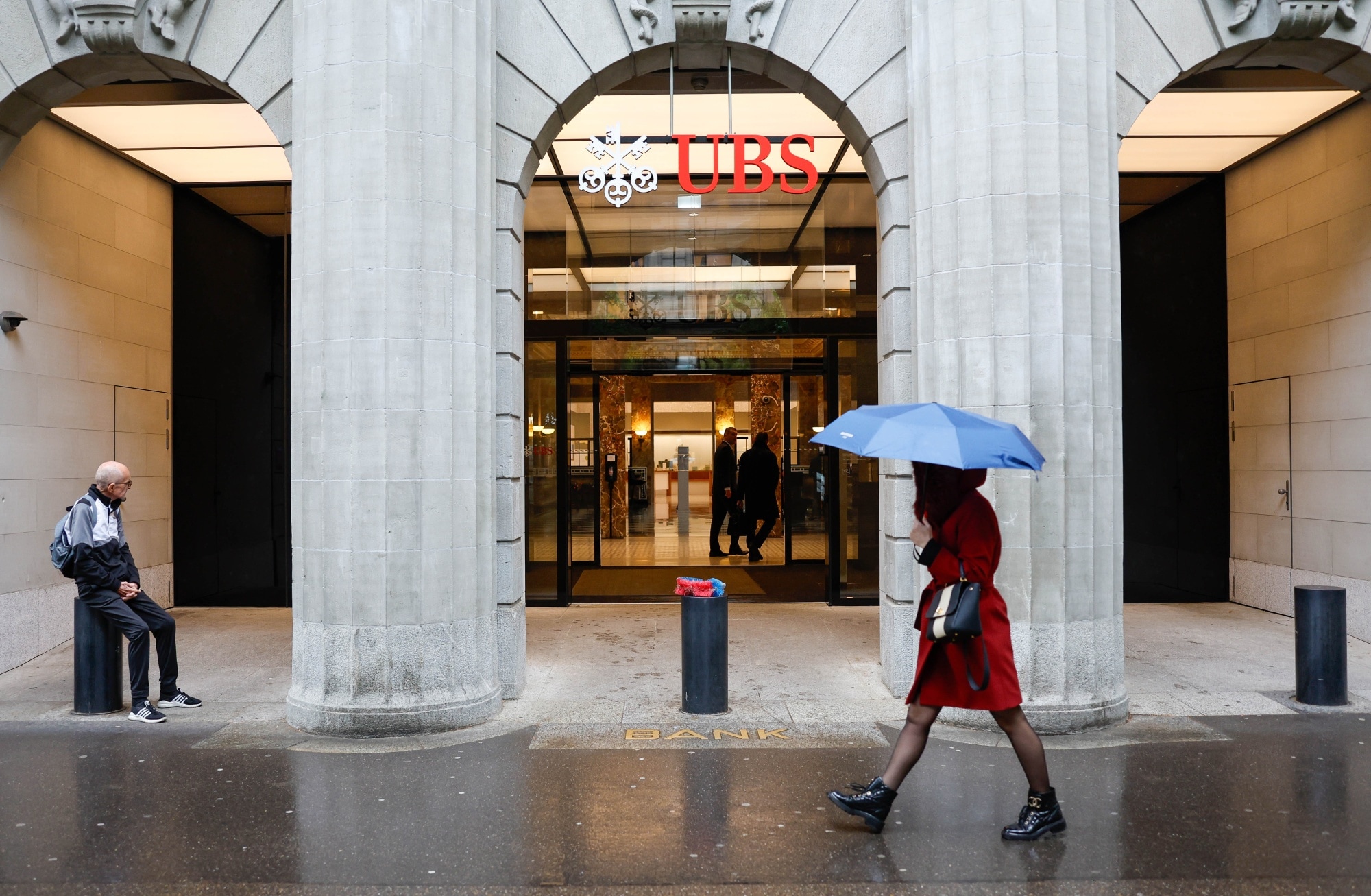
(Bloomberg) -- UBS Group AG returned to profit after two loss-making quarters, cementing sustained progress in the integration of Credit Suisse after its emergency rescue last year.
The Zurich-based bank said net income in the first quarter was $1.8 billion, three times what analysts forecast. While accounting effects related to the takeover represented a large part of the beat, strong performance in managing wealth and investment banking aided the result.
UBS surged after the release, up 9% as of 11:40 a.m. in Zurich, the largest increase since March 21 2023, just after the takeover deal.
The quarter's outcome gives some breathing room to UBS Chief Executive Officer Sergio Ermotti, as he grapples with the Swiss government's initiative to force the bank to maintain as much as $20 billion in extra capital. Ermotti used the results to underline that investors can still expect payouts to resume this year even amid tougher regulatory demands on multiple fronts.
“We also see good momentum with clients, with inflows across our businesses, and our capital is strong, allowing us to continue to pursue our capital return plans,” Ermotti said in an interview with Bloomberg Television's Francine Lacqua on Tuesday. UBS has said it intends to buy back around $2 billion of shares over the next two years.
The bank is targeting the completion of the legal merger with Credit Suisse by May 31, Ermotti said. With the run-down of unwanted Credit Suisse assets proceeding apace, attention will soon turn to migrating Credit Suisse clients on to UBS platforms, Ermotti said in a call with analysts.

A big boost to the performance came from a continued revaluation of the assets and liabilities UBS bought as part of the Credit Suisse takeover last year. The bank also booked a $272 million gain in the unit dedicated to winding down Credit Suisse businesses, related to the sale of assets to Apollo Global Management Inc.
Excluding such effects, “the key operating divisions only mildly outperformed,” analysts at KBW including Thomas Hallett wrote in a note. “This being said, we do not envisage any major declines to group earnings which have been a key theme in the previous quarters.”
In its outlook, UBS signaled that the turning central-bank rate environment is beginning to impact earnings from lending. Partly as a result, the bank expects net interest income declines in wealth management and personal and corporate banking.

On the integration, UBS said it had realized about $1 billion in cost savings in the first quarter and was targeting another $1.5 billion by the end of 2024.
Revenue in the wealth management unit rose to a reported $6.1 billion in the quarter, from $5.6 billion at the end of December. The bank said that the Americas, Switzerland and Asia-Pacific in particular drove the result.
UBS's investment bank posted before-tax profit of about $555 million, compared with analyst estimates for $398 million. Revenue at the investment bank's unit that houses advisory as well as debt and equity capital markets services rose 52% from a year earlier.
The investment bank shone in particular in the Americas, which doubled its market share in the global banking business, UBS said. That unit has now fully integrated its Credit Suisse counterpart, the bank said.
Read More: UBS's Ermotti Targets More Billionaires After Credit Suisse Deal
Personal and corporate banking posted profit before tax of $859 million, while asset management delivered $111 million, the latter below estimates.
What Bloomberg Intelligence Says
UBS' net new-asset generation, better-than-expected progress in expenses — raising its year-end cumulative cost-reduction target to $6.5 billion or 50% from 45% of the total 2026 exit-rate — and non-core asset wind down signal successful integration of Credit Suisse, even as structural regulatory capital questions remain.
Alison Williams, BI analyst
Ermotti sought to deflect calls for clarity on the ongoing debate within Switzerland about UBS's upcoming capital requirements. Last month the Swiss Federal Council said it wants systemically-important banks to hold significantly more capital against their foreign units to protect against future risks. That primarily applies to UBS, and could translate into a jump of as much as $20 billion.
Yet the regulations are unlikely to be fully formulated until later next year and come into effect in 2026 at the earliest.
Ermotti said that it is “premature” to speculate or comment on the potential impact of the Swiss banking reforms. UBS will need to see the full picture to respond, he said, as the bank was not involved in the consultation process leading to the proposals.
The bank said its CET1 ratio, a measure of capital strength, was 14.8% at the end of the quarter.
Separately to that discussion, UBS is already adding some $20 billion in extra capital as a result of the acquisition of Credit Suisse and the full phase-in of the Basel III banking regulations, Ermotti said.
With around $200 billion in total loss absorbing capacity, investors “bear the significant costs and risks to ensure taxpayers would not suffer in the highly unlikely scenario that a major systemic event affects UBS,” Ermotti said.
--With assistance from Macarena Muñoz, Paula Doenecke and Allegra Catelli.
(Adds further details throughout. A previous version of the story was corrected to add million to investment bank result)
More stories like this are available on bloomberg.com
©2024 Bloomberg L.P.

-
Getting To Work Costs Women More | The Reason Why

It is not just about women paying more than men. It is about women paying much more in cities than in villages.
-
AI Bias In Investing Cannot Be Eliminated, But It Can Be Governed
Framing is a particularly important example as identical financial information presented in terms of gains rather than losses can lead an LLM to reach a different assessment.
-
Joining The Dots | Dark Skies, Steady Diya: Why Hope Holds This Diwali
With war, a weak rupee and foreign outflows weighing on sentiment, policymakers at the NDTV World Summit and market veterans at NDTV Profit Ignite: Diwali Edition offered the same advice: stay invested and filter out the noise.
-
The Curious Case of Equitas Small Finance Bank And A CEO Who Quit For Stock
PN Vasudevan believes persistent investor concerns over a perceived conflict of interest had become a governance overhang on Equitas Small Finance Bank's stock, even as the lender improved profitability and asset quality.
-
Talking Points This Week: AI Cash Burn, A Tiger Comeback And An India That Still Finds Its Own Path
India is not immune to higher oil or tighter global liquidity, yet its earnings base is broader, its domestic policy levers are still available.
-
Foreign Investors Own Half Of HDFC Bank and ICICI Bank. An LTCG Cut Could Matter Most Here
Foreign portfolio investors have US$115 billion parked in HDFC Bank, ICICI Bank. If the government cuts long-term capital gains tax, Jefferies says returning foreign money could land here first.
-
'Never Seen This Level Of Negativity': Sandeep Tandon Says The Next Rally May Be Closer Than You Think
Veteran investor Sandeep Tandon says foreign selling is easing, large-caps are due a comeback and mid-caps are crowded, while he turns positive on gold, power and pharma this Diwali.
-
Indians Stay With Family, Not In Hotels | The Reason Why
India still lacks enough clean, reliable and affordable hotels for budget-conscious travellers.
-
The Economic Imperative: Analysing The Material Driving Force Behind India-Canada Strategic Reset
This economic complementarity is further reinforced by deep institutional investment ties and talent mobility, which form the bedrock of the bilateral framework.
-
Medicine Pricing: Where Must Profit Stop?
India must confront excessive margins, hidden incentives and regulatory gaps that threaten the integrity of medicine.










