Twitter Whistleblower Could Help Musk By Adding 'Volatility' To Legal Battle
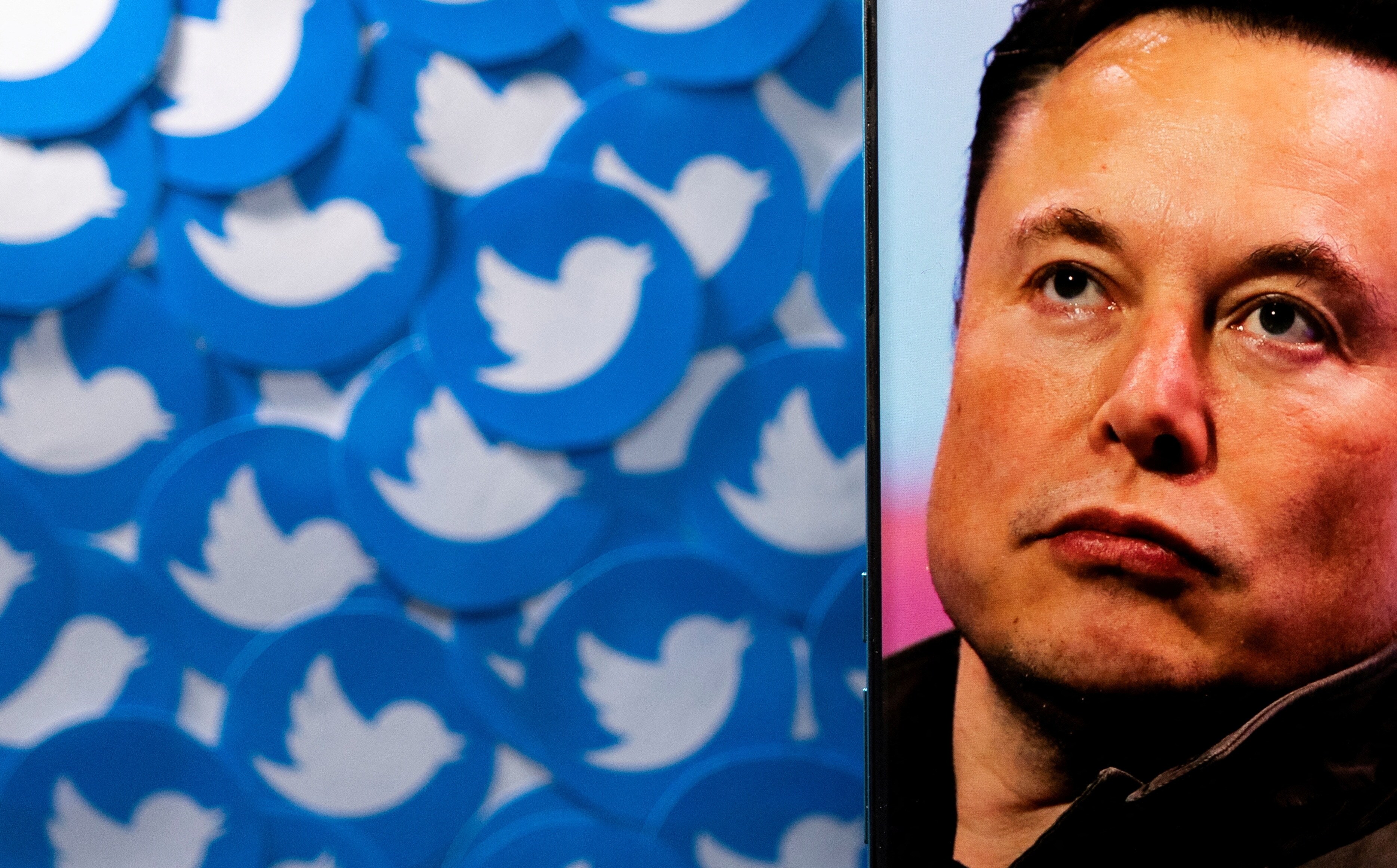
A whistleblower's complaint that Twitter Inc misled federal regulators about the company's security risks could provide Elon Musk with fresh ammunition in his bid to get out of buying the company for $44 billion.
Until now, Musk's legal showdown with Twitter has primarily centered around claims that the company misled the billionaire about the number of bot and spam accounts on its platform.
The whistleblower complaint by Twitter's former security chief Peiter Zatko gives Musk new angles to pursue in his legal battle, such as claims that Twitter failed to disclose weaknesses in its security and data privacy.
It provides "a different basis for fraud," said Ann Lipton, a professor at Tulane Law School.
It is not clear if and how Musk's team will use the whistleblower's information, although Musk's lawyer, Alex Spiro with Quinn Emanuel Urquhart & Sullivan, said on Tuesday that a subpoena had been issued to Zatko.
"We found his exit and that of other key employees curious in light of what we have been finding," Spiro said in a statement.
Legal experts said the whistleblower complaint introduced uncertainty to Musk's showdown with Twitter, rather than dramatically transforming a case that corporate law specialists have said favors Twitter.
"Volatility is helpful if you're not playing a strong hand. It creates some possibility that something crazy might happen," said Eric Talley, a professor at Columbia Law School, of the whistleblower complaint.
Twitter's stock was down about 5.9% in late trading at $40.44 a share.
'Adding Textture'
Musk, the world's richest person and the chief executive of electric vehicle maker Tesla Inc, told Twitter in July that he was ending the agreement to buy the company for $54.20 per share.
Musk accused Twitter of fraudulently misrepresenting the true number of spam and bot accounts on its social media platform, which the company has estimated at 5% in corporate filings. Musk said he relied on those filings when he offered to buy the company.
Twitter and Musk have since sued each other, with Twitter asking a judge on the Delaware Court of Chancery to order Musk to close the deal. A trial is set to start on Oct. 17.
On Wednesday, Chancellor Kathaleen McCormick will hear arguments by the two sides over access to documents as part of the discovery process. Legal experts said Musk might raise the whistleblower complaint and indicate how his team might use the allegations.
Zatko's whistleblower complaint, which was made public on Tuesday, claimed that Twitter had falsely told regulators that it had a solid security plan.
Zatko said he had warned colleagues that half the company's servers were running out-of-date and vulnerable software, according to a redacted version of his complaint.
Twitter Chief Executive Parag Agrawal told employees in a memo that the company is reviewing the claims. "What we have seen so far is a false narrative that is riddled with inconsistencies and inaccuracies, and presented without important context," Agrawal said, according to a CNN report.
Claims that Twitter failed to disclose security and privacy risks could be easier for Musk to prove than allegations that Twitter misrepresented the number of spam accounts, legal experts said.
To prevail on the spam claim, Musk must show that he relied on Twitter's disclosures about spam accounts.
Corporate deal specialists have said this will be tough since Musk cited defeating spam as the very reason for buying the company.
By contrast, Zatko's allegations that the company withheld security information from investors and regulators could qualify as an omission, which would not require Musk to show reliance on the company's disclosures.
Musk, however, would still need to prove that Twitter's allegedly weak defenses against hackers was a material risk that was not disclosed to investors.
And to walk away from the acquisition without paying a $1 billion termination fee, he would have to show the omission amounted to a material adverse effect on Twitter.
A material adverse effect (MAE) is an event that significantly reduces the long-term value of an acquisition.
Talley said whether Zatko's claims amount to an MAE could be an issue for the trial.
"This doesn't open a brand new battlefront," said Talley. "It's adding texture to existing ones."
(Except for the headline, this story has not been edited by NDTV staff and is published from a syndicated feed.)

-
Indians Are Travelling, But Not Every Journey Is A Holiday | The Week In Whys

Pilgrims, patients and working women are the real travellers, and the system hasn't quite caught up with them.
-
Getting To Work Costs Women More | The Reason Why
It is not just about women paying more than men. It is about women paying much more in cities than in villages.
-
AI Bias In Investing Cannot Be Eliminated, But It Can Be Governed
Framing is a particularly important example as identical financial information presented in terms of gains rather than losses can lead an LLM to reach a different assessment.
-
Joining The Dots | Dark Skies, Steady Diya: Why Hope Holds This Diwali
With war, a weak rupee and foreign outflows weighing on sentiment, policymakers at the NDTV World Summit and market veterans at NDTV Profit Ignite: Diwali Edition offered the same advice: stay invested and filter out the noise.
-
The Curious Case of Equitas Small Finance Bank And A CEO Who Quit For Stock
PN Vasudevan believes persistent investor concerns over a perceived conflict of interest had become a governance overhang on Equitas Small Finance Bank's stock, even as the lender improved profitability and asset quality.
-
Talking Points This Week: AI Cash Burn, A Tiger Comeback And An India That Still Finds Its Own Path
India is not immune to higher oil or tighter global liquidity, yet its earnings base is broader, its domestic policy levers are still available.
-
Foreign Investors Own Half Of HDFC Bank and ICICI Bank. An LTCG Cut Could Matter Most Here
Foreign portfolio investors have US$115 billion parked in HDFC Bank, ICICI Bank. If the government cuts long-term capital gains tax, Jefferies says returning foreign money could land here first.
-
'Never Seen This Level Of Negativity': Sandeep Tandon Says The Next Rally May Be Closer Than You Think
Veteran investor Sandeep Tandon says foreign selling is easing, large-caps are due a comeback and mid-caps are crowded, while he turns positive on gold, power and pharma this Diwali.
-
Indians Stay With Family, Not In Hotels | The Reason Why
India still lacks enough clean, reliable and affordable hotels for budget-conscious travellers.
-
The Economic Imperative: Analysing The Material Driving Force Behind India-Canada Strategic Reset
This economic complementarity is further reinforced by deep institutional investment ties and talent mobility, which form the bedrock of the bilateral framework.










