Twitter to Take India Election Innovations Global
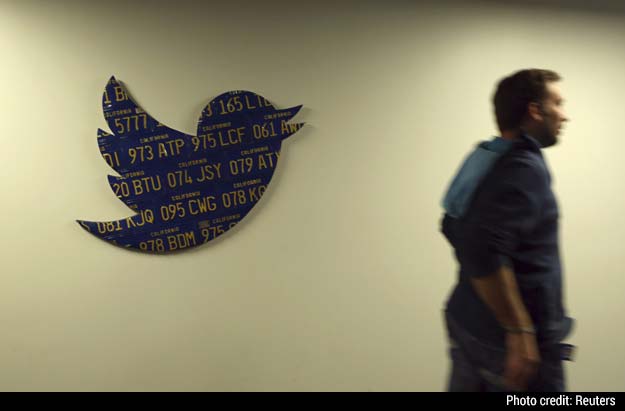
US social networking company Twitter is planning to replicate parts of its India election strategy across countries that go to polls this year, after it emerged as a key tool for politicians and media companies during the world's largest democratic exercise.
In India, Twitter Inc worked closely with politicians including the victor Narendra Modi who used the platform for election campaigning, and also partnered with mobile and media firms to distribute tweets online and offline.
Now, with polling due in countries such as Brazil, Indonesia and the United States later this year, the San Francisco-based company plans to take its India lessons abroad to expand its foothold in the political arena and increase its user base.
"The election more than any other moment provides a nice microcosm of the value Twitter can add ... we are sharing widely the lessons of this Indian election around the world," said Rishi Jaitly, India market director at Twitter.
Last week, the company sent its top political strategist to Brazil to explain the potential of the social network to senators, who are likely to use Twitter's six-second video app Vine for campaigning after it was used by Indian politicians, the company said.
For the US election, the company has started looking for partners to replicate their "Tweet To Remember" feature used in India, which enables users to add the voting date automatically to their mobile calendar using a tweet.
Twitter widely emerged as a political tool first during the 2012 US presidential elections, and then during the Arab Spring uprisings in North Africa and the Middle East. Today, US President Barack Obama has more than 43 million Twitter followers.
In India, Modi's Bharatiya Janata Party (BJP) embraced the technology ahead of rivals, collaborating with thousands of volunteers to spread Narendra Modi's message and counter criticism on the web.
It was the country's first major Twitter election, and the novelty of the technology gave an advantage to the politicians who adopted first - especially the BJP, said Milan Vaishnav of Carnegie Endowment for International Peace.
"The Indian experience will serve as a model for other developing countries ... In the US, the saturation of the social media space by all parties may have a cancelling out effect," Vaishnav said.
The Modi Way
Tech-savvy Modi, who now has 4.3 million Twitter followers, used the platform relentlessly. He recently tweeted "selfies" and pictures with his mother. On May 16 he set a Twitter India record with his victory acknowledgement tweet.
His rivals lagged. A few years before India's mammoth election, Congress leader Shashi Tharoor asked Rahul Gandhi, the lead campaign manager of the now ousted party, to join Twitter. Gandhi declined.
With about two-thirds of India's population under 35, Modi targetted the young and smart by topping up campaigning with social media, holograms and recorded voice calls.
The potential was, and still is, huge: India has the world's third largest internet user base of 239 million and more than 900 million mobile connections. Many access web on their phones.
Twitter's reach was not restricted to its estimated 35 million India users, as nearly 400 multilingual news channels that closely tracked politicians on the website reached 153 million households, data from TAM Media Research showed.
Modi, who is due to be sworn in on Monday, has not let up his Twitter onslaught since the election and like other global leaders will make the service a central part of his communications arsenal.
Tharoor, for now, has again advised his top leadership to adapt to social media platforms as a part of their renewed strategy to improve communication.
"There is no reason why we should cede that space to the BJP. This is an area in which we can be just as good," said Tharoor, who has over 2 million Twitter followers and was among the first Indian politicians to join the platform.
Copyright: Thomson Reuters 2014

-
Getting To Work Costs Women More | The Reason Why

It is not just about women paying more than men. It is about women paying much more in cities than in villages.
-
AI Bias In Investing Cannot Be Eliminated, But It Can Be Governed
Framing is a particularly important example as identical financial information presented in terms of gains rather than losses can lead an LLM to reach a different assessment.
-
Joining The Dots | Dark Skies, Steady Diya: Why Hope Holds This Diwali
With war, a weak rupee and foreign outflows weighing on sentiment, policymakers at the NDTV World Summit and market veterans at NDTV Profit Ignite: Diwali Edition offered the same advice: stay invested and filter out the noise.
-
The Curious Case of Equitas Small Finance Bank And A CEO Who Quit For Stock
PN Vasudevan believes persistent investor concerns over a perceived conflict of interest had become a governance overhang on Equitas Small Finance Bank's stock, even as the lender improved profitability and asset quality.
-
Talking Points This Week: AI Cash Burn, A Tiger Comeback And An India That Still Finds Its Own Path
India is not immune to higher oil or tighter global liquidity, yet its earnings base is broader, its domestic policy levers are still available.
-
Foreign Investors Own Half Of HDFC Bank and ICICI Bank. An LTCG Cut Could Matter Most Here
Foreign portfolio investors have US$115 billion parked in HDFC Bank, ICICI Bank. If the government cuts long-term capital gains tax, Jefferies says returning foreign money could land here first.
-
'Never Seen This Level Of Negativity': Sandeep Tandon Says The Next Rally May Be Closer Than You Think
Veteran investor Sandeep Tandon says foreign selling is easing, large-caps are due a comeback and mid-caps are crowded, while he turns positive on gold, power and pharma this Diwali.
-
Indians Stay With Family, Not In Hotels | The Reason Why
India still lacks enough clean, reliable and affordable hotels for budget-conscious travellers.
-
The Economic Imperative: Analysing The Material Driving Force Behind India-Canada Strategic Reset
This economic complementarity is further reinforced by deep institutional investment ties and talent mobility, which form the bedrock of the bilateral framework.
-
Medicine Pricing: Where Must Profit Stop?
India must confront excessive margins, hidden incentives and regulatory gaps that threaten the integrity of medicine.










