Trump’s Tariff Date Arrives After A 90-Day Rollercoaster

The world economy, beset with uncertainty for three months over Donald Trump's on-again-off-again tariffs, is about to get more clarity as the US president's deadline for tariff deals arrives on Wednesday.
That's when the 90-day reprieve from Trump's so-called “reciprocal” levies ends, clearing the way for the protectionism he thinks will narrow US trade deficits and spark a manufacturing revival. The wielding of unilateral tariffs is upending a system that for decades encouraged lower barriers to commerce under rules enforced by the World Trade Organization.
The US president isn't just ripping up the old playbook for trade alliances. Trump's tariffs will also help fill Treasury coffers at a time when investors are worried about the sustainability of the nation's debt — particularly after Congress sealed much of the president's economic agenda in a $3.4 trillion tax cut and spending package.
“The money will start to come into the United States on Aug. 1,” Trump said, referring to the date he's declared for the start of some new tariffs.
Heading into the final days before the July 9 deadline, negotiators are scrambling to come up with trade pacts.
Treasury Secretary Scott Bessent has called trade one of three pillars of Trump's agenda, which along with tax cuts and deregulation is aimed at unleashing investment, job growth and innovation.
So far, the US economy is holding up, hiring is healthy, and inflation has remained tame. But the Federal Reserve is wary about tariffs despite pressure from Trump to lower rates, and wants to see how they feed through to output in the next few months.
Trump's second-term rush to overhaul US trade policy has also fueled uncertainty for markets and corporate supply-chain managers trying to game out the effects on production, inventories, hiring, inflation and consumer demand. That sort of routine planning is hard enough without factors like tariffs that are moving forward one day, and potentially gone the next.
What Bloomberg Economics Says: “It's likely Trump will seek to escalate his threats against trade partners over the coming days to increase leverage in talks, as he did with Japan.”—Adam Farrar and Maeva Cousin. For full analysis, click here
Trump is famous for saying that “tariffs” is his favorite word. Yet the economic fallout may blindside a president who incorrectly asserts that trading partners directly pay the customs duties he imposes. In fact, the burden most often falls on American importers, who must contend with tighter profit margins and weigh up whether to raise prices on consumers, seek discounts from their foreign suppliers, or a combination of both.
Bloomberg Economics estimates that if reciprocal tariffs are raised to their threatened levels on July 9, the average duties on all US imports could climb to about 20% from near 3% before Trump's inauguration in January. That would add to multiple risks to the US outlook.
Elsewhere in the coming week, the Fed's latest minutes, a possible rate cut in Australia, and economic growth numbers from China to the UK will be among the highlights. A summit of BRICS leaders also takes place from Sunday.
US and Canada
The US calendar lightens up considerably following the June jobs report that appeared to take pressure off the Fed to lower rates when it meets late this month. Job growth exceeded forecasts on an unusual surge in public education employment, while the jobless rate declined.
Economists on Wednesday will parse minutes of the Fed's June policy meeting for indications on whether officials are closer to lowering rates. Regional presidents Alberto Musalem and Mary Daly are among the officials slated to speak about the economy a day later.
Weekly jobless claims data on Thursday are expected to show employers are still reticent to cut staffing levels. At the same time, an elevated number of continuing claims suggests the unemployed are having a tougher time finding another job.
In Canada, figures for June are likely to show a further weakening of the labor market after the unemployment rate ticked up to 7% the previous month. Tariffs are curbing businesses' appetite to hire, especially in manufacturing and other trade-exposed sectors. A report on return arrivals to the country in June is expected to reveal a continued decline in cross-border tourism.
Asia
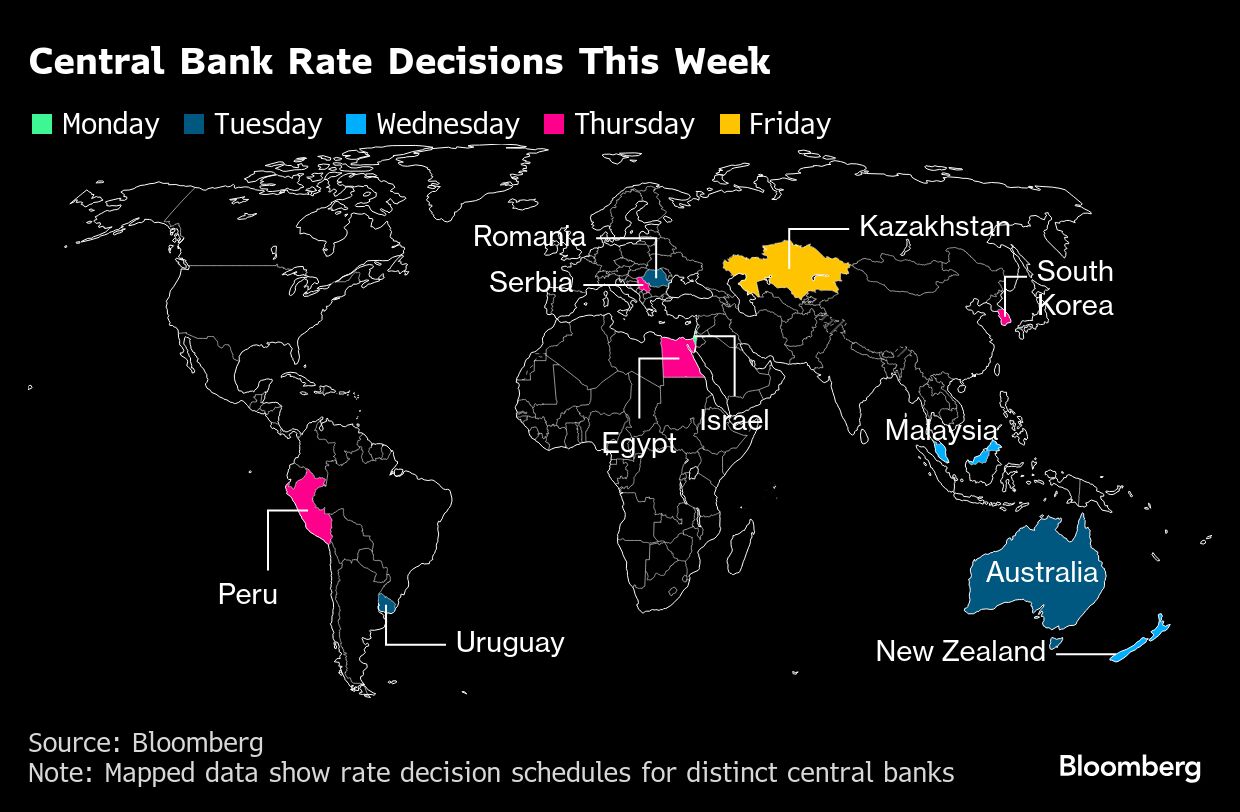
The week is packed with central bank decisions and key macro indicators that will help define the region's second-half trajectory. Monetary policy takes center stage in Australia, New Zealand, South Korea and Malaysia, where officials are expected to weigh recent inflation trends against slowing growth momentum.
Meanwhile, China's inflation will offer fresh clues on the region's manufacturing pulse and domestic demand conditions, after Vietnam on Saturday reported a surprise surge in growth.
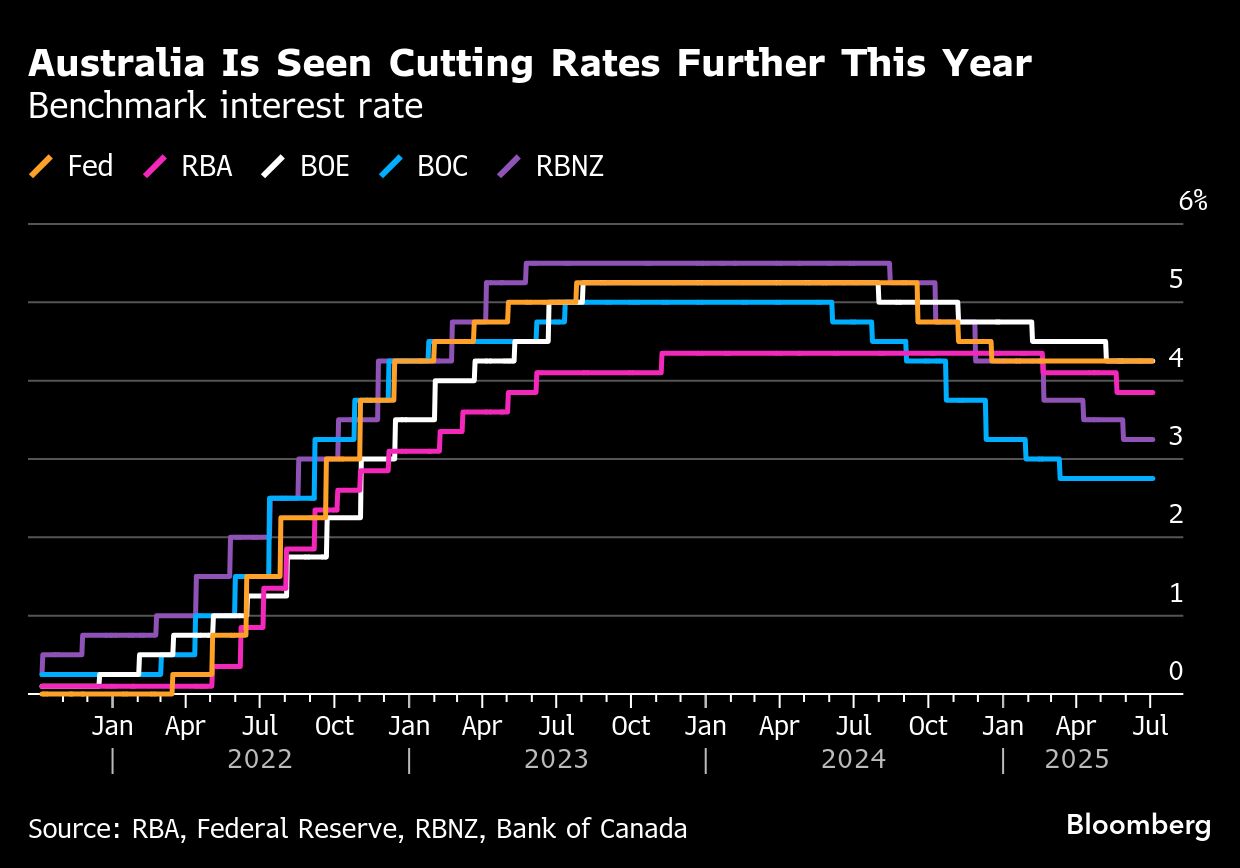
The Reserve Bank of Australia is expected to lower its cash rate to 3.6% on Tuesday, marking a third consecutive cut as inflation eases. The decision will be preceded by the NAB business confidence survey and ANZ job ads, both of which will help assess how sentiment and hiring intentions are tracking.
On Wednesday, RBA Deputy Governor Andrew Hauser gives a speech in Sydney on “Australian Macroeconomic Thought.”
The same day, the Reserve Bank of New Zealand is expected to keep its policy rate unchanged at 3.25%, while Malaysia's Bank Negara is anticipated to hold its overnight policy rate steady on Wednesday. A day later, the Bank of Korea is seen holding the base rate at 2.50% as it weighs the case for buffering the economy from the impact of Trump's tariffs against a desire to avoid fueling soaring housing prices in the capital.
China releases inflation data on Wednesday, with price pressures likely to remain subdued, while loans and money supply indicators will be closely watched during the week.
Japan publishes labor cash earnings on Monday as policymakers look for indications that rising pay is feeding into demand-led price gains. Bank lending, current account figures and the Eco Watchers Survey are also due.
Elsewhere, the Philippines publishes its employment report for May, Taiwan releases June CPI and trade data, and Indonesia updates on foreign reserves and consumer confidence.
Europe, Middle East, Africa
Among this week's highlights, UK GDP for May will be released on Friday, with a small increase predicted by economists after a drop in April that was the biggest drop since 2023.
The Bank of England publishes its latest financial stability report on Wednesday, with a press conference presented by Governor Andrew Bailey.
Manufacturing-related data from around the euro zone showing the impact of Trump's tariff policies will draw attention following Friday's release showing a much-bigger-than-anticipated drop in German factory orders in May.
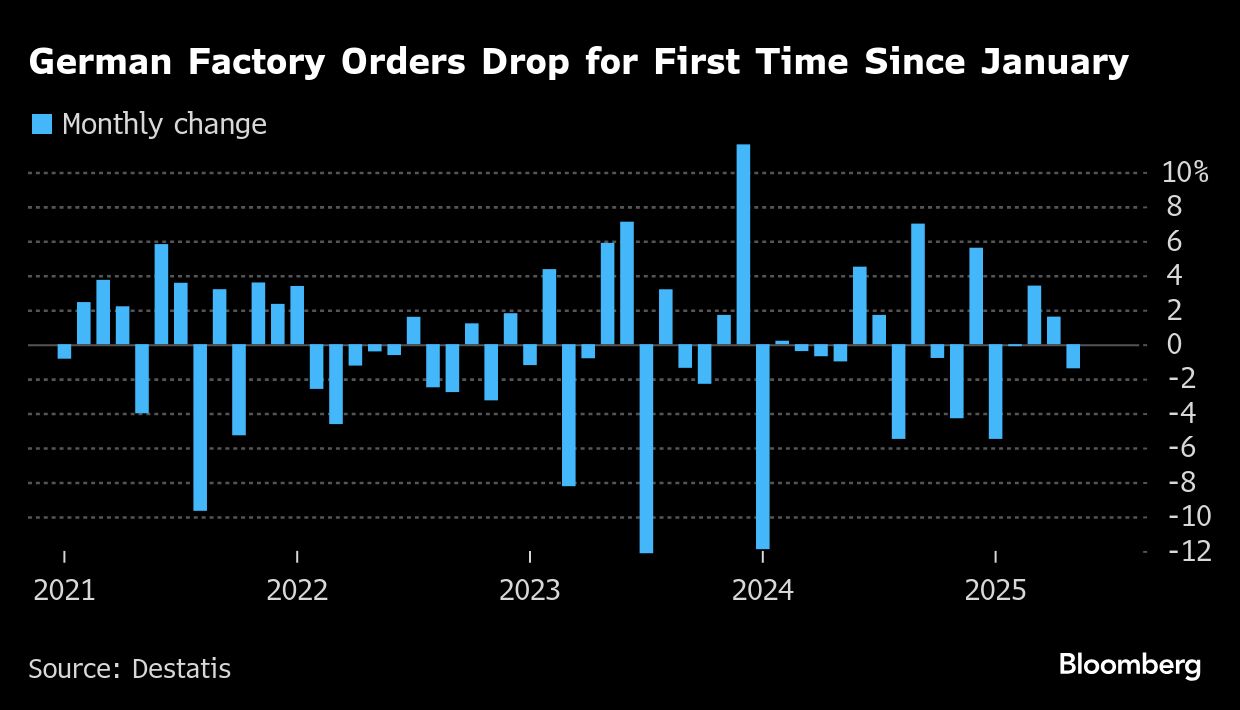
That country's industrial production numbers are due on Monday, followed on Tuesday by exports both there and in France. Output in Italy will be revealed on Wednesday.
Fewer European Central Bank appearances are scheduled, but Bundesbank President Joachim Nagel and Executive Board member Piero Cipollone will be among them.
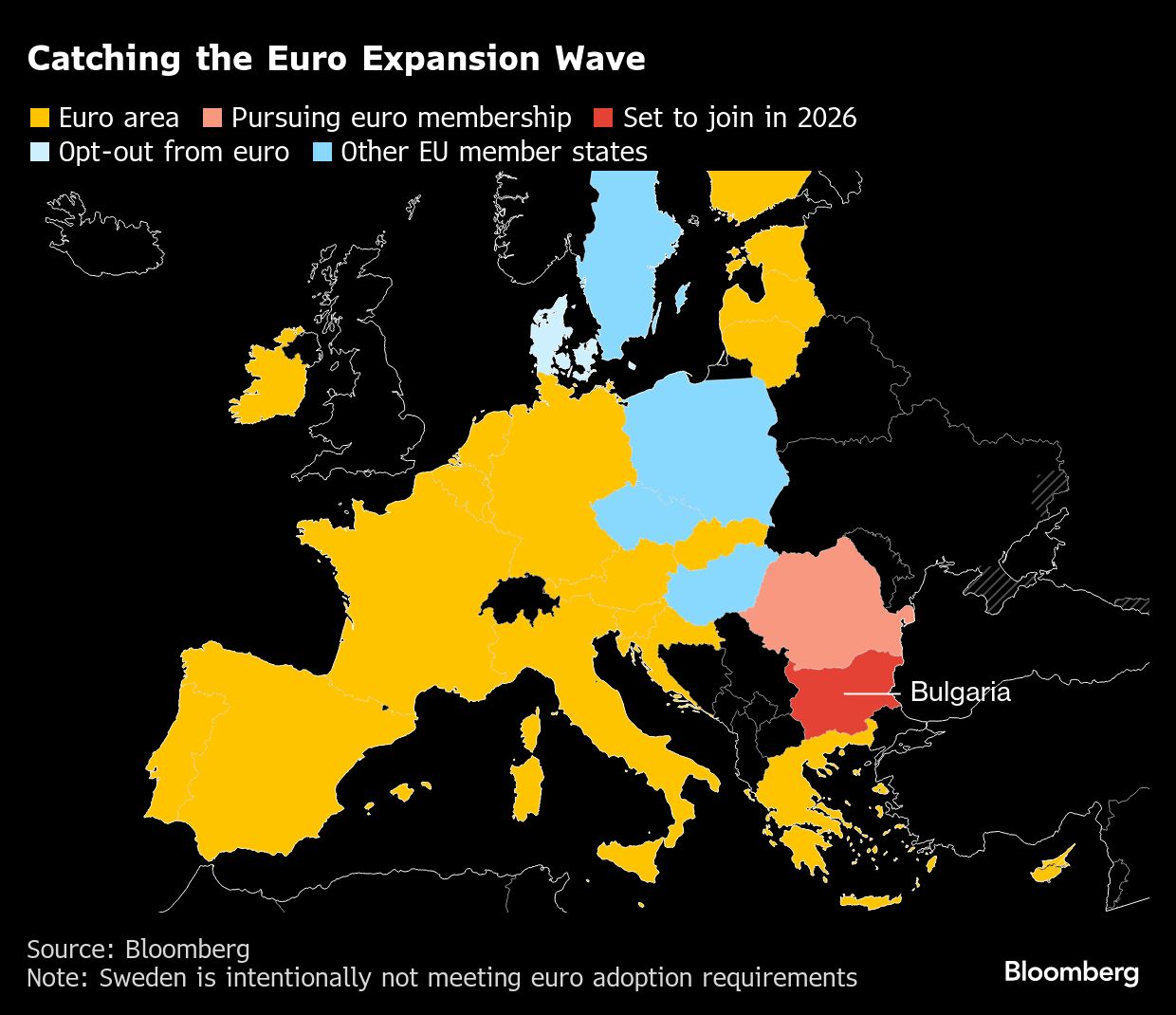
Eurozone finance ministers will meet at the start of the week, with the agenda to include the exchange rate at which Bulgaria is supposed switch to the euro. Officials are also set to seal legislative acts to finalize that country's new membership of the single currency starting in January.
Turning to the Nordics, Swedish inflation is due on Monday, followed by house price numbers on Tuesday and the monthly GDP indicator on Wednesday. That's also when Norway and Denmark publish consumer-price data.
Russian policymakers will watch for evidence that inflation is continuing to ease when June numbers are published on Wednesday. The Bank of Russia cited slowing price growth in its decision to cut borrowing costs last month for the first time in nearly three years.
Deputy Governor Alexey Zabotkin said inflation data will influence whether officials consider a larger than one percentage-point cut in the key rate at its July meeting.
A few monetary meetings are scheduled throughout the wider region:
Israel's central bank is set to hold rates for a 12th consecutive time, with policymakers waiting to see if inflation returns to the target range after the shekel rally that followed a ceasefire with Iran.
Romania's decision on Tuesday and is expected to see borrowing costs on hold, with officials concerned that recent fiscal changes may trigger a new spike in inflation and dampen economic growth.
Serbian policymakers will reveal their decision on Thursday after keeping the rate unchanged at 5.75% since September.
The same day, Egypt's central bank decision is due following two cuts in as many months, aimed at boosting economic growth. Inflation accelerated for a third month in May, potentially giving the officials pause before lowering the deposit rate from its current 24%.
Latin America
It's inflation week in Latin America, with four of the region's five major economies set to publish price data for June.
Colombia kicks off proceedings on Monday, with expectations that annual inflation slowed below 5% for the month. That would mark the lowest reading since October 2021, although price increases remain above the central bank's target range.
Chile's data on Tuesday is expected to show little change or perhaps a slight uptick in annual inflation from May, when consumer prices rose 4.4%. While that too remains above the central bank's target, policymakers signaled last month that they may soon resume monetary easing if global economic uncertainty remains limited.
Mexico will release inflation data on Wednesday, a day before policymakers publish the minutes of their decision to cut rates by a half-point for the fourth consecutive time in late June. Analysts expect consumer-price increases to cool slightly, to 4.3%, from May.
The minutes will offer clues into how they view headwinds facing an economy that narrowly missed tipping into recession early this year, and provide more hints on the likely pace of future easing.
Brazil, the region's largest economy, publishes its data on Thursday, with Bloomberg Economics forecasting that it will mark the first breach of the country's new continuous inflation target. The central bank hiked rates again last month in an attempt to tamp down inflation that ran above 5% in May.
Peru's policymakers will hold their latest rate decision Wednesday, with Bloomberg Economics expecting a quarter-point cut, to 4.25%, after they held steady at their last meeting.

-
The Curious Case of Equitas Small Finance Bank And A CEO Who Quit For Stock

PN Vasudevan believes persistent investor concerns over a perceived conflict of interest had become a governance overhang on Equitas Small Finance Bank's stock, even as the lender improved profitability and asset quality.
-
Talking Points This Week: AI Cash Burn, A Tiger Comeback And An India That Still Finds Its Own Path
India is not immune to higher oil or tighter global liquidity, yet its earnings base is broader, its domestic policy levers are still available.
-
Foreign Investors Own Half Of HDFC Bank and ICICI Bank. An LTCG Cut Could Matter Most Here
Foreign portfolio investors have US$115 billion parked in HDFC Bank, ICICI Bank. If the government cuts long-term capital gains tax, Jefferies says returning foreign money could land here first.
-
'Never Seen This Level Of Negativity': Sandeep Tandon Says The Next Rally May Be Closer Than You Think
Veteran investor Sandeep Tandon says foreign selling is easing, large-caps are due a comeback and mid-caps are crowded, while he turns positive on gold, power and pharma this Diwali.
-
Indians Stay With Family, Not In Hotels | The Reason Why
India still lacks enough clean, reliable and affordable hotels for budget-conscious travellers.
-
The Economic Imperative: Analysing The Material Driving Force Behind India-Canada Strategic Reset
This economic complementarity is further reinforced by deep institutional investment ties and talent mobility, which form the bedrock of the bilateral framework.
-
Medicine Pricing: Where Must Profit Stop?
India must confront excessive margins, hidden incentives and regulatory gaps that threaten the integrity of medicine.
-
Why Amazon And Flipkart Are Struggling To Beat Meesho In India's Smaller Cities
With 274 million users and lowest-cost logistics, Meesho is defending its value commerce crown against giants like Amazon and Flipkart.
-
High US Salaries, No Green Card Certainty: The Financial Calculation Facing Indian H-1B Families
The suspension of PERM processing at eight technology employers does not cancel existing H-1B visas. What it does is force a question many Indian families have been avoiding: is the US salary worth tying your career and family plans to one employer?
-
Swiggy vs Eternal: Food Delivery's Two Rivals Are No Longer In The Same Race
Eternal is building a private AI assistant, dark.ai. Swiggy is still working out how to make Instamart pay, with an operating loss of Rs 895 crore in the July-September quarter while Blinkit stayed profitable.










