Trump Proposes US Tax Overhaul, Stirs Concerns On Deficit
Washington: President Donald Trump proposed on Wednesday the biggest U.S. tax overhaul in three decades, calling for tax cuts for most Americans, but prompting criticism that the plan favours business and the rich and could add trillions of dollars to the deficit.
The proposal drew a swift, sceptical response from Senator Bob Corker, a leading Republican "fiscal hawk," who vowed not to vote for any federal tax package financed with borrowed money.
"What I can tell you is that I'm not about to vote for any bill that increases our deficit, period," Corker, who said on Tuesday he would not seek re-election in 2018, told reporters.
Trump said his tax plan was aimed at helping working people, creating jobs and making the tax code simpler and fairer. But it faces an uphill battle in the U.S. Congress with Trump's own Republican Party divided over it and Democrats hostile.
The plan would lower corporate and small-business income tax rates, reduce the top income tax rate for high-earning American individuals and scrap some popular tax breaks, including one that benefits people in high-tax states dominated by Democrats.
Forged during months of talks among Trump's aides and top congressional Republicans, the plan contained few details on how to pay for the tax cuts without expanding the budget deficit and adding to the nation's $20 trillion national debt.
The plan still must be turned into legislation, which was not expected until after Congress makes progress on the fiscal 2018 budget, perhaps in October. It must then be debated by the Republican-led congressional tax-writing committees.
Analysts were sceptical that Congress could approve a tax bill this year, but that is what Republicans hope to achieve so they can enter next year's congressional election campaigns with at least one legislative achievement to show for 2017.
Financial markets rallied on the plan's unveiling, an event long anticipated by traders betting that stocks would benefit from both faster economic growth and inflation.
TRUMP IN INDIANA
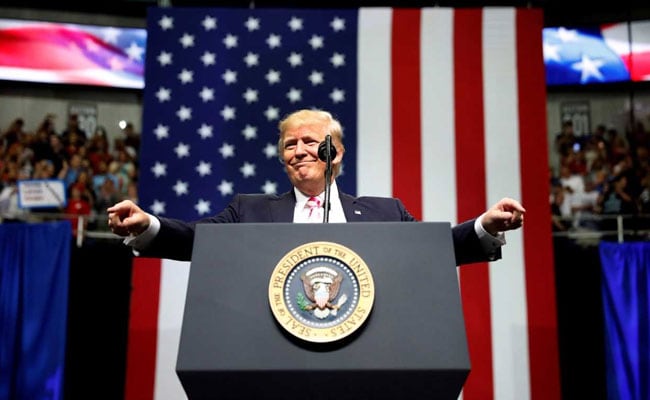
At an event in Indianapolis, Trump called the plan the largest tax cut in U.S. history. "We want tax reform that is pro-growth, pro-jobs, pro-worker, pro-family and, yes, tax reform that is pro-American," he said.
The real estate mogul-turned-politician, who promised big tax cuts as a candidate, told reporters he personally would not gain financially from the proposal.
"I think there's very little benefit for people of wealth," said Trump, who unlike many of his White House predecessors, has refused to make public his own tax returns.
Republicans have produced no major legislative successes since Trump took office in January, even though they control the White House and both chambers of Congress. Their top legislative priority, overhauling the U.S. healthcare system, collapsed again in the Senate on Tuesday.
A comprehensive rewrite of the U.S. tax code has eluded previous presidents and Congress for decades. The last one was passed in 1986 under Republican President Ronald Reagan.
Trump's plan falls short of the sweeping, bipartisan package crafted by Reagan and congressional Democrats, analysts said.
The White House said that, under the proposal, typical middle-class families would have less income subject to federal tax. Trump said the first $12,000 earned by an individual and the first $24,000 by a married couple would be tax-free.
The plan would lower the top individual tax rate, paid by the nation's top earners, to 35 percent from 39.6 percent.
It would lower the top corporate income tax rate to 20 percent from the current 35 percent. The existing rate is high globally, but many U.S.-based multinationals pay much less than the headline rate because of abundant loopholes and tax breaks.
DEMOCRATS SCEPTICAL
Trump has appealed to Democrats to back the plan, although they were not consulted in drafting it.
Republicans hold a thin 52-48 Senate majority and may need some Democratic support to win passage. But Democrats said the plan would expand the federal deficit in order to deliver tax cuts to wealthy Americans rather than the middle-class families that Trump and Republicans say they are trying to help.
"If this framework is all about the middle class, then Trump Tower is middle-class housing," said Senator Ron Wyden, the top Democrat on the tax law-writing Senate Finance Committee.
Republican Kevin Brady, chairman of the tax-writing House of Representatives Ways and Means Committee, said he expected tax legislation to be passed by the end of this year.
The Committee for a Responsible Federal Budget, a Washington-based policy group, estimated on Wednesday the plan contained about $5.8 trillion of total tax cuts over a decade and would have a net cost of $2.2 trillion through 2027.
Analysts have warned huge tax cuts would balloon the deficit if economic growth projected by Republicans to offset the costs fails to materialise amid rising interest rates.
'PASS-THROUGH' RATE
The plan would set a new 25 percent tax rate for "pass-through" businesses, which are usually small, private enterprises, such as partnerships and sole proprietorships. They represent about 95 percent of all U.S. businesses.
Under current law, the profits of those companies "pass through" directly to their owners and are taxed as personal income, often at the top 39.6 percent individual income rate.
Cutting that to 25 percent could mean big tax savings for small-business owners, but also be vulnerable to abuse by other individuals and companies, analysts said.
Republicans proposed eliminating some tax deductions. They did not target the popular ones for mortgage interest and charitable giving, but called for scrapping the one for state and local tax payments. That could especially hurt people in high-tax states like California and New York.
In a step to simplify tax returns, the plan would shrink the current seven tax brackets to three: 12 percent, 25 percent and 35 percent. That would raise the bottom tax rate on low-earning Americans to 12 percent from 10 percent, but analysts said other parts of the plan would still mean a net tax cut.
(This story has not been edited by NDTV staff and is auto-generated from a syndicated feed.)

-
AI Bias In Investing Cannot Be Eliminated, But It Can Be Governed

Framing is a particularly important example as identical financial information presented in terms of gains rather than losses can lead an LLM to reach a different assessment.
-
Joining The Dots | Dark Skies, Steady Diya: Why Hope Holds This Diwali
With war, a weak rupee and foreign outflows weighing on sentiment, policymakers at the NDTV World Summit and market veterans at NDTV Profit Ignite: Diwali Edition offered the same advice: stay invested and filter out the noise.
-
The Curious Case of Equitas Small Finance Bank And A CEO Who Quit For Stock
PN Vasudevan believes persistent investor concerns over a perceived conflict of interest had become a governance overhang on Equitas Small Finance Bank's stock, even as the lender improved profitability and asset quality.
-
Talking Points This Week: AI Cash Burn, A Tiger Comeback And An India That Still Finds Its Own Path
India is not immune to higher oil or tighter global liquidity, yet its earnings base is broader, its domestic policy levers are still available.
-
Foreign Investors Own Half Of HDFC Bank and ICICI Bank. An LTCG Cut Could Matter Most Here
Foreign portfolio investors have US$115 billion parked in HDFC Bank, ICICI Bank. If the government cuts long-term capital gains tax, Jefferies says returning foreign money could land here first.
-
'Never Seen This Level Of Negativity': Sandeep Tandon Says The Next Rally May Be Closer Than You Think
Veteran investor Sandeep Tandon says foreign selling is easing, large-caps are due a comeback and mid-caps are crowded, while he turns positive on gold, power and pharma this Diwali.
-
Indians Stay With Family, Not In Hotels | The Reason Why
India still lacks enough clean, reliable and affordable hotels for budget-conscious travellers.
-
The Economic Imperative: Analysing The Material Driving Force Behind India-Canada Strategic Reset
This economic complementarity is further reinforced by deep institutional investment ties and talent mobility, which form the bedrock of the bilateral framework.
-
Medicine Pricing: Where Must Profit Stop?
India must confront excessive margins, hidden incentives and regulatory gaps that threaten the integrity of medicine.
-
Why Amazon And Flipkart Are Struggling To Beat Meesho In India's Smaller Cities
With 274 million users and lowest-cost logistics, Meesho is defending its value commerce crown against giants like Amazon and Flipkart.










