Trade War: U.S. Metal Tariffs’ Impact On India

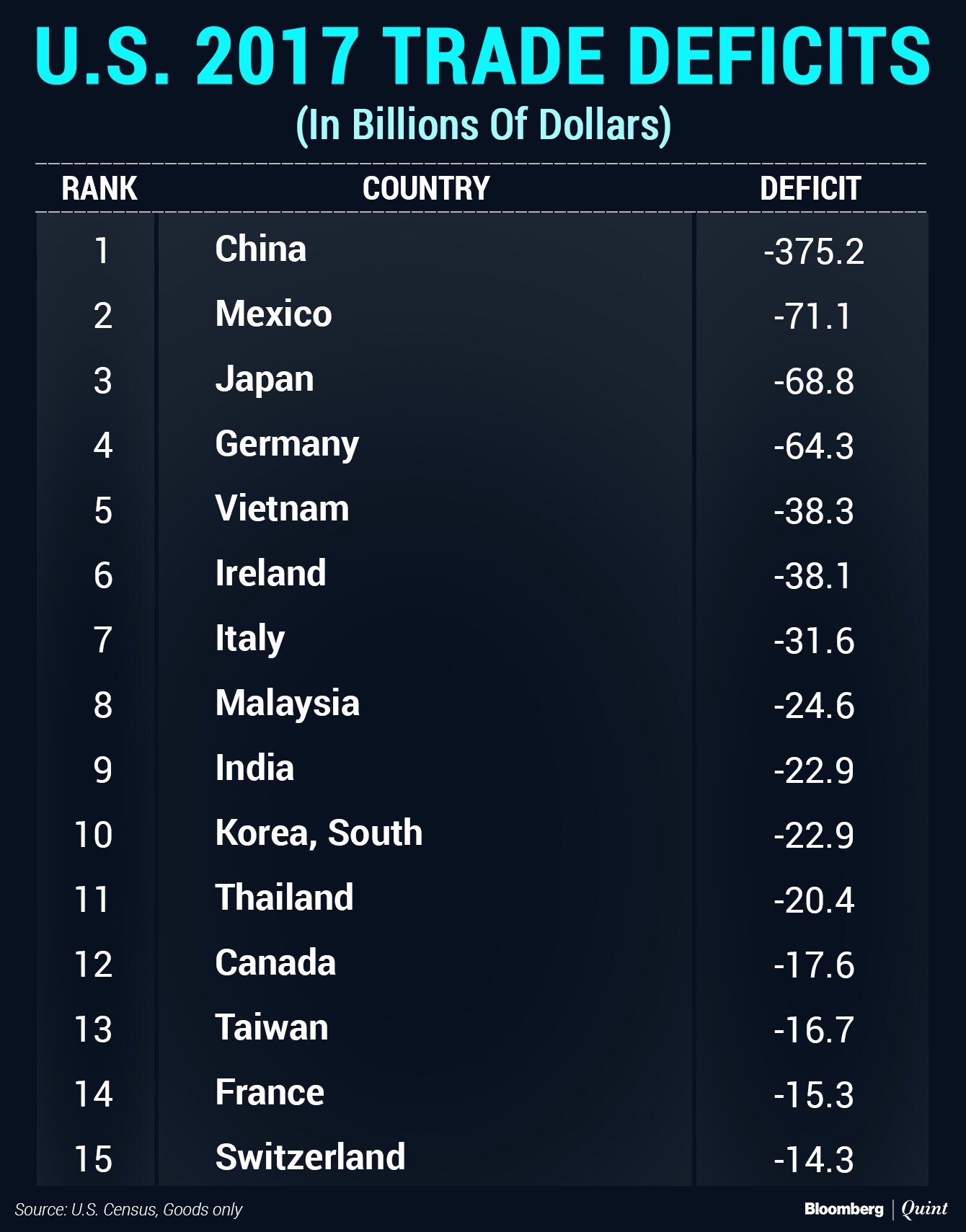
India ranks ninth on the list of trading partners that run a trade surplus with the U.S.— it exports more to the U.S. than what it imports. China, Mexico and Japan lead the list and even Vietnam runs a higher surplus against the U.S. than India does, according to U.S. government data.
U.S.-India Trade In 2017
- India ranked 9
- Exports: $25.7 billion
- Imports: $48.6 billion
- Total Trade: $74.3 billion
- Percent of total trade: 1.9 percent
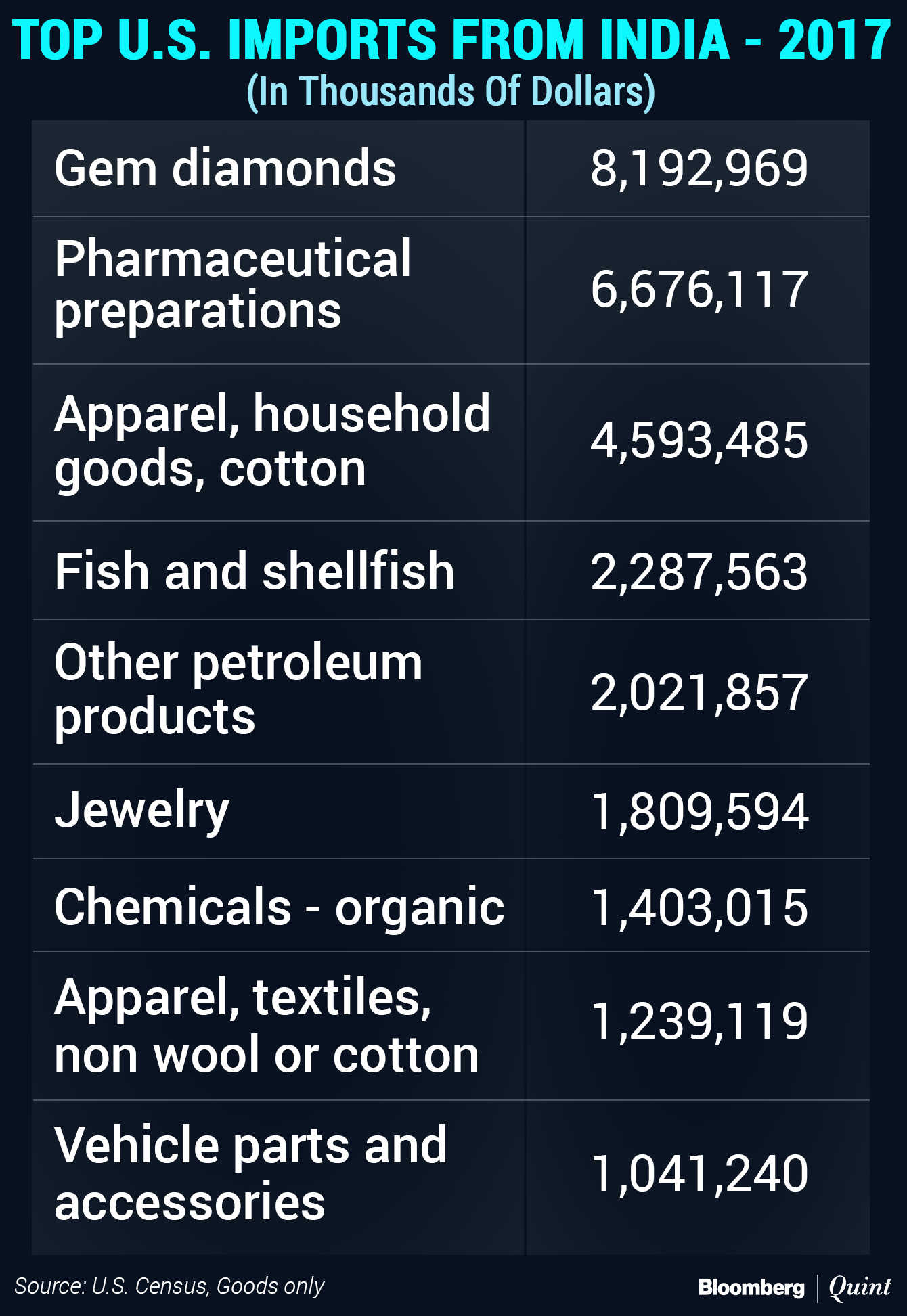
Diamonds top the list of Indian goods exports to the U.S., amounting to over $8 billion last year. Pharmaceuticals, apparel, fish and shellfish petroleum products and organic chemicals are among the top 10 U.S. imports from India.
The Metals Impact
India is a minor exporter of the two metals that U.S. President Donald Trump has announced tariffs on—steel and aluminium. The formal tariff orders are expected to be signed this week.
Also Read: Steel, Aluminium, And The New Trade War
Steel
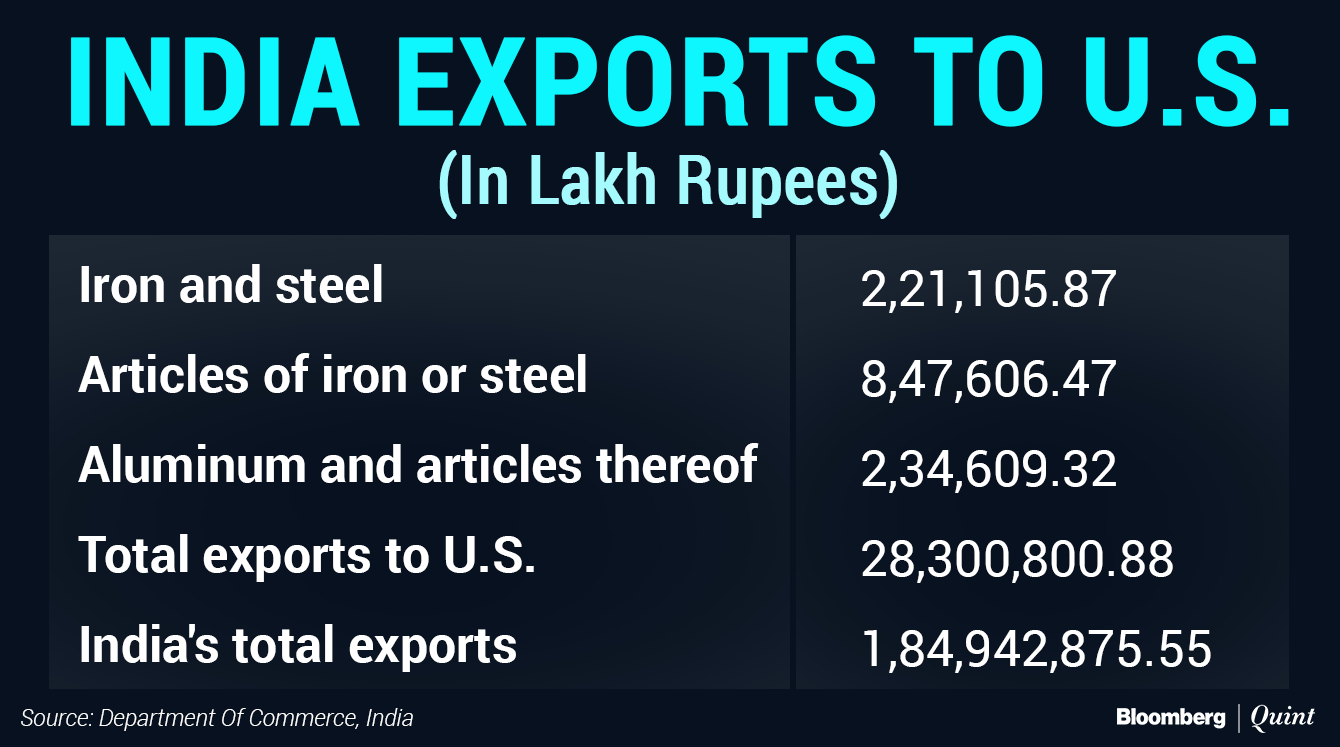
While India is among the top four manufacturers of steel globally, it exports less than 10 percent of its total production. According to government data, India exported just over Rs 10,600 crore of iron and steel, and articles thereof, to the U.S. in financial year 2016-17.
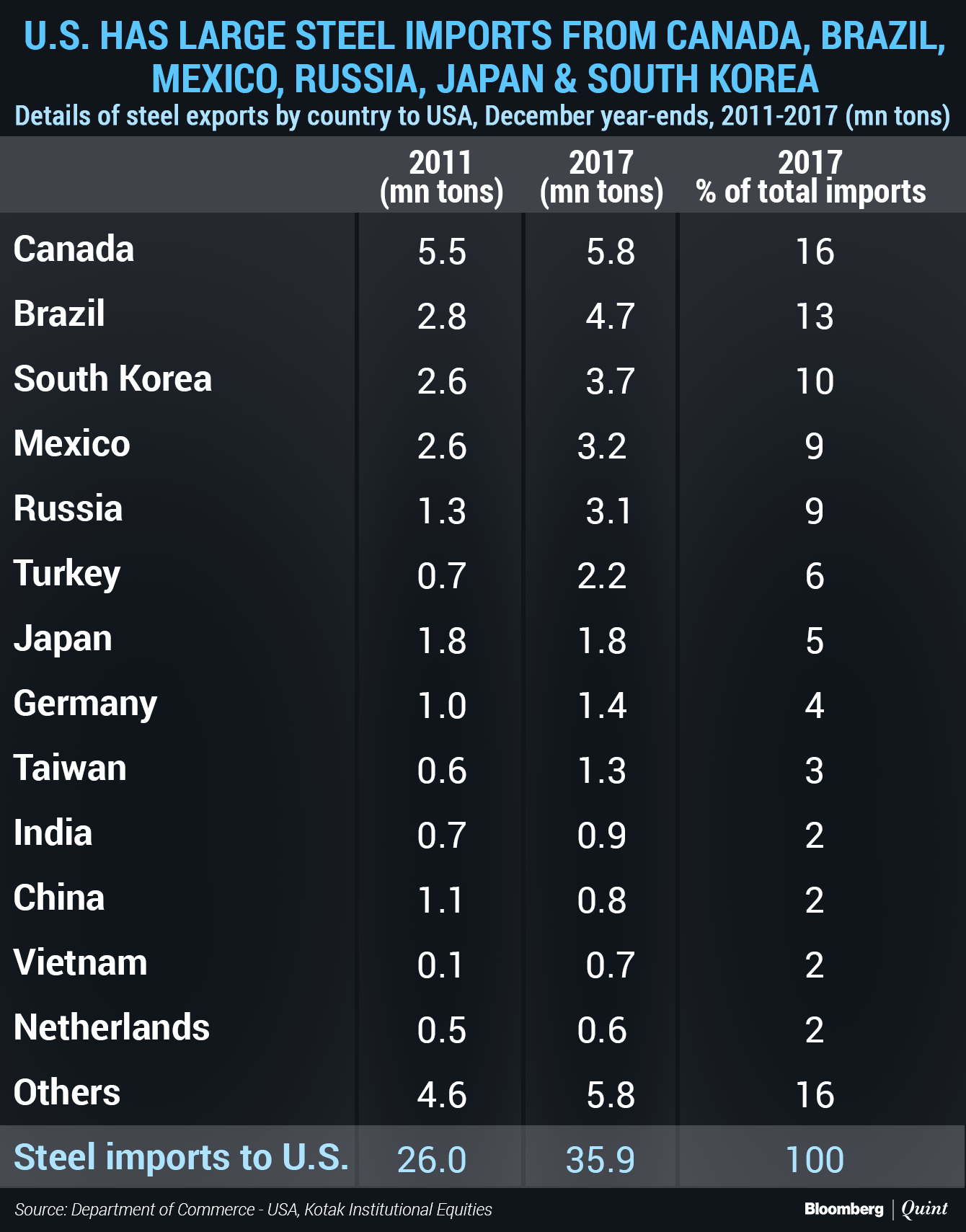
According to an HSBC Global Research report, India accounts for approximately 2 percent of U.S. steel imports—Canada, Brazil and Korea top the list. While the direct tariff impact on India will be minimal, global prices will likely remain under pressure, said the report.
- Exports to be rerouted to other markets and hence prices will remain under pressure.
- A 1 percent drop in steel prices could lead to 2-10 percent contraction in steelmakers' Ebitda estimates.
A Morgan Stanley report made a similar assessment and pointed out that India's steel exports to the U.S. represent less than 1 percent of total India production and about 4 percent of India's steel exports. Any rerouting of steel exports from other countries to India is unlikely and strong growth in domestic steel demand could absorb any incremental domestic supply, the report said.
The key to watch, we believe, would be rising risk of counter measures from other countries that may trigger trade issues, leading to pressure on steel and Aluminiumprices outside the U.S. However, with safeguard duty (for steel) still in place and domestic steel prices at a discount to global steel prices (on import parity), a potential increase in steel imports into India is unlikely.Morgan Stanley Research
Aluminium
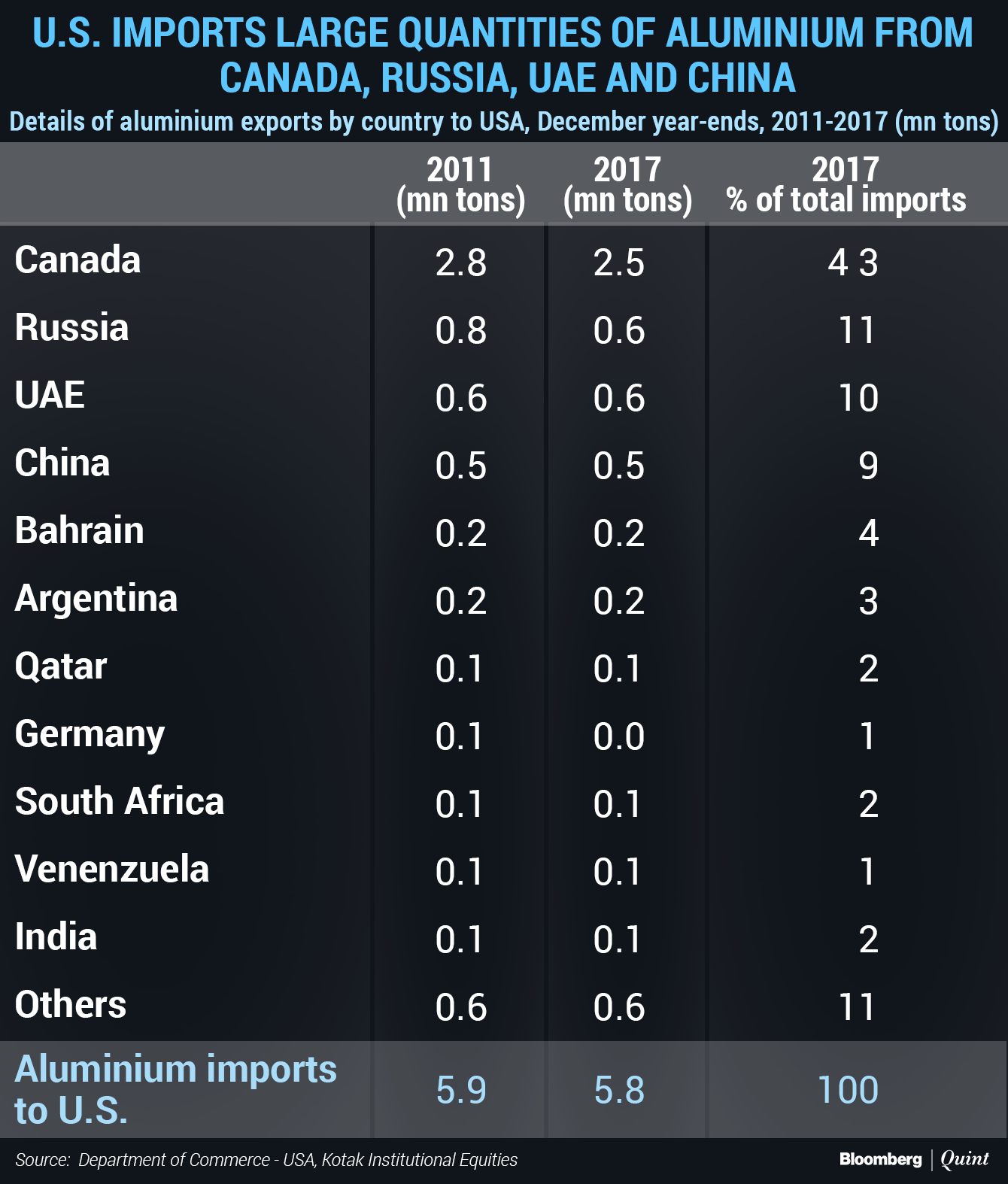
China is the world's largest aluminium producer and accounts for over 50 percent of the metal's global trade. India accounts for only 5 percent of global primary aluminium production. In financial year 2016-17, India exported Rs 2,346 crore of aluminium and aluminium products to the U.S, according to Indian government data.
A Kotak Institutional Equities report said India's aluminium exports constitute 2 percent of total U.S. imports of the metal.
The 25 percent import tariff on steel and 10 percent on aluminium by the U.S. can result in lower exports from other countries—steel exports to U.S. can decline by 9-14 million tons (0.6-0.9 percent of global demand) and aluminium by 600-700 kt (0.9 percent). We believe the extent of a potential steel mill, aluminium smelter restarts in the U.S. will not be meaningful to significantly weaken the outlook on global aluminium and steel, especially given supply-side reforms in China in these industries.Kotak Institutional Equities Report
Despite the limited exposure, shares of metal companies in India traded lower on Monday, the first trading day after the tariff announcement.

-
Indians Stay With Family, Not In Hotels | The Reason Why

India still lacks enough clean, reliable and affordable hotels for budget-conscious travellers.
-
The Economic Imperative: Analysing The Material Driving Force Behind India-Canada Strategic Reset
This economic complementarity is further reinforced by deep institutional investment ties and talent mobility, which form the bedrock of the bilateral framework.
-
Medicine Pricing: Where Must Profit Stop?
India must confront excessive margins, hidden incentives and regulatory gaps that threaten the integrity of medicine.
-
Why Amazon And Flipkart Are Struggling To Beat Meesho In India's Smaller Cities
With 274 million users and lowest-cost logistics, Meesho is defending its value commerce crown against giants like Amazon and Flipkart.
-
High US Salaries, No Green Card Certainty: The Financial Calculation Facing Indian H-1B Families
The suspension of PERM processing at eight technology employers does not cancel existing H-1B visas. What it does is force a question many Indian families have been avoiding: is the US salary worth tying your career and family plans to one employer?
-
Swiggy vs Eternal: Food Delivery's Two Rivals Are No Longer In The Same Race
Eternal is building a private AI assistant, dark.ai. Swiggy is still working out how to make Instamart pay, with an operating loss of Rs 895 crore in the July-September quarter while Blinkit stayed profitable.
-
Where You Live Shapes How You Get To Work | The Reason Why
Two-wheelers are the most popular way to get to work in India, accounting for nearly 43% of workplace commutes.
-
Unhedged Position: Can India See An Indonesia-Style Time Correction?
The Nifty is trading below levels it first clocked in 2024. Is there, then, as I have suggested in the headline, potential that the current time correction drags on painfully for the next three-five, even ten years?
-
Navigating Friction And Energy Realities: An Analysis Of Marco Rubio's October Visit To India
Occurring at a critical juncture marked by stalled trade negotiations and escalating geopolitical pressures over global energy supplies, the visit offers a profound window into modern US-India relations.
-
India Exports Capital. Why Not Export Trusteeship?
The big question, then, is whether India can build an institution that global borrowers, investors, banks, and lawyers can trust, even without an Indian connection.










