Tomato Prices To Fall As Maharashtra, Madhya Pradesh Send Higher Supplies
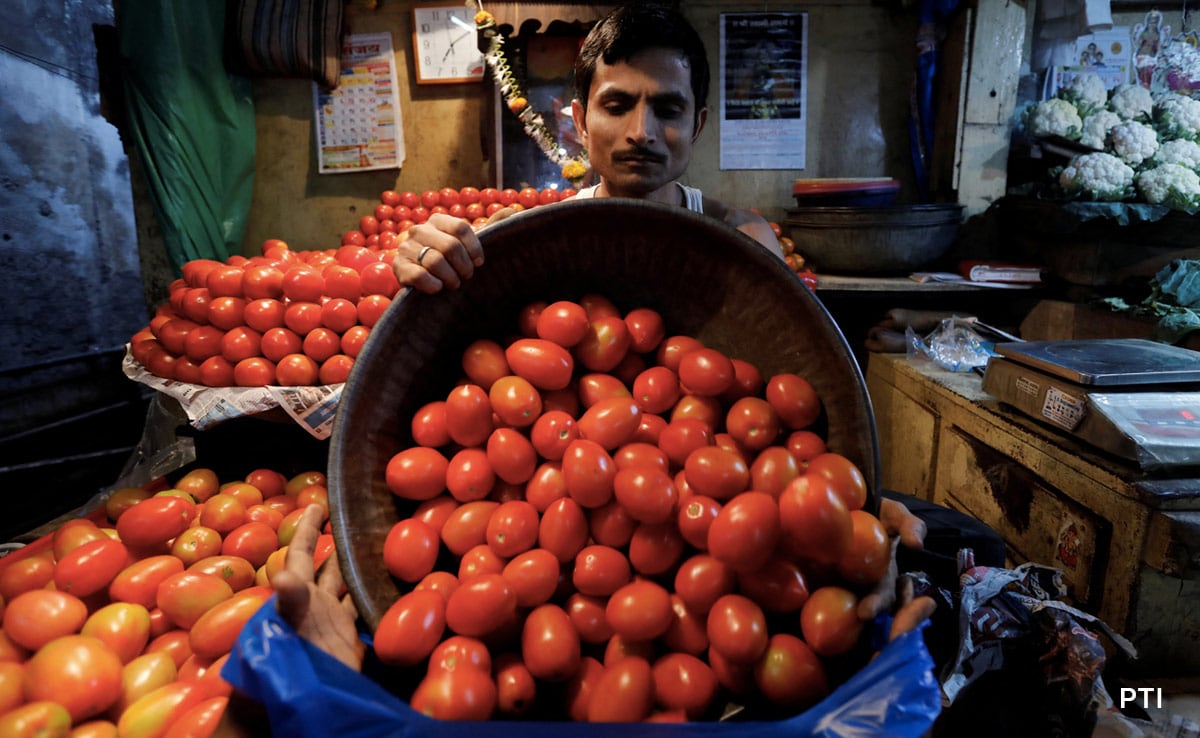
The government today said retail prices of tomatoes are expected to fall with higher supply of new crops from Maharashtra and Madhya Pradesh.
The retail prices have shot up to Rs 200-250 per kilogram in several parts of the country as supply chain got disrupted due to monsoon rains and other issues.
In a written reply to Rajya Sabha, Minister of State for Consumer Affairs, Food and Public Distribution Ashwini Kumar Choubey said, "Prices of tomato are expected to come down with the increase in arrival of new crop from Nashik, Naryangaon and Aurangabad belt in Maharashtra and also from Madhya Pradesh." He said the "current increase in tomato prices may incentivise farmers to grow more tomato crop which is expected to stabilise the prices in coming months".
Mr Choubey attributed the recent increase in prices to a combination of factors like "crop seasonality, white fly disease in Kolar (Karnataka), instantaneous arrival of monsoon rains in northern part of the country which adversely affected tomato crops in Haryana and Himachal Pradesh and logistics disruptions in isolated areas due to heavy rains."
In response to a question by independent member Kartikeya Sharma, the minister informed that the average daily retail price of tomato had crossed Rs 150 per kg in Delhi, Punjab, Chandigarh and Andaman and Nicobar Islands during the week July 10-16.
As on July 18, the average retail price in Delhi declined to Rs 130 per kg and to Rs 127.70 per kg in Punjab.
In order to check prices of tomatoes and make them affordable, the government has started their procurement under Price Stabilisation Fund and is making them available at a highly subsidised rate to consumers.
The National Cooperative Consumers Federation (NCCF) and National Agricultural Cooperative Marketing Federation (NAFED) are continuously procuring tomatoes from 'mandis' in Andhra Pradesh, Karnataka and Maharashtra, and making them available at affordable prices in major consuming centres in Delhi-NCR, Bihar and Rajasthan, among other places.
Tomatoes were initially sold at a retail price of Rs 90 per kg which was reduced to Rs 80 per kg from July 16 and further cut to Rs 70 per kg from July 20.
Till July 18, a total of 391 tonnes of tomatoes had been procured for continuous retail disposal in major consumption centres for the benefit of consumers.
The Department of Agriculture & Farmers Welfare (DAFW) is implementing Market Intervention Scheme (MIS) to protect the growers of perishable agri-horticultural commodities from making distress sale in the event of a bumper crop during the peak arrival period when the prices tend to fall below economic levels and cost of production.
"Under the scheme, the loss on account of the fall in price is borne between the central government and state government on 50:50 basis.
"Since the inception of MIS till date, the Department of Agriculture and Farmers Welfare has not received any proposal from state governments for market intervention to address distress sale of tomato," the minister said.
(Except for the headline, this story has not been edited by NDTV staff and is published from a syndicated feed.)

-
We May Need Another Tukaram Mundhe To Fight Air Pollution | The Reason Why

Developers may install basic measures such as sprinklers and green nets, resume work, and continue violating rules when this equipment stops working.
-
Extracting Value From Battery Scrap Could Be Challenging For India | The Reason Why
A discarded lithium-ion battery still contains valuable materials such as lithium, nickel and cobalt. These can be recovered and reused. When such batteries are crushed and shredded, they produce a dark powder called black mass.
-
One El Nino, India Can Handle. Two Could Break The Granary
India's grain stocks can absorb one bad year, but a second El Nino could drain the buffer in two to three years, economists say.
-
India's Troika Of Good Luck | Joining The Dots
As Jensen Huang's exit drags Nvidia down, a cooling AI trade and resilient earnings have revived investor interest in India. A likely RBI rate hike looms.
-
Talking Points This Week: Leadership Shock At Nvidia, Earnings Strength, And The Fog Over Hormuz
The Anthropic IPO pricing and first trading day, Nvidia's upcoming earnings, and any fresh signals from Iran will set the tone for the following week.
-
Signature Play: The Classic Cocktail Is Dead. Or Is It?
Classic cocktails are disappearing from India's cocktail menus. But they're still being ordered, taught to bartenders and borrowed from. So, who's really having the last drink?
-
A New Samvat Wishlist: Inclusive Prosperity And Human Development
India has strengthened its economic foundations through infrastructure, digital access and enterprise. Its next growth chapter must deepen productivity, create better livelihoods and widen participation in prosperity.
-
Love, Sex Aur Dhokha: The Audacious Plot To Spy On Jensen Huang
A Taipei dinner, a Singapore chip buyer and a suspected Chinese asset: inside the alleged spy operation that got close to NVIDIA's Jensen Huang.
-
Ten Things I Learnt This Samvat
Patience can be a trap. Cheap stocks can stay cheap. Leverage can wipe you out. What did Samvat 2082 teach us? Niraj Shah writes on 10 lessons from the year gone by.
-
Talking Points This Week: Tech Nerves, FII Buying, And A Faraway Banking Shock
The global markets are not shining this Diwali. The exception in the large markets is, India.









