To Avoid Default, Sri Lanka Might Need to Get Tougher on Climate Change
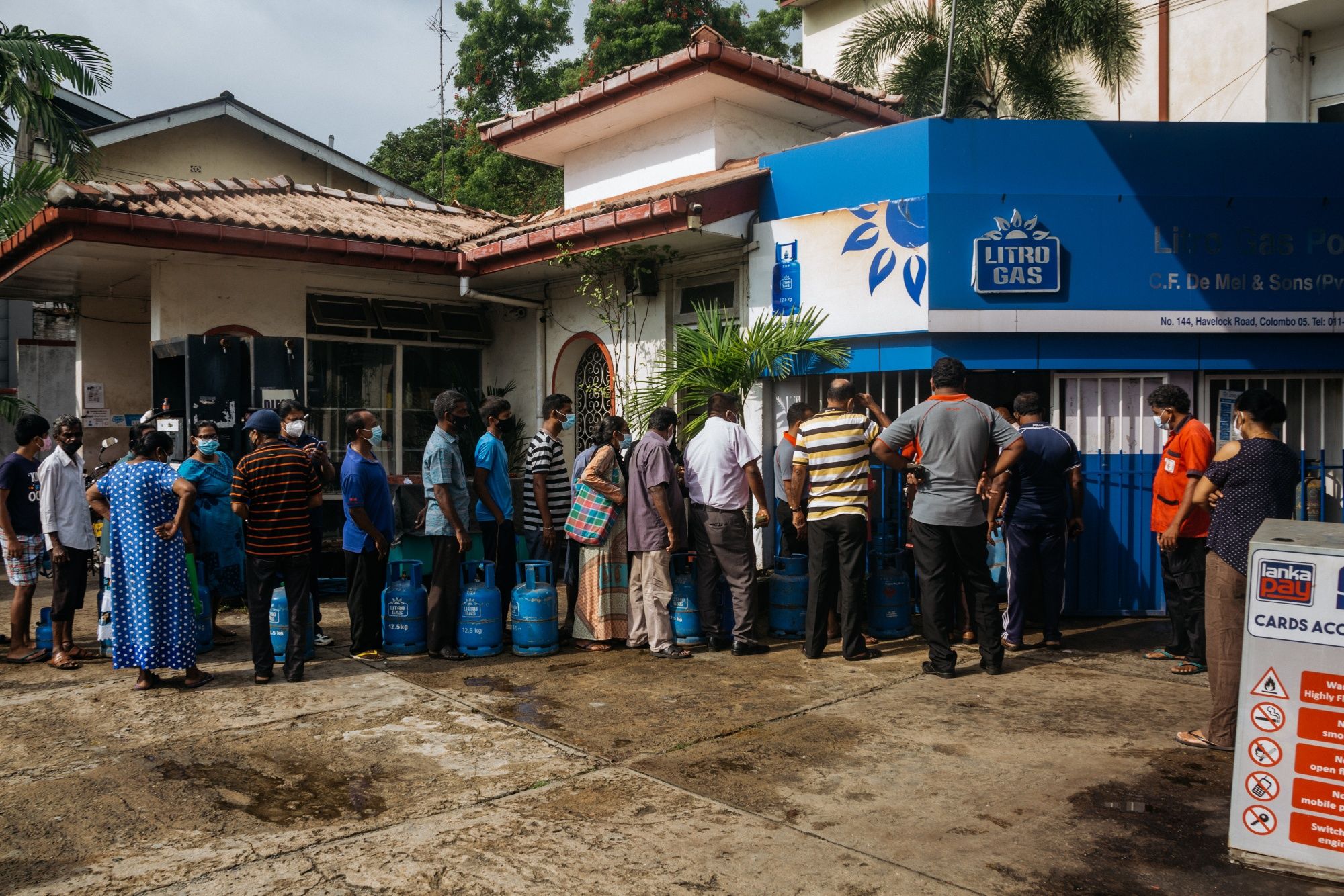
(Bloomberg) -- Sri Lanka is hurtling toward a default of its international debt and needs to restructure. Its government may be surprised to find that a group of its creditors have more than money on their mind.
One of its lenders, Nordea Bank Abp's asset management unit, wants to tie any agreement to climate goals, according to a letter from the asset manager to Sri Lankan authorities last month that was seen by Bloomberg. In the letter, the Helsinki-based manager outlined targets set under the Paris agreement including increasing forest cover, reducing greenhouse gases, achieving 70% renewable energy in electricity generation by 2030 and carbon neutrality by 2050.
“Sri Lanka has the unique chance to become the first country that has all its international bonds aligned to the Paris agreement,” said Thede Ruest, Nordea's head of emerging markets debt, who signed the letter. The asset manager is seeking the backing of other creditors. To be successful it will need them because it holds less than 1% of Sri Lanka's international debt.

Sri Lanka is in a precarious position. Unable to both service its debt and buy enough food and fuel for its population, it has stopped all payments on its foreign debt and faces its first default since independence from Britain in 1948. While the World Bank has for now stepped in to help pay for food and medicines, a debt restructure is key to winning a bailout from the International Monetary Fund.
In March, the country had less than enough dollars in its foreign exchange reserves to buy one month's worth of imports such as food and fuel after the pandemic and then the war in Ukraine decimated its tourism industry.
Read more: A Powerful Dynasty Bankrupted Sri Lanka in Just 30 Months
The move by Nordea is the latest iteration of a trend that is slowly emerging in the fund management industry: Using sovereign debt talks to push a climate agenda. In November, Belize and its creditors, with the help of U.S. charity the Nature Conservancy, agreed a $553 million restructuring that saw the government commit to spending millions on marine conservation.

Convincing countries and creditors to agree to such demands is not easy. Governments are nervous about making policy based on fund managers' requests and bondholders might care more about making money than pushing for green commitments.
Some recent efforts have been unsuccessful. In 2020 Ecuador rejected a proposal to eliminate fuel subsidies that encouraged gasoline use, and the following year Argentina resisted the chance to get lower coupon payments if it hit targets tied to United Nations ambitions on education and clean water.
Read more: At London Debt Talks, Wealthy Fund Managers Try Something New
Ruest believes that proposing goals to which Sri Lanka has already committed makes his suggestion easier to digest.
“The ESG element is becoming a recurring feature in restructurings,” said Joe Delvaux, an emerging markets distressed debt portfolio manager at Amundi SA, which was involved in debt talks with Ecuador and Argentina's governments. “It is not always successful for various reasons, but it has become a difficult topic to avoid.”
Sri Lanka's Finance Minister Ali Sabry didn't immediately respond to a request for comment.
Amundi is one of the creditors to Sri Lanka and some of the debt is held in funds Delvaux oversees. The asset manager will also bring up environmental, social and governance questions when the time comes, Delvaux said.

Ajata Mediratta, president at Greylock Capital Management, a Connecticut-based hedge fund that was among creditors pushing for Belize to adopt climate goals, said bondholders are increasingly open to including such goals in debt restructurings but that it has to be something that works for both the country and its creditors.
“It is still the early days, and months of difficult work are ahead before the real negotiations begin,” Mediratta said, referring to the Sri Lanka talks.
BlackRock Inc. and Pacific Investment Management Co., which are among Sri Lanka's biggest creditors, declined to comment about whether they plan to use the debt talks to push an ESG or climate-related agenda.
More stories like this are available on bloomberg.com
©2022 Bloomberg L.P.

-
Signature Play: The Classic Cocktail Is Dead. Or Is It?

Classic cocktails are disappearing from India's cocktail menus. But they're still being ordered, taught to bartenders and borrowed from. So, who's really having the last drink?
-
A New Samvat Wishlist: Inclusive Prosperity And Human Development
India has strengthened its economic foundations through infrastructure, digital access and enterprise. Its next growth chapter must deepen productivity, create better livelihoods and widen participation in prosperity.
-
Love, Sex Aur Dhokha: The Audacious Plot To Spy On Jensen Huang
A Taipei dinner, a Singapore chip buyer and a suspected Chinese asset: inside the alleged spy operation that got close to NVIDIA's Jensen Huang.
-
Ten Things I Learnt This Samvat
Patience can be a trap. Cheap stocks can stay cheap. Leverage can wipe you out. What did Samvat 2082 teach us? Niraj Shah writes on 10 lessons from the year gone by.
-
Talking Points This Week: Tech Nerves, FII Buying, And A Faraway Banking Shock
The global markets are not shining this Diwali. The exception in the large markets is, India.
-
Midterm Rally Lasted A Day. The Hard Reality Of A Divided US May Last Two Years | Opinion
Between a contested AI boom, a debt ceiling that arrives in 2027 and a president with every incentive to act alone, the next two years may prove more volatile than the first day's rally suggests.
-
Blue Wave Will Derail the AI Trade but Won't Dismantle the AI Era | Unhedged Position
The Democrats' sweep of the US Congress will see politics collide with economic forces both over the long and short term.
-
It's Time To Take The GST Council's Bet On Trust Global
Payment records can prove India's services exports, and clear, proportionate rules can bring foreign digital sellers into the tax net.
-
Opinion | India at 38: From Innovation Overperformer to Innovation Powerhouse
India now has 453 VC-backed deep science startups, 18 of them late-stage, after 117 percent growth since 2020. Laurus Labs, at USD 9.3 billion, is the most valuable deep science company in any middle-income economy outside China.









