How The Titanic Wreck Became A Money-Making Scheme
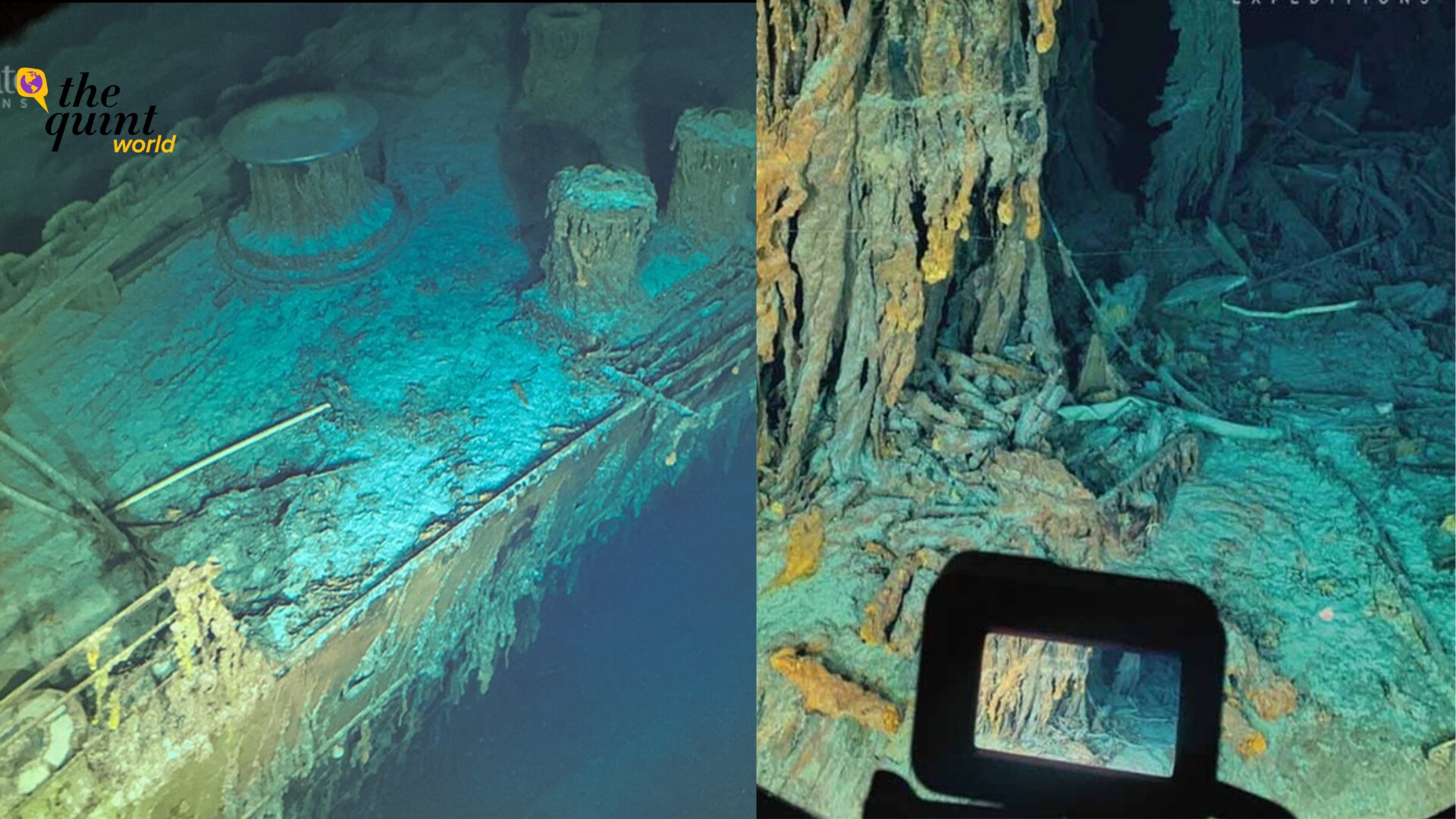
(Bloomberg Opinion) -- The ill-fated passengers who died trying to visit the wreck of the Titanic paid an extraordinary price for the privilege: $250,000 each. This is hardly surprising, given how many people view the story of the doomed ship with intense, if morbid, fascination. A profitable industry now caters to this obsession, with commercial museums the latest offering for those in need of a Titanic fix.
While it's tempting to blame James Cameron for this state of affairs, that's not quite right. Our obsession with the Titanic tragedy, along with monetizing it, has far deeper roots. Even as the corpses of those who died in the tragedy awaited burial in April 1912, countless entrepreneurs seized the opportunity to make a fortune off the misfortune of others.
First in line were companies that made and distributed newsreels to be screened in movie theaters. Within days of the sinking, short films claiming to show the great ship before its fateful voyage began playing in packed movie houses and theaters on both sides of the Atlantic. The only problem? Almost no footage of the ship existed.
No matter! Some of the newsreel companies got their hands on footage of the Titanic's twin, the Olympic, in New York City. They scratched out the names of other ships in the footage as well as any other clues that might betray the ship's true identity. They also repurposed footage of the Titanic's Captain Edward Smith taken on a different ship, passing it off as if he was piloting the Titanic.
This dubious mix of fact and fiction, typically accompanied by melodramatic music and audience singalongs, proved quite lucrative for these companies. Warner's Features, which marketed one of these misleading films, claimed to have sold 100 copies in 48 hours.
Not everyone gave glowing reviews, though. Some crowds protested when they discovered that –- contrary to false advertising claims –- the reels didn't actually contain footage of the sinking after all.
The actual film industry took things even further. Less than a month after the ship sank, Saved from the Titanic hit theaters. It featured Dorothy Gibson, an American silent-film star who just happened to have been on the Titanic's fateful voyage. The film, built around a series of flashbacks, showed Gibson reenacting her experience, all while wearing the very dress she had worn on that fateful evening.
Gibson's film proved a huge hit, overshadowing another Titanic-related commercial success released to the German market: Nacht und Eis, or Night and Ice. Both films excelled where the newsreels could not, building models that depicted the actual sinking. The Germans went so far as to show Captain Smith drowning. Audiences loved it.
But the big screen was only one of many places that attracted people eager to turn the catastrophe into cash. By the early 20th century, publishers had perfected the art of churning out “instant books” that purported to memorialize and document tragedies. When the Titanic sank, they didn't hesitate.
The first instant book came out within a month of the sinking, followed by several others. These typically claimed to have some kind of official imprimatur – “the only authoritative book,” one claimed. Printed on cheap paper and padded with passages taken from newspapers, these books reached a market through armies of salesmen, who went door to door collecting advance orders for the works, which typically sold for a dollar each, or about $30 in today's money.The music industry also jumped on the bandwagon. At the time, most of the money lay in publishing sheet music, not records. And while some of the compositions were written with the idea of raising money for the families of the victims, plenty were in it to turn a profit. The offerings varied in quality. Some had maudlin lyrics: “My Sweetheart Went Down With the Ship” was typical of the genre.
While World War I put a temporary end to the fondness for all things Titanic, this was hardly the end of the line. As one historian of this pop culture phenomenon has noted, “interest in the disaster was dormant, not extinct,” reviving in 1929 with a smash theatrical hit: The Berg. This became the basis of another film, The Atlantic, which was breathlessly billed as “a thunderbolt of drama impossible to describe.”
For the most part, critics of commercialization hailed from British and American shipping lines. These magnates feared that all the films, plays and radio dramas about the Titanic might deter people from traveling by boat. For example, when the BBC proposed making a highly realistic radio play about the Titanic in the 1930s, complete with sound effects, members of the press sympathetic to the liners warned that listeners would experience “a night of horror which, in gruesome realism, is likely to surpass anything given before.” But they rarely won these censorship campaigns.
The postwar era experienced renewed commercial interest in the tragedy. Walter Lord's 1955 bestselling book, A Night to Remember, became a critically acclaimed film. Others proved less successful. In 1980, Raise the Titanic, based on Clive Cussler's book of the same name, proved a spectacular failure. It took $40 million to make and only brought in $7 million. After it tanked at the box office, the producer, Lew Grade, quipped: “It would have been cheaper to lower the Atlantic Ocean.”
Many predicted that James Cameron's Titanic would suffer the same fate. It did not, eventually grossing more than any other movie made up until that time. But if Cameron made the most money off the Titanic than anyone in history, he was by no means the first.
And, judging from the fate of the Titan, he won't be the last. Whatever other reasons for the doomed ship's appeal across the ages, one thing seems certain: It always was – and will remain so for the foreseeable future – a source of profit as much as anything else.
This column does not necessarily reflect the opinion of the editorial board or Bloomberg LP and its owners.
Stephen Mihm, a professor of history at the University of Georgia, is coauthor of “Crisis Economics: A Crash Course in the Future of Finance.”
More stories like this are available on bloomberg.com/opinion
©2023 Bloomberg L.P.

-
The Economic Imperative: Analysing The Material Driving Force Behind India-Canada Strategic Reset

This economic complementarity is further reinforced by deep institutional investment ties and talent mobility, which form the bedrock of the bilateral framework.
-
Medicine Pricing: Where Must Profit Stop?
India must confront excessive margins, hidden incentives and regulatory gaps that threaten the integrity of medicine.
-
Why Amazon And Flipkart Are Struggling To Beat Meesho In India's Smaller Cities
With 274 million users and lowest-cost logistics, Meesho is defending its value commerce crown against giants like Amazon and Flipkart.
-
High US Salaries, No Green Card Certainty: The Financial Calculation Facing Indian H-1B Families
The suspension of PERM processing at eight technology employers does not cancel existing H-1B visas. What it does is force a question many Indian families have been avoiding: is the US salary worth tying your career and family plans to one employer?
-
Swiggy vs Eternal: Food Delivery's Two Rivals Are No Longer In The Same Race
Eternal is building a private AI assistant, dark.ai. Swiggy is still working out how to make Instamart pay, with an operating loss of Rs 895 crore in the July-September quarter while Blinkit stayed profitable.
-
Where You Live Shapes How You Get To Work | The Reason Why
Two-wheelers are the most popular way to get to work in India, accounting for nearly 43% of workplace commutes.
-
Unhedged Position: Can India See An Indonesia-Style Time Correction?
The Nifty is trading below levels it first clocked in 2024. Is there, then, as I have suggested in the headline, potential that the current time correction drags on painfully for the next three-five, even ten years?
-
Navigating Friction And Energy Realities: An Analysis Of Marco Rubio's October Visit To India
Occurring at a critical juncture marked by stalled trade negotiations and escalating geopolitical pressures over global energy supplies, the visit offers a profound window into modern US-India relations.
-
India Exports Capital. Why Not Export Trusteeship?
The big question, then, is whether India can build an institution that global borrowers, investors, banks, and lawyers can trust, even without an Indian connection.
-
France's Economy & Politics Are In Crisis | The Reason Why
Let's look at how the French economy and politics evolved under Nicolas Sarkozy, Franois Hollande and Emmanuel Macron.










