Love Shopping Online? Keep These 5 Things In Mind For Safe Online Transactions
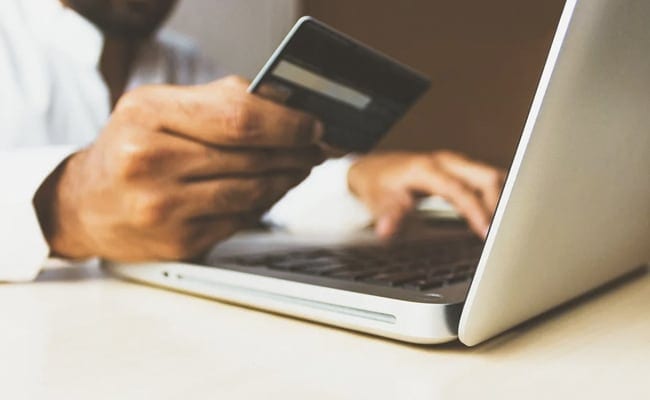
It is not uncommon for us to come across horrifying news and stories of people, known or unknown, who got defrauded while making online transactions for hardly any fault of their own. With the coronavirus pandemic compelling us to find ways to reduce physical touch as a way of preventing contamination, many of us have turned to online payment methods as a way to complete our regular purchases. Be it using banking applications or our debit and credit cards, cash purchases have gone down comparatively and our dependence on these virtual payment gateways has increased.
But this also exposes us to the risk of cyber theft and frauds, since many users are not privy to the safety precautions one should keep in mind while making such transactions.
Here are some of the things you should ensure while making payments online:
Choose the OTP option
While making any payment online via virtual payment gateways, it is always advised to choose the OTP (one-time-password) option instead of passwords or 3D pin for the simple reason that OTPs are valid for a very short duration from the time the payment processing starts. One must also always remember to never ever share the OTP with anyone. No legitimate bank or financial institution will ever call a client to ask for their OTP, so it is very important to never fall for fraudulent phone call requests like these.
Avoid purchasing from untrustworthy portals
In order to keep oneself safe from the possibility of being defrauded in an online transaction, it is also recommended that one doesn't make online purchases from applications and websites that are not reputed or trustworthy. A handy way of ensuring this can be to not link one's cards or bank accounts to every e-commerce application or platform they use and to always type in the website addresses with "https" instead of clicking on Google search results that might be fake. If there is a lock sign on the address bar and if "https://" is in green, it is safe to assume that the connection is secure.
Avoid public Wi-Fi connections
Public Wi-Fi connections, like those at airports or cafes, or even a stranger's hotspot, are not the most secure ones for making online payments and entering sensitive information like your passwords and OTPs. If you're outside, try completing the transaction using your own mobile data connection and avoid shopping online when connected to public Wi-Fi.
Create strong unique passwords and pins
For banking applications, log-in credentials to e-commerce websites as well as credit and debit card PINs, it is very important to not only create strong passwords but also to keep changing them from time to time. A strong password would usually be one that is complex, has a range of characters and alphabets, and cannot be linked to any publicly available information regarding yourself. For example, although it is tempting to use one's date of birth as a PIN, it is highly recommended to not. Date of birth, parents' names also serve as information related to security questions in multi-step authentications.
Log out from e-commerce websites
After online shopping, remember to not stay logged in even if the device is yours. If the device is not yours, it is prudent to not log into banking websites or e-commerce platforms from public or untrustworthy devices. If someone needs help with a purchase, instead of sharing your banking credentials on their e-commerce account, ask them to place the order via your account. At no cost should passwords, PINs, OTPs, or related log-in credentials be shared with anyone else.

-
The Economic Imperative: Analysing The Material Driving Force Behind India-Canada Strategic Reset

This economic complementarity is further reinforced by deep institutional investment ties and talent mobility, which form the bedrock of the bilateral framework.
-
Medicine Pricing: Where Must Profit Stop?
India must confront excessive margins, hidden incentives and regulatory gaps that threaten the integrity of medicine.
-
Why Amazon And Flipkart Are Struggling To Beat Meesho In India's Smaller Cities
With 274 million users and lowest-cost logistics, Meesho is defending its value commerce crown against giants like Amazon and Flipkart.
-
High US Salaries, No Green Card Certainty: The Financial Calculation Facing Indian H-1B Families
The suspension of PERM processing at eight technology employers does not cancel existing H-1B visas. What it does is force a question many Indian families have been avoiding: is the US salary worth tying your career and family plans to one employer?
-
Swiggy vs Eternal: Food Delivery's Two Rivals Are No Longer In The Same Race
Eternal is building a private AI assistant, dark.ai. Swiggy is still working out how to make Instamart pay, with an operating loss of Rs 895 crore in the July-September quarter while Blinkit stayed profitable.
-
Where You Live Shapes How You Get To Work | The Reason Why
Two-wheelers are the most popular way to get to work in India, accounting for nearly 43% of workplace commutes.
-
Unhedged Position: Can India See An Indonesia-Style Time Correction?
The Nifty is trading below levels it first clocked in 2024. Is there, then, as I have suggested in the headline, potential that the current time correction drags on painfully for the next three-five, even ten years?
-
Navigating Friction And Energy Realities: An Analysis Of Marco Rubio's October Visit To India
Occurring at a critical juncture marked by stalled trade negotiations and escalating geopolitical pressures over global energy supplies, the visit offers a profound window into modern US-India relations.
-
India Exports Capital. Why Not Export Trusteeship?
The big question, then, is whether India can build an institution that global borrowers, investors, banks, and lawyers can trust, even without an Indian connection.
-
France's Economy & Politics Are In Crisis | The Reason Why
Let's look at how the French economy and politics evolved under Nicolas Sarkozy, Franois Hollande and Emmanuel Macron.










