The US Has A Long History Of Bad Peace Deals
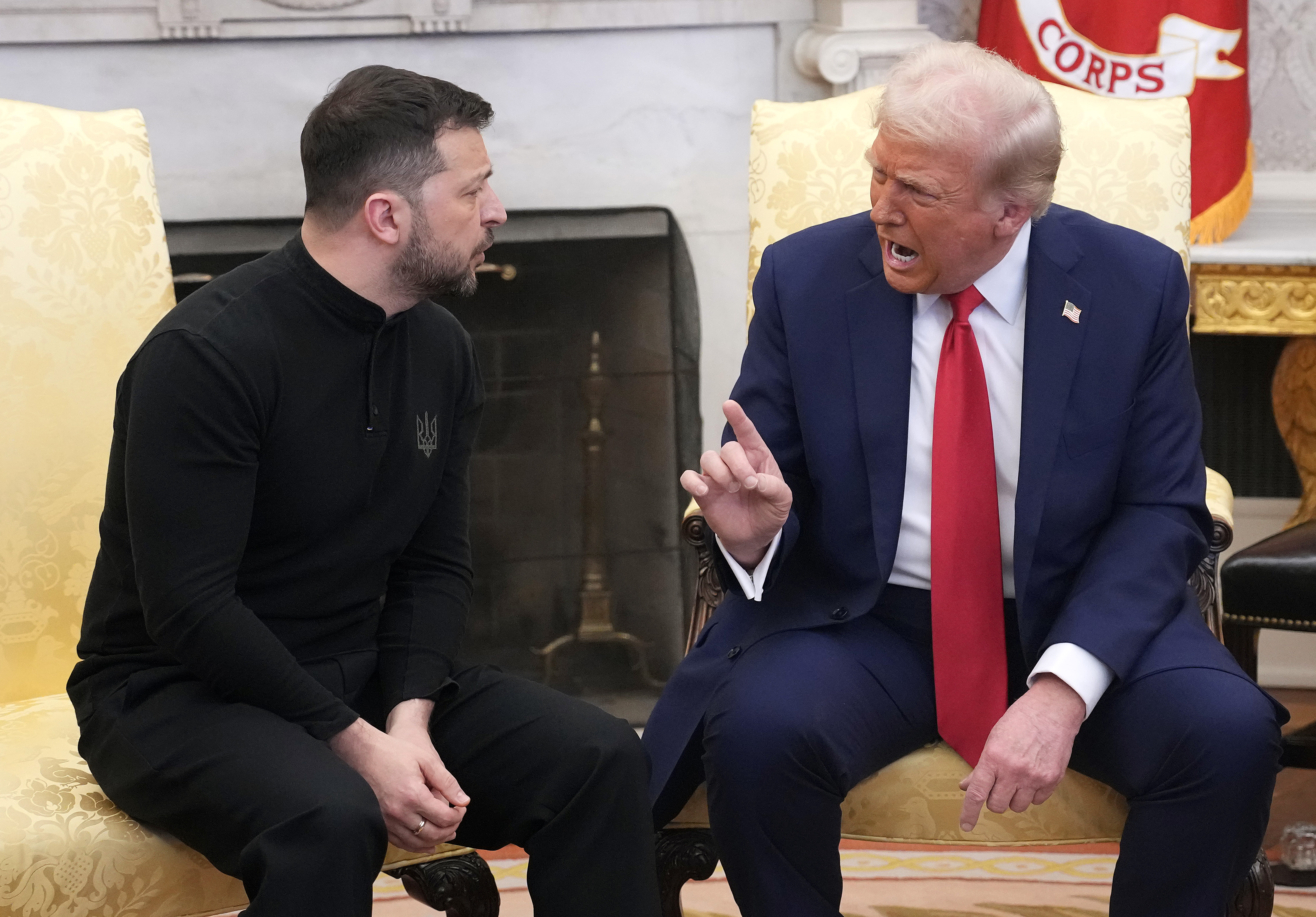
A truce is always better than no truce, and that includes the ceasefire which Ukraine, after discussions with the United States in Saudi Arabia, says it's ready to comply with, provided that Russia does so too. It's also good that the Americans and Ukrainians are talking at all, after Donald Trump so contemptuously dressed down Volodymyr Zelenskiy in the Oval Office earlier this month. But the Ukrainian president is right to remain wary of the coming peace negotiations as his American counterpart seems to envision them.
The tenor of American peace efforts under Trump is to foist, for the sake of getting any deal, a bad and unfair one on the nation that has been the victim of Russia's aggression since 2014, and of its brutal full-scale invasion since 2022. Trump has inverted the moral roles in the conflict, blaming Ukraine rather than Russia for the war and calling Zelenskiy rather than Russian President Vladimir Putin a dictator. It's clear that Trump will ask a lot of Zelenskiy and shockingly little of Putin. For starters, Trump has preemptively ruled out Ukraine's membership in NATO and American boots on the ground, and left no doubt that he expects Ukraine to make big territorial concessions.
These bad omens have strategists and pundits reaching for historical parallels. Larry Summers, a former US treasury secretary, told Bloomberg that the coming settlement could be “a Versailles-like agreement imposed, not on aggressors, but imposed on the victims of aggression.” He was referring to the Treaty of Versailles that ended World War I, but on terms which observers such as John Maynard Keynes considered so ruinous and humiliating toward Germany as to assure a new war in due course. The fact that Ukraine, unlike Germany in 1914, did nothing to cause the present war would make such an outcome even harder to bear.
But there are more pertinent and recent analogies to today's situation, according to the historian Ian Horwood. One is Vietnam in the early 1970s. As the US has since 2022 stood by Ukraine, it once supported South Vietnam, which was under attack from North Vietnam, which was in turn backed by China and the Soviet Union. One big difference to the Ukrainian situation now was that the US had boots on the ground, and a correspondingly traumatized home front. A similarity was that Washington had come to view the conflict as unwinnable and wanted to end it, with President Richard Nixon eager to play the role of peacemaker.
Then as now, the US in effect coerced its ally into negotiations by threatening to withdraw all support. It also offered its ally what turned out to be flimsy security assurances. In a letter to his South Vietnamese counterpart, Nixon repeated “my personal assurances to you that the United States will react very strongly and rapidly to any violation of the agreement.” That response was understood to be massive aerial bombardment. The Paris Peace Accords were signed in 1973. But when the North Vietnamese launched a new attack two years later, the US (now led by Gerald Ford) retreated, and South Vietnam fell.
Another example is sure to make Trump blow his top, because it involves him and his successor, Joe Biden. In his first term, Trump was in a hurry to end the war in Afghanistan, which he also viewed as a stalemate. So his administration started talking directly to the Taliban — hear the echoes in Trump's conversations with Putin — without including the Afghan government that America nominally supported, but which Trump now pressured with threats of abrupt withdrawal that came to be known as the “Tweets of Damocles.”
These talks led to the Doha agreement of 2020, in which the Afghan government was sidelined and the US struck a deal with the Taliban, who promised to allow no terrorists in Afghanistan and to talk to the government. When they broke those assurances, though, the Americans kept withdrawing. And when Biden took over, he stayed the path, eventually pulling out hastily, incompetently and irresponsibly, letting the government collapse and the Taliban seize Kabul.
The worrisome pattern is that the US, when it's eager to get out of a foreign mess, tends to sideline allies, concede too much to adversaries and eventually walk away from commitments implied or given. Everything that Trump has said and done as candidate and 47th president suggests he may be in for an encore.
Trump has had a fraught relationship with the Ukrainian president since his first term. But for Zelenskiy, it shouldn't matter who his interlocutor is, just as it made little difference for the South Vietnamese or Afghans whether they were abandoned by Nixon or Ford, Trump or Biden. Kyiv's job is to ensure that Ukraine survives as a nation, not just for the duration of a news cycle defined by an American president, but for good.

-
Extracting Value From Battery Scrap Could Be Challenging For India | The Reason Why

A discarded lithium-ion battery still contains valuable materials such as lithium, nickel and cobalt. These can be recovered and reused. When such batteries are crushed and shredded, they produce a dark powder called black mass.
-
One El Nino, India Can Handle. Two Could Break The Granary
India's grain stocks can absorb one bad year, but a second El Nino could drain the buffer in two to three years, economists say.
-
India's Troika Of Good Luck | Joining The Dots
As Jensen Huang's exit drags Nvidia down, a cooling AI trade and resilient earnings have revived investor interest in India. A likely RBI rate hike looms.
-
Talking Points This Week: Leadership Shock At Nvidia, Earnings Strength, And The Fog Over Hormuz
The Anthropic IPO pricing and first trading day, Nvidia's upcoming earnings, and any fresh signals from Iran will set the tone for the following week.
-
Signature Play: The Classic Cocktail Is Dead. Or Is It?
Classic cocktails are disappearing from India's cocktail menus. But they're still being ordered, taught to bartenders and borrowed from. So, who's really having the last drink?
-
A New Samvat Wishlist: Inclusive Prosperity And Human Development
India has strengthened its economic foundations through infrastructure, digital access and enterprise. Its next growth chapter must deepen productivity, create better livelihoods and widen participation in prosperity.
-
Love, Sex Aur Dhokha: The Audacious Plot To Spy On Jensen Huang
A Taipei dinner, a Singapore chip buyer and a suspected Chinese asset: inside the alleged spy operation that got close to NVIDIA's Jensen Huang.
-
Ten Things I Learnt This Samvat
Patience can be a trap. Cheap stocks can stay cheap. Leverage can wipe you out. What did Samvat 2082 teach us? Niraj Shah writes on 10 lessons from the year gone by.
-
Talking Points This Week: Tech Nerves, FII Buying, And A Faraway Banking Shock
The global markets are not shining this Diwali. The exception in the large markets is, India.
-
Midterm Rally Lasted A Day. The Hard Reality Of A Divided US May Last Two Years | Opinion
Between a contested AI boom, a debt ceiling that arrives in 2027 and a president with every incentive to act alone, the next two years may prove more volatile than the first day's rally suggests.









