The Supreme Court Is Still Sitting On An Active Volcano
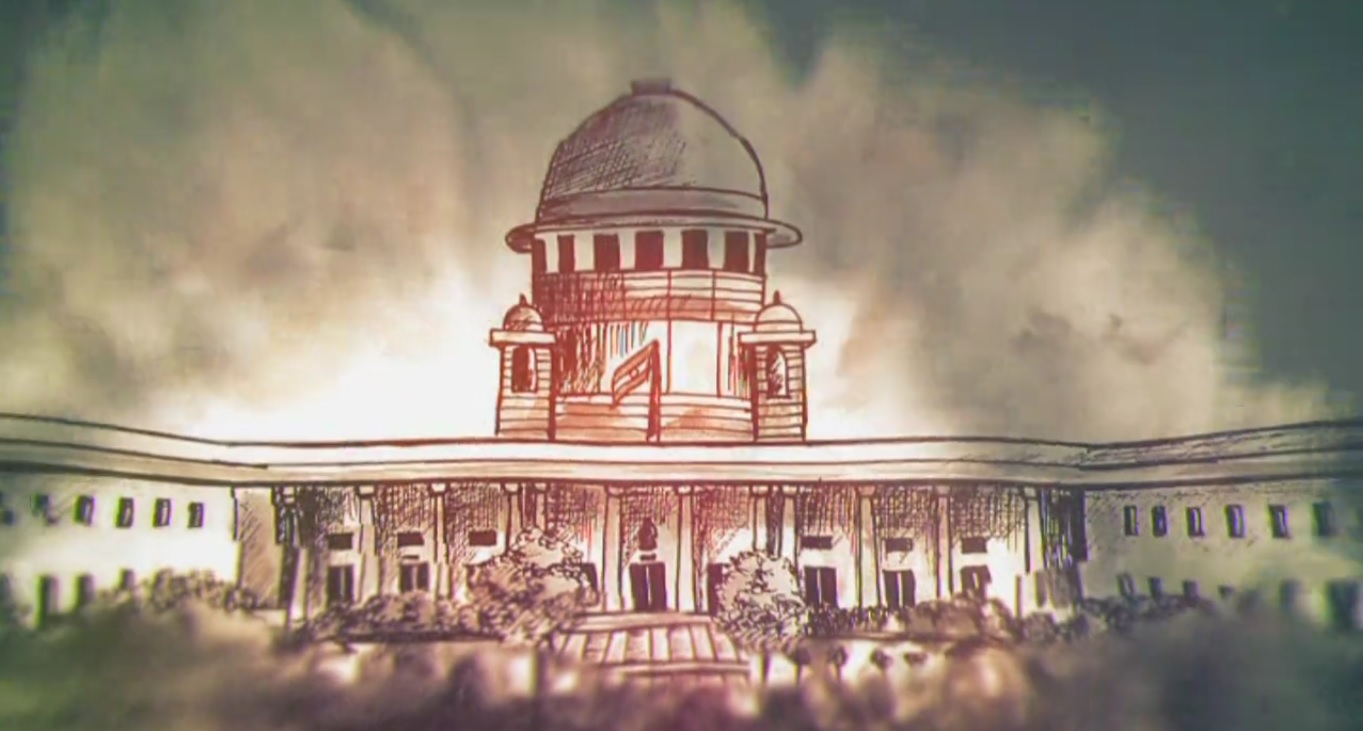
Four sitting judges of the Supreme Court of India addressing a press conference was no doubt an unusual step, but that does not make it illegal or improper as some have suggested. The self-imposed code of conduct for judges has been cited in support of saying that judges are not supposed to go to the press. True, but that is in relation to their judgments. No judge is expected to support her own judgment in the press but allows ‘the judgment to speak for itself'. This is absolutely true, but where is the embargo on a judge speaking about administrative matters?
The four judges who did speak out at the press conference spoke about the alleged mischief which has been in operation in the administration of justice, more particularly in assigning cases to a “bench of preference” by Chief Justices. We must not miss the emphasis on the plural, implying that the practice began with the former Chief Justice Khehar who was criticised for having killed the challenge to demonetisation by delay, not listing the Aadhaar matter promptly and fast-tracking the triple talaq matter in the vacation. The story is simple, the Chief Justice, who is the ‘Master of the Roster' (what if the Chief justice is a woman, will she be Mistress of the Roster?), can kill a case, can determine the outcome of the case by assigning it to a particular bench. Hence, the issue is institutional and not personal.
That judges have pronounced philosophical approaches to an issue — some are diametrically opposed to each other — is a known fact, but what does this imply for the Master of the Roster?
Can he pick and choose judges to whom to assign ‘sensitive' matters? Sensitive is being used here to indicate cases in which politicians or judges are implicated in unlawful acts. I am not one who believes that judges can be free of a worldview, what I expect is a disclosure of connections, personal and political by the judges.
Those who quote the conduct rules, which do prevent the judges from speaking to the press, forget that the rule prevents them from socialising at private events of lawyers and politicians. In Delhi, it is fashionable to have politicians at marriage functions and Judges have also fallen prey to this. Similarly, they wine and dine, and what is worse, some have been seen accept gifts from practicing lawyers, making a mockery of justice. Justice SK Gangele, of the Madhya Pradesh High Court, threw a party on his own twenty-fifth wedding anniversary at which he invited top ranking police officers, senior lawyers, and people who would be potential litigants in his court and, in videos produced in an impeachment proceeding, can be seen accepting gifts. He is not an exception to the rule.
Also Read: Judges Can't Behave Like Company Shareholders, Says Former Attorney General Sorabjee
So you ask what is the solution to the problem? The solution can only be transparency. It must be incumbent on all persons being considered by appointment to disclose in public, their political affiliations, the membership of student unions during their student days, and their connections with politicians. It is not enough to disclose your assets, in today's world or in any world, a person's real estate seems to be his or her connections with the rich and the powerful. These disclosures must be made in appointment hearings and also during the tenure of the judge as time goes on so that at any given time, it is possible to assess the true independence of a judge from extraneous influences.
So while I do not demand that judges live in ivory towers, I do demand that they make disclosures of their interests in social, political and economic issues of a public nature.
The judges who spoke out at the press conference in their own words “discharged a debt to the nation”, powerful words intended to alert us to the danger to the collapse of the judiciary from within. External political forces will always have a vested interest in the collapse of the judiciary, every government has always been the largest litigant before the court, but the judiciary cannot collapse unless they want it to collapse. It is now universally recognised that resistance to the undemocratic functioning of governments can come in the form of two sources, the press, and the judiciary. If any one of the two fails to perform its historic and constitutional role, democracy itself can collapse.
Also Read: No Judicial Crisis Here, Says Attorney General Of India On Supreme Court Rift
The Constitution itself has a transformative social justice agenda, if judges must commit to anything, it is to that transformative agenda they must commit in their judgments.
As the public debate polarises into ‘with me' or ‘against me', ‘national' or ‘anti-national', there is a danger that we will see this happening in our courts. We have seen Kanhaiya Kumar being beaten up in the premises of the court, we have seen women lawyers from the North East being spoken to with racial slurs, we have seen orange flags hoisted on courts when Shambulal Regar — who is being tried for the killing of Mohammad Afrazul in Rajasthan — was produced in court, more of this will destroy the secular fabric of the Constitution.
The Supreme Court will now have to save itself from itself, that is the huge significance of the historic moment in Indian legal history of the four judges addressing the press, not only were they sending a message to the Chief Justice of India publically but also to powerful litigants, ‘don't mess with us'. History will judge whether they succeeded.
The story of the press conference is not over, the Supreme Court is sitting on a volcano, which can erupt anytime. We know that in most institutions, resistance comes from within, from whistle-blowers, that is what we have seen. This is a turning point, the Supreme Court may implode or it may emerge from this crisis stronger. It is time for big-ticket reform, only transparency can bring in this reform. This is why I have filed a petition in the Supreme Court calling for all hearings in important cases to be live-streamed, this is why I think we need confirmation hearings of appointment of judges. We are beckoned to move on to putting in place a more accountable judiciary.
Indira Jaising is an advocate and former Additional Solicitor General practicing in the Supreme Court of India.
The views expressed here are those of the author's and do not necessarily represent the views of BloombergQuint or its editorial team.

-
Getting To Work Costs Women More | The Reason Why

It is not just about women paying more than men. It is about women paying much more in cities than in villages.
-
AI Bias In Investing Cannot Be Eliminated, But It Can Be Governed
Framing is a particularly important example as identical financial information presented in terms of gains rather than losses can lead an LLM to reach a different assessment.
-
Joining The Dots | Dark Skies, Steady Diya: Why Hope Holds This Diwali
With war, a weak rupee and foreign outflows weighing on sentiment, policymakers at the NDTV World Summit and market veterans at NDTV Profit Ignite: Diwali Edition offered the same advice: stay invested and filter out the noise.
-
The Curious Case of Equitas Small Finance Bank And A CEO Who Quit For Stock
PN Vasudevan believes persistent investor concerns over a perceived conflict of interest had become a governance overhang on Equitas Small Finance Bank's stock, even as the lender improved profitability and asset quality.
-
Talking Points This Week: AI Cash Burn, A Tiger Comeback And An India That Still Finds Its Own Path
India is not immune to higher oil or tighter global liquidity, yet its earnings base is broader, its domestic policy levers are still available.
-
Foreign Investors Own Half Of HDFC Bank and ICICI Bank. An LTCG Cut Could Matter Most Here
Foreign portfolio investors have US$115 billion parked in HDFC Bank, ICICI Bank. If the government cuts long-term capital gains tax, Jefferies says returning foreign money could land here first.
-
'Never Seen This Level Of Negativity': Sandeep Tandon Says The Next Rally May Be Closer Than You Think
Veteran investor Sandeep Tandon says foreign selling is easing, large-caps are due a comeback and mid-caps are crowded, while he turns positive on gold, power and pharma this Diwali.
-
Indians Stay With Family, Not In Hotels | The Reason Why
India still lacks enough clean, reliable and affordable hotels for budget-conscious travellers.
-
The Economic Imperative: Analysing The Material Driving Force Behind India-Canada Strategic Reset
This economic complementarity is further reinforced by deep institutional investment ties and talent mobility, which form the bedrock of the bilateral framework.
-
Medicine Pricing: Where Must Profit Stop?
India must confront excessive margins, hidden incentives and regulatory gaps that threaten the integrity of medicine.










