Mukesh Ambani Says The Process Of Globalisation Has Hit A Wall
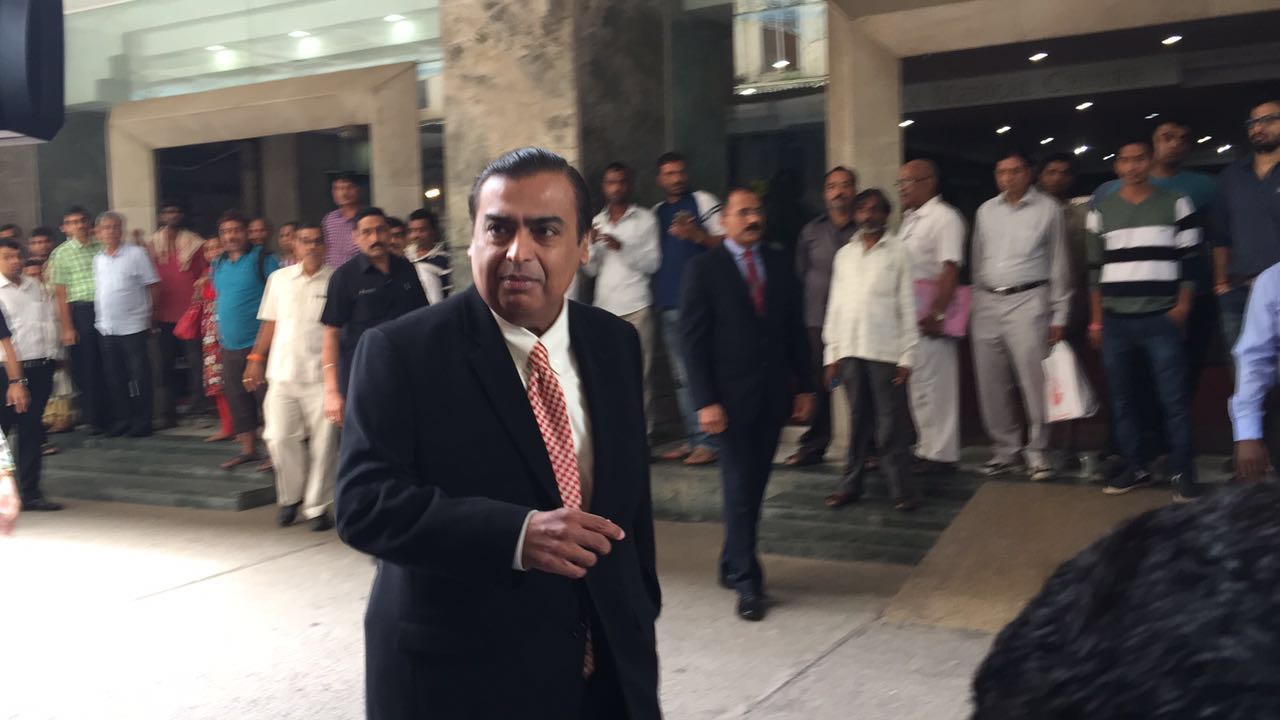
The Russia-Ukraine war has led to a rise in geopolitical tensions, exposing the fault lines in the global economy, according to Mukesh Ambani.
That has led to a significant dislocation in energy markets and disrupted traditional trade flows, the chairman and managing director at Reliance Industries Ltd. said in a letter to shareholders ahead of the company's annual general meeting on Aug. 29.
"The process of globalisation, which drove the global economic growth over the last four decades, appears to have hit a wall," Ambani said. "The cause of economic inter-dependence that globalisation promoted to help align every country's interests and, thereby, help reduce conflicts, has taken a back seat."
Reliance has built three extremely agile and highly potent growth engines—digital services, retail and oil-to-chemicals—which were all tested, and “came out with flying colours, during the covid-led extreme volatility”, Ambani said, as he spent a large part of the letter articulating the new energy blueprint that RIL embarked upon in the last AGM.
“Reliance aims to bring affordability of new energy similar to what it did with wireless broadband. In the field of green energy, Reliance will develop end-to-end green energy solutions, which will make clean and abundant energy available to everyone at the most affordable price,” he said.
The solutions RIL will build in the (new energy space) will be exportable to other countries, helping them to contain carbon emissions, he said. “Reliance has committed to improving the economics of this green ecosystem to directly compete with the fossil fuels.”
The company as part of the shareholders notice is seeking amendment to memorandum of association to go full throttle in the new energy space.
Reliance, according to Ambani, has undertaken to enable the entire green energy ecosystem throughout India starting with solar power generation, to production of green hydrogen to its distribution and consumption.
The company has been shopping in the new energy space in the last one year. It has partnered Ambri in the U.S., Faradion in the U.K., and the Netherlands-based Lithium Werks in the energy storage space.
It has also invested in Germany's NexWafe—a pioneer in the next-gen technology to produce monocrystalline silicon wafers needed to make solar panels—acquired promoters' stake in REC Solar, a global technology leader in solar panel manufacturing; and bought a 40% stake in India-based Sterling & Wilson Renewable Energy, one of the world's leading EPC turnkey contractors in large scale solar projects.
In the hydrogen ecosystem, Reliance partnered U.S.-based Chart Industries to set up India H2 Alliance to commercialise hydrogen technology and develop a supply chain in collaboration with other Indian stakeholders. It has entered into an agreement with Denmark's Stiesdal A/S for its innovative next-gen electrolyser technology, which has the potential to dramatically reduce the cost of producing hydrogen from pure water.
The company has also begun construction of four giga factories at Dhirubhai Ambani Green Energy Giga Complex to set up world-scale production capacity for solar panels, energy storage systems, electrolysers and fuel cells spread over 5,000 acres in Jamnagar.
Ambani articulated that Reliance will invest in creating an ecosystem of thousands of small- and medium-scale project consultants and installers across India to set up green energy generation projects, in addition to undertaking large gigawatt scale turnkey green energy projects for power generation companies or large investors on its own.
Reliance has committed to achieve net-carbon zero status by 2035. For this, it has initiated a process to separate the petcoke gasification complex into a wholly-owned subsidiary.
The petcoke gasification complex produces syngas, currently used as fuel at the Jamnagar complex and is a major source of carbon emission. Once the company switches to green and renewable energy for its energy needs, syngas will become available for upgradation to high-value petrochemicals and hydrogen fuel. The highly concentrated stream of CO2 in syngas can be easily captured and sequestered, Ambani said. “These steps will greatly reduce the carbon footprint of the Jamnagar complex.”

-
Indians Are Travelling, But Not Every Journey Is A Holiday | The Week In Whys

Pilgrims, patients and working women are the real travellers, and the system hasn't quite caught up with them.
-
Getting To Work Costs Women More | The Reason Why
It is not just about women paying more than men. It is about women paying much more in cities than in villages.
-
AI Bias In Investing Cannot Be Eliminated, But It Can Be Governed
Framing is a particularly important example as identical financial information presented in terms of gains rather than losses can lead an LLM to reach a different assessment.
-
Joining The Dots | Dark Skies, Steady Diya: Why Hope Holds This Diwali
With war, a weak rupee and foreign outflows weighing on sentiment, policymakers at the NDTV World Summit and market veterans at NDTV Profit Ignite: Diwali Edition offered the same advice: stay invested and filter out the noise.
-
The Curious Case of Equitas Small Finance Bank And A CEO Who Quit For Stock
PN Vasudevan believes persistent investor concerns over a perceived conflict of interest had become a governance overhang on Equitas Small Finance Bank's stock, even as the lender improved profitability and asset quality.
-
Talking Points This Week: AI Cash Burn, A Tiger Comeback And An India That Still Finds Its Own Path
India is not immune to higher oil or tighter global liquidity, yet its earnings base is broader, its domestic policy levers are still available.
-
Foreign Investors Own Half Of HDFC Bank and ICICI Bank. An LTCG Cut Could Matter Most Here
Foreign portfolio investors have US$115 billion parked in HDFC Bank, ICICI Bank. If the government cuts long-term capital gains tax, Jefferies says returning foreign money could land here first.
-
'Never Seen This Level Of Negativity': Sandeep Tandon Says The Next Rally May Be Closer Than You Think
Veteran investor Sandeep Tandon says foreign selling is easing, large-caps are due a comeback and mid-caps are crowded, while he turns positive on gold, power and pharma this Diwali.
-
Indians Stay With Family, Not In Hotels | The Reason Why
India still lacks enough clean, reliable and affordable hotels for budget-conscious travellers.
-
The Economic Imperative: Analysing The Material Driving Force Behind India-Canada Strategic Reset
This economic complementarity is further reinforced by deep institutional investment ties and talent mobility, which form the bedrock of the bilateral framework.










