The Problem With Goa
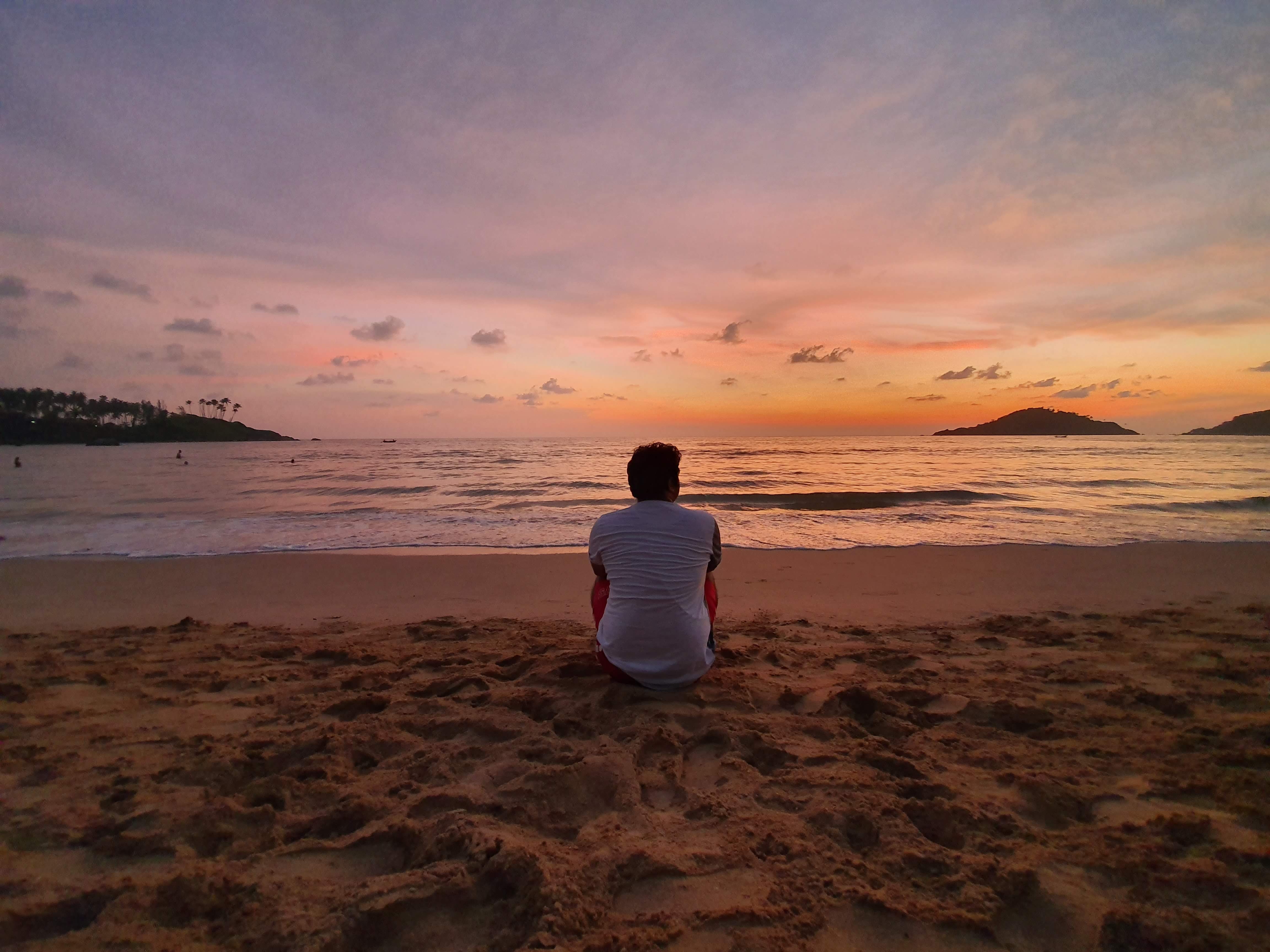
On a recent visit to Goa, an editorial in the local newspaper O Heraldo got me thinking. “Goa has had a strange fascination for domestic tourists, more so from the 1990s,” it read. “Most tend to lose their bearings and sanity when they come to this place. This is because of the perception (real, as well as unreal) they have about Goa which they have heard from those who have been to this place.” The editorial went on to say that Goa needed an advisory for Indian tourists.
What possesses us when we land in Goa? If you read the newspapers you'll know that foreign charter tourists are steering clear of Baga and Calangute beaches to avoid domestic tourists who ask international tourists wearing bikinis to pose with them. Groups of friends rent villas in quiet residential areas, buy crates of fancy foreign liquor (now available at Haryana prices) and turn the Bollywood music up to max through the day. I think I know why we do this but I'll share it at the end of this piece.

Like every urban Indian I know, I pack differently for Goa than when I visit any other place in India. The only Indian beaches I've worn bikinis on are in Goa. Every time we visit, I rummage through the back of my cupboard where my flimsiest clothes lie languishing. Growing up, Goa was always one of the few places in India where I didn't feel the need to barricade myself from the male gaze. It was only later in life—after I married a man proud and informed of his Goan origins—that I realised how outsiders rarely looked beyond the beaches of India's smallest state.
Goa's present day worries don't concern tourists who want to rush into the sea and dive into swimming pools fully clothed and attached to their beer bottles, at least until they are emptied. Then they can be thrown in the sea or abandoned on the beach. See this 2023 review of Butterfly Beach, a tourist favourite, on Trip Advisor: “This once beautiful secluded beach really was a butterfly beach with a small sweet water lagoon that was fed by the water coming from the forests. All this is now gone and has been replaced during the season by endless fishing boats dropping off and picking up noisy tourists who seem more interested in selfies than surf. The back end of the beach is like one giant rubbish dump of broken shoes, nappies, broken glass, plastic bottles, crisp packets and so on…the butterflies are gone.”
We view Goa's beautiful, historic houses through the eyes of a property owner and not as one aspect of its extraordinary architectural history. We see historic neighbourhoods only through an Instagram filter, no matter how much inconvenience our antics may cause residents. We don't care that Panjim has Asia's oldest medical college and that the continent's oldest convent is in Old Goa. We know next to nothing about Goa's artistic legacy from António Xavier Trindade (referred to by some as the Rembrandt of the East) to Francis Newton Souza, Vasudeo Gaitonde and many more. We may or may not know the state's legendary writers such as the gentle, always smiling Damodar Mauzo, who was awarded the Jnanpith Award, the country's highest literary honour, earlier this year.
Goa has cheerfully integrated and modified the culture and music of the old colonial state. Two or three times a year, if you're lucky, you can hear the legendary singer Lorna, now 79, perform because she feels like it. But I'm not sure domestic tourists care about these things.
A Lok Sabha committee just reprimanded Goa for failing to protect its sand dunes, coral reefs, Olive Ridley nesting sites, and mangroves. It asked why the state gave permission to construct hotels, resorts, guesthouses, and residential houses and other infrastructure development along the coast. But tourists couldn't be bothered that Goa needs a sustainable development plan instead of just piecemeal infrastructure development such as adding a bridge here, an airport there or doubling the railway track, many of these environmentally dubious decisions.
When I visited South America a decade ago, I couldn't help thinking that Goa would benefit from Costa Rica's determination and vision to keep itself firmly eco-friendly. Its pioneering brand of ‘leave no trace' tourism would be a perfect fit for Goa. Of course though Costa Rica is much larger than Goa, it gets a fraction of the tourists that throng Goa. Unlike Costa Rica, Goa gets millions of Indian tourists, all desperate to break free. And that is Goa's biggest downfall. Goa bears the burden of a country that smothers free expression at every turn.
Though Goan society is as conservative as many other parts of India, the state's history of tourism and its reliance on the travel industry likely makes its residents look away from the antics of holidaymakers. It could also be that Goans just aren't as judgmental as the rest of us. Authorities in another Indian state might lock up a kissing couple, but that is unlikely to happen in Goa.
It may be the only state where you can shed your inhibitions and take a public breather from the continuous restraints of Indian society. You can feel the ‘don't wear this, don't eat that' objectionable-behaviour culture steadily slip away as you step out of Dabolim or Mopa airports.
Goa is a taste of freedom for a country denied it at every turn. No wonder tourists from across the country find it hard to navigate. Imagine how suppressed they have been that they must explode at first contact with a Goan beach, leaving the destructive detritus of their eruptions for someone else to clean up. Or if you're a parent it's like that kid who empties your snacks stash because he isn't allowed to eat them at home.
No tourist advisory Goa issues can fix this problem. The only way we can change things is if every Indian state carves out a little Goa within itself.
Priya Ramani is a Bengaluru-based journalist and is on the editorial board of Article-14.com.
The views expressed here are those of the author and do not necessarily represent the views of BQ Prime or its editorial team.

-
Talking Points This Week: Leadership Shock At Nvidia, Earnings Strength, And The Fog Over Hormuz

The Anthropic IPO pricing and first trading day, Nvidia's upcoming earnings, and any fresh signals from Iran will set the tone for the following week.
-
Signature Play: The Classic Cocktail Is Dead. Or Is It?
Classic cocktails are disappearing from India's cocktail menus. But they're still being ordered, taught to bartenders and borrowed from. So, who's really having the last drink?
-
A New Samvat Wishlist: Inclusive Prosperity And Human Development
India has strengthened its economic foundations through infrastructure, digital access and enterprise. Its next growth chapter must deepen productivity, create better livelihoods and widen participation in prosperity.
-
Love, Sex Aur Dhokha: The Audacious Plot To Spy On Jensen Huang
A Taipei dinner, a Singapore chip buyer and a suspected Chinese asset: inside the alleged spy operation that got close to NVIDIA's Jensen Huang.
-
Ten Things I Learnt This Samvat
Patience can be a trap. Cheap stocks can stay cheap. Leverage can wipe you out. What did Samvat 2082 teach us? Niraj Shah writes on 10 lessons from the year gone by.
-
Talking Points This Week: Tech Nerves, FII Buying, And A Faraway Banking Shock
The global markets are not shining this Diwali. The exception in the large markets is, India.
-
Midterm Rally Lasted A Day. The Hard Reality Of A Divided US May Last Two Years | Opinion
Between a contested AI boom, a debt ceiling that arrives in 2027 and a president with every incentive to act alone, the next two years may prove more volatile than the first day's rally suggests.
-
Blue Wave Will Derail the AI Trade but Won't Dismantle the AI Era | Unhedged Position
The Democrats' sweep of the US Congress will see politics collide with economic forces both over the long and short term.
-
It's Time To Take The GST Council's Bet On Trust Global
Payment records can prove India's services exports, and clear, proportionate rules can bring foreign digital sellers into the tax net.
-
Opinion | India at 38: From Innovation Overperformer to Innovation Powerhouse
India now has 453 VC-backed deep science startups, 18 of them late-stage, after 117 percent growth since 2020. Laurus Labs, at USD 9.3 billion, is the most valuable deep science company in any middle-income economy outside China.









