The Miscalculations of the ‘Modi, Tujhse Bair Nahi’ Argument
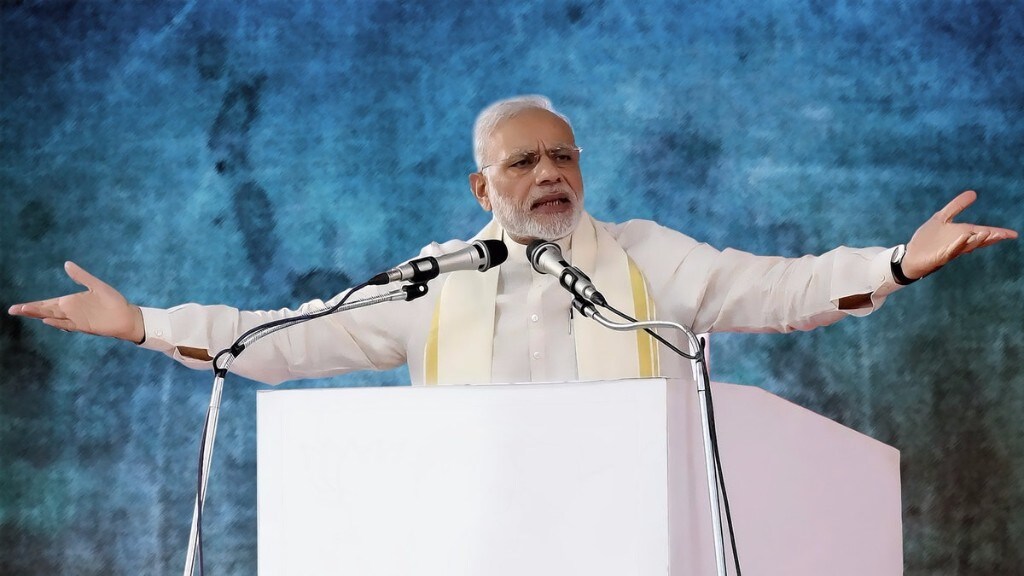
Stunned by the 0-3 verdict in the Hindi heartland, many BJP supporters are hoping that Prime Minister Narendra Modi's charisma will counter the anti-incumbency that led to the party's defeat in Chhattisgarh, Madhya Pradesh and Rajasthan.
Some point to the slogan “Modi tujhse bair nahi, Vasundhara teri khair nahi” as a sign that voters were angry with state leaders rather than with the PM, and that this setback was one-off.
The National Element
This is somewhat optimistic. There was undeniably a national element to the state campaigns.
Many of the issues that afflicted the incumbent BJP governments were national – agricultural distress, demonetisation impact and GST.
Congress President Rahul Gandhi campaigned at length on the alleged failings of the Modi government, and Modi also spent a lot of time criticising the Congress party.
That said, issues and candidates do differ between state and national elections, so we can't rule out the possibility of some voters in those states voting differently in the coming general election. However, history is not encouraging for the BJP, at least when it comes to Chhattisgarh, Madhya Pradesh and Rajasthan.
The Trends Over 15 Years
Consider the average swing for the winning and losing parties in these three states over the past 15 years.

The party that wins a state election on average gains 7-9 percentage points in the following general election. The party that loses also gains 1-2 points. The overall share of the vote going to smaller parties and independents usually shrinks between state and national elections, benefiting national parties.
If this pattern holds, the INC can expect to increase its lead over the BJP in these states in the coming general election. And even if there is a Modi effect on some voters, the state winner effect could neutralise it.
Some might argue that Modi is sui generis, and that his personal charisma will suffice to see the BJP through, especially in the Hindi belt. The historical record suggests otherwise. Consider 2013-14, when the INC was at a low point and dealing with serious anti-incumbency. In Chhattisgarh, Madhya Pradesh and Rajasthan, the party lost only 1-3 percentage points between the 2013 state election and the 2014 general election.

Possibilities for 2019
This means that very few INC voters in the state election switched to the BJP – or at least those losses were offset by incoming voters who had previously voted for other parties or independents. The INC lost such few votes at arguably its lowest point that it seems unlikely that it will slide when it is resurgent, and when the BJP faces anti-incumbency after five years in office.
The BJP could still jump ahead of the INC, as occurred early in the Atal Bihari Vajpayee era. The former won Madhya Pradesh (which included Chhattisgarh then) decisively in the February 1998 and September 1999 general elections, even though in between it had lost the November 1998 state election to the INC. Again, the INC held on to its vote share but the floating vote moved towards the BJP.
The problem is that the momentum is now going the other way. The BJP could, in theory, reverse its losses in the Hindi belt, but it won't be easy.
(This piece was originally published in chunauti.org and has been republished with permission. Read the original story here.)
(Amitabh Dubey is a political analyst and can be reached @dubeyamitabh. This is an opinion piece and the views expressed above are the author's own. The Quint neither endorses nor is responsible for them.)

-
Talking Points This Week: Leadership Shock At Nvidia, Earnings Strength, And The Fog Over Hormuz

The Anthropic IPO pricing and first trading day, Nvidia's upcoming earnings, and any fresh signals from Iran will set the tone for the following week.
-
Signature Play: The Classic Cocktail Is Dead. Or Is It?
Classic cocktails are disappearing from India's cocktail menus. But they're still being ordered, taught to bartenders and borrowed from. So, who's really having the last drink?
-
A New Samvat Wishlist: Inclusive Prosperity And Human Development
India has strengthened its economic foundations through infrastructure, digital access and enterprise. Its next growth chapter must deepen productivity, create better livelihoods and widen participation in prosperity.
-
Love, Sex Aur Dhokha: The Audacious Plot To Spy On Jensen Huang
A Taipei dinner, a Singapore chip buyer and a suspected Chinese asset: inside the alleged spy operation that got close to NVIDIA's Jensen Huang.
-
Ten Things I Learnt This Samvat
Patience can be a trap. Cheap stocks can stay cheap. Leverage can wipe you out. What did Samvat 2082 teach us? Niraj Shah writes on 10 lessons from the year gone by.
-
Talking Points This Week: Tech Nerves, FII Buying, And A Faraway Banking Shock
The global markets are not shining this Diwali. The exception in the large markets is, India.
-
Midterm Rally Lasted A Day. The Hard Reality Of A Divided US May Last Two Years | Opinion
Between a contested AI boom, a debt ceiling that arrives in 2027 and a president with every incentive to act alone, the next two years may prove more volatile than the first day's rally suggests.
-
Blue Wave Will Derail the AI Trade but Won't Dismantle the AI Era | Unhedged Position
The Democrats' sweep of the US Congress will see politics collide with economic forces both over the long and short term.
-
It's Time To Take The GST Council's Bet On Trust Global
Payment records can prove India's services exports, and clear, proportionate rules can bring foreign digital sellers into the tax net.
-
Opinion | India at 38: From Innovation Overperformer to Innovation Powerhouse
India now has 453 VC-backed deep science startups, 18 of them late-stage, after 117 percent growth since 2020. Laurus Labs, at USD 9.3 billion, is the most valuable deep science company in any middle-income economy outside China.









