The Invisible India Book Everyone Must Read
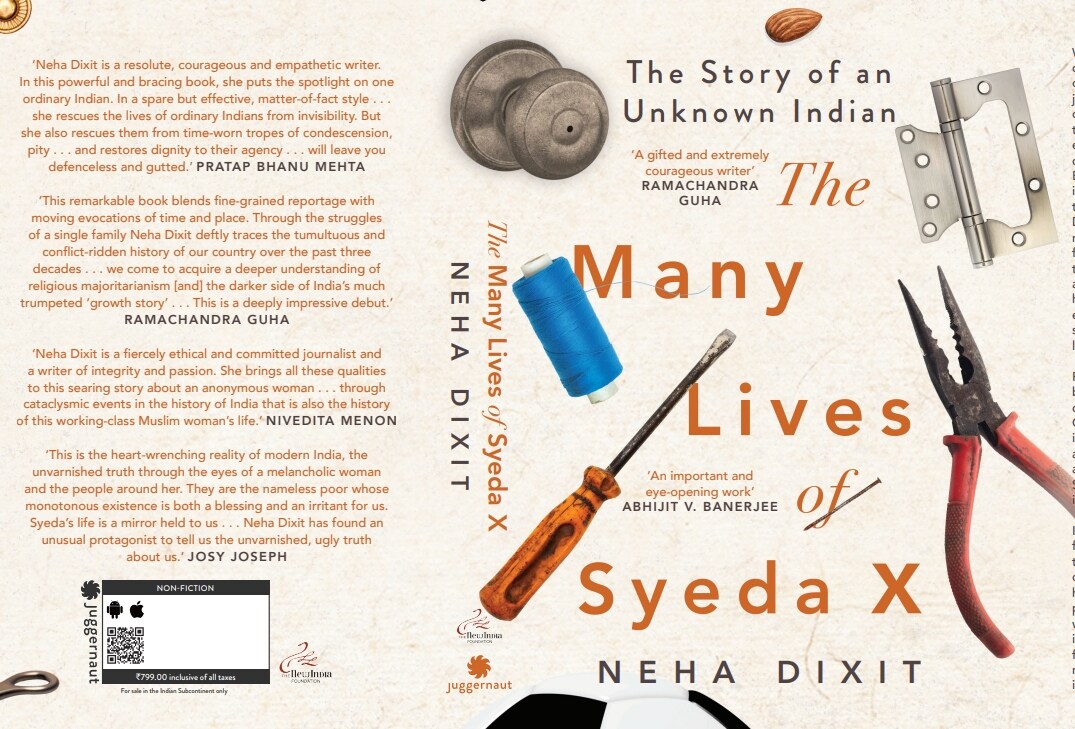
Nine years and nine hundred people. Hours of fieldwork in a world of sweatshops, slums, and police stations located in the working-class heart of the capital. That's what it took journalist Neha Dixit to write her stunning, just-out non-fiction book The Many Lives of Syeda X: The Story of an Unknown Indian.
In a time when the cult of emerald-wearing celebrities distracts us from most things real, nobody wants to know about the lives the poor lead. Early in her career, one of Dixit's editors told her to focus her reporting on the target viewership—male, city slicker, rich—and steer clear of ‘bleeding heart' stories. The book's narrative is interspersed with key events that have occurred in India since the 1990s. They serve as a stark reminder that even as the rich are able to access more, buy more, live grander lives in higher towers, and witness a country transform, absolutely nothing changes for the majority of citizens. In fact, the divide only deepens. As Dixit observes towards the end of her book, “The rich and poor no longer coexist. They do not share spaces any more.”
Most of the films and books we consume depict the lives of the top one percent of Indians almost like the rest of the country doesn't exist—even the so-called ‘authentic' small town films that have been popular for a few years now don't stray anywhere near the millions of Indians who live without any resources and with zero support from the state. The last two narrative non-fiction books I read about the urban poor that moved me as much as Dixit's work did were Aman Sethi's A Free Man and Katherine Boo's Behind the Beautiful Forevers, both published before Narendra Modi came to power in 2014. In Dixit's book, Modi's India is a key protagonist alongside Syeda, Dixit's never-say-die titular character, who moved from Benaras to Chandni Chowk in 1995 after post-Babri riots broke out in her city.
She went overnight from being a chatterbox to being monosyllabic, from being the wife of a skilled Benarasi weaver to a ‘home-based' migrant worker. For such unskilled workers, not even accounted for by the state, the wages could be as low as a thousand rupees for 14–16 hours of work. Dixit quotes the 2006 Arjun Sengupta Committee report that found 93% of all non-agricultural workers in India work in the unorganised sector. In urban areas, 96% of women workers are part of the informal sector, which accounts for 50% of the national product. There are 80 million women like Syeda who do home-based work but are not counted as ‘workers'. All of us have met a version of Syeda, and Dixit shows you this country through their eyes.
Syeda realised early on that “piece-based work” was easier to find if you bought your own tools, and the tools depicted on the cover of the book are hers, collected and stored lovingly in a trunk (her “jaadu ka pitara”) as she went through 50 jobs in 30 years, ranging from bindi pasting to assisting in abortions. One of the earliest tools she bought was a combination plier to work with bicycle wires. As her husband Akmal moped, she started working on day 3 of her arrival in Delhi, doing laundry for other guests at the Paharganj motel where they were staying, switching on her “survival mode," as Dixit says. In her marriage, “she was the one who would step in to clean up everyone's mess, fix everything, and stay solid like a rock, one that would just continue to exist, come what may.” It took her family eight years of living and working in the capital to be able to watch a film in a theatre together.

Author Neha Dixit. (Photo credit: Apal)
Dixit repeatedly calculates the math for unskilled workers' earnings. This book tells the stories of those who make 144 cycle brake wires with steel strands and plastic sleeves for 80 rupees; stitch a cloth bag for 50 paisa; stuff and stitch a soft toy for one rupee; assemble 1,000 plastic guns with springs for 25 rupees; remove the stems of two kilos of raisins for 50 paise; and earn 100 rupees to assemble a dozen string lights.
Dixit met Syeda in 2014 at a strike by Delhi's almond workers, one of the biggest by unorganised workers and one that drove international prices of the nut higher by 40%. The book is set in that world of unsafe, hazardous ‘factories' that most of us only see as inside-page headlines when they catch fire and someone dies. Those who do get ahead in Syeda's world, like Iftekaar, a former mason who acquired a big piece of land in the midst of plots owned by other caste groups, are hated and hunted by those higher up on the food chain. The Dixit book is littered with brilliant characters who enter and exit Syeda's life.

Image of women at leisure in Karawal Nagar.
The story is largely bookended between two riots. It begins with Babri and a large part of the book is set in Karawal Nagar, where the family moved in 2001. If the neighbourhood sounds familiar to you, it's because it was one of the places where riots broke out in Delhi in 2020. “The riots were not about Aadhaar cards, land records or any identity proof or documents to establish Indianness or their citizenship,” Dixit writes. “They were about who could be killed, maimed and looted to create New India. A Hindu India.”
Dixit says Syeda's story is intersectional—a tale of a woman as a human being, her struggle to survive more than the sum of parts of her experiences of sexual violence or the religion she belongs to. “If the conversation on pluralism does not marry caste, class and gender intersections, it will only remain the discourse of the elite,” the author argues. In the final analysis, it's a story of how women are forced to survive better than men.
Priya Ramani is a Bengaluru-based journalist and is on the editorial board of Article-14.com.
The views expressed here are those of the author and do not necessarily represent the views of NDTV Profit or its editorial team.

-
Getting To Work Costs Women More | The Reason Why

It is not just about women paying more than men. It is about women paying much more in cities than in villages.
-
AI Bias In Investing Cannot Be Eliminated, But It Can Be Governed
Framing is a particularly important example as identical financial information presented in terms of gains rather than losses can lead an LLM to reach a different assessment.
-
Joining The Dots | Dark Skies, Steady Diya: Why Hope Holds This Diwali
With war, a weak rupee and foreign outflows weighing on sentiment, policymakers at the NDTV World Summit and market veterans at NDTV Profit Ignite: Diwali Edition offered the same advice: stay invested and filter out the noise.
-
The Curious Case of Equitas Small Finance Bank And A CEO Who Quit For Stock
PN Vasudevan believes persistent investor concerns over a perceived conflict of interest had become a governance overhang on Equitas Small Finance Bank's stock, even as the lender improved profitability and asset quality.
-
Talking Points This Week: AI Cash Burn, A Tiger Comeback And An India That Still Finds Its Own Path
India is not immune to higher oil or tighter global liquidity, yet its earnings base is broader, its domestic policy levers are still available.
-
Foreign Investors Own Half Of HDFC Bank and ICICI Bank. An LTCG Cut Could Matter Most Here
Foreign portfolio investors have US$115 billion parked in HDFC Bank, ICICI Bank. If the government cuts long-term capital gains tax, Jefferies says returning foreign money could land here first.
-
'Never Seen This Level Of Negativity': Sandeep Tandon Says The Next Rally May Be Closer Than You Think
Veteran investor Sandeep Tandon says foreign selling is easing, large-caps are due a comeback and mid-caps are crowded, while he turns positive on gold, power and pharma this Diwali.
-
Indians Stay With Family, Not In Hotels | The Reason Why
India still lacks enough clean, reliable and affordable hotels for budget-conscious travellers.
-
The Economic Imperative: Analysing The Material Driving Force Behind India-Canada Strategic Reset
This economic complementarity is further reinforced by deep institutional investment ties and talent mobility, which form the bedrock of the bilateral framework.
-
Medicine Pricing: Where Must Profit Stop?
India must confront excessive margins, hidden incentives and regulatory gaps that threaten the integrity of medicine.










