The Indian Consumer May Stay Cautious Even As Economy Reopens
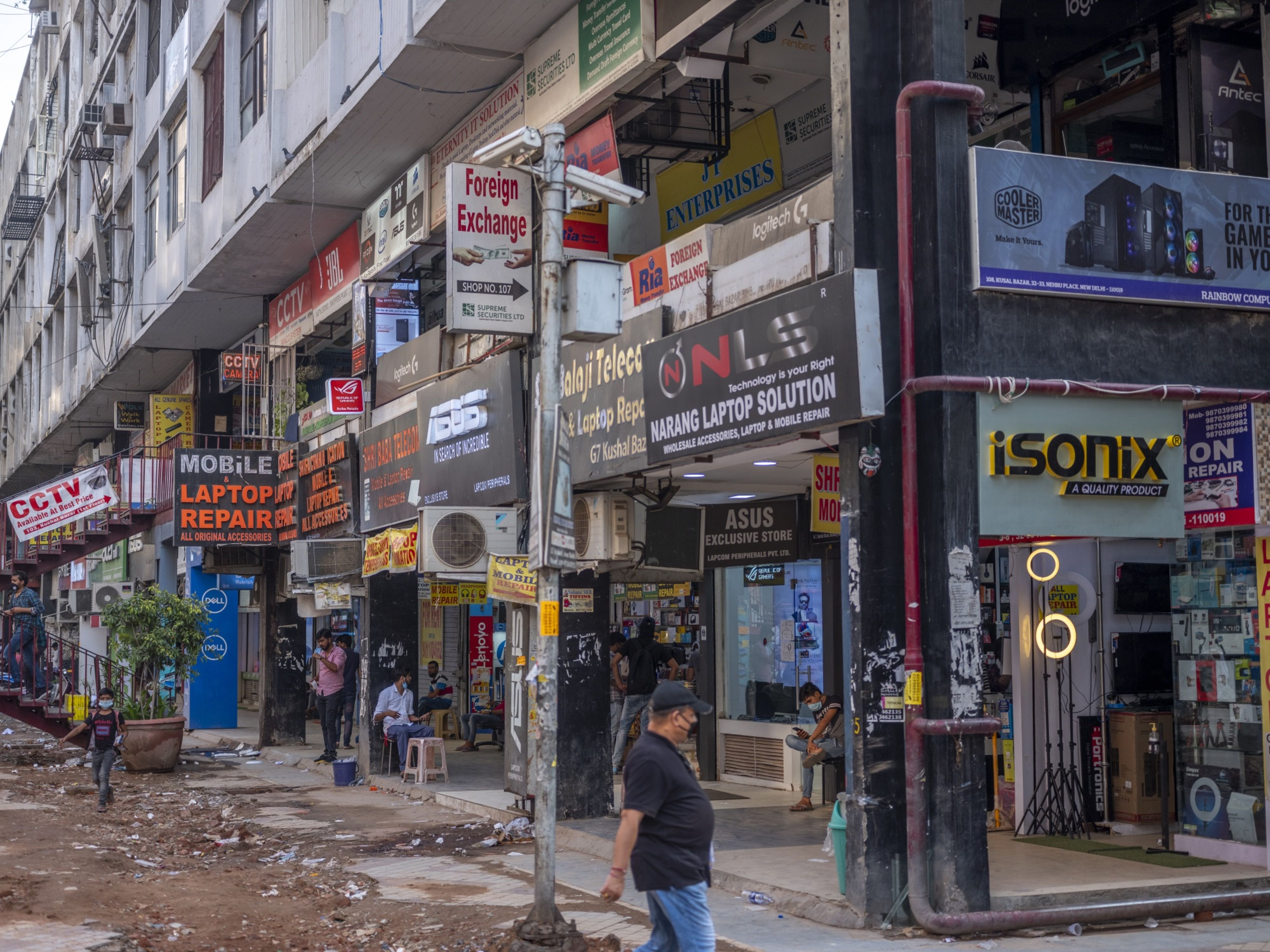
The Indian consumer drove the economy's growth in the last few years. But even before the Covid-19 crisis hit, the private consumption story had started to tire out.
Now, an uncertain economic environment, along with a fall in jobs and incomes has led to the steepest fall in private consumption the economy has seen. In the April-June quarter, when gross domestic product contracted by 23.9%, private consumption fell 26.7%.
This was a quarter when the nation was under lockdown. As such, the drop in spending by the average consumer came as no surprise.
The early indications suggest that consumers will be slow to return to the store fronts.
Supply side indicators, such as demand for power and output of other core industries, have normalised at a faster pace, said Sonal Varma, chief India economist at Nomura. However, the demand side of the economy is normalising at a slower pace, she said.
In July, as per our estimates, aggregate supply side indicators were at 82% of the pre-pandemic levels, whereas demand side indicators were still at 67%. So that tells you that demand is lagging supply.Sonal Varma, Chief India Economist, Nomura
Within consumption, offtake of consumer non-durable goods rebounded first due to relatively lower elasticity, said Aditi Nayar, principal economist at ICRA Ltd. This may continue to be the dominant part of consumption in the near term. Non-discretionary and in-home consumption will continue to be prioritised at the expense of discretionary goods and services, especially where social distancing is difficult to maintain, Nayar said.
An HSBC report dated June 4, had pegged consumption of essential goods at about 31% of the consumption pie, while essential services comprised 25% of consumer spending. Discretionary goods made up 17% of consumption, while discretionary services were the remaining 27%.
When split into durables, non-durables and services, consumption of non-durables has done well, said Varma. Going forward, the baton of consumption recovery has been passed on to consumer durables due to pent-up demand, she said. However, demand for services continues to languish and is picking up at a slow pace, Varma said.
Varma also said there could be another shift in consumption trends in the second half of the year. As the pandemic spreads, it's possible that we might see some slowdown in rural demand, which has so far held up reasonably well.
Ultimately, we expect private consumption to pick up again only by the beginning of next year, said Hugo Erken, head of international economics at Rabo Research. This is because of several factors. While the government's economic support package helps, it's too little to kickstart consumption and the economy in the short term, Erken said. Moreover, although unemployment levelled off quickly from all-time highs, it remains elevated at 7.5-8.5%, which seems to be structural in nature, he said.
Share Of Private Consumption
The share of private final consumption expenditure at current prices fell to 57.1% in the April- June 2020 quarter. Even before the pandemic, the share of private final consumption expenditure moderated to 59.5% in the January-March 2020 quarter from 62.5% in the quarter before that.
The consumption boom in India rode on leverage, said Sabyasachi Kar, RBI Chair professor at the National Institute of Public Finance and Policy. It wasn't based on income alone, and this began to collapse even pre-pandemic, he said.
Now, even if the government creates demand by funding income-creating expenditure, via MGNREGA for example, the ensuing consumption would be income-based consumption, Kar said. Leverage-based consumption may not come back even in the absence of Covid-19.
Data from the RBI annual report 2019-20 shows that households had started to deleverage before the Covid-19 crisis hit. Household financial liabilities fell to 2.9% of gross national disposable income in 2019-20 from 4% a year earlier. Consequently, net financial savings of households improved to 7.6% of the gross national disposable income in fiscal 2019-20, according to preliminary estimates published by the Reserve Bank of India in its annual report.
GDP Of India: Robust Recovery Now Needs Further Stimulus
Now, with the unprecedented income shock because of the pandemic, precautionary savings are set to rise, said Kar. Leverage-based consumption to return would require clearing financial sector challenges, he said.

-
We May Need Another Tukaram Mundhe To Fight Air Pollution | The Reason Why

Developers may install basic measures such as sprinklers and green nets, resume work, and continue violating rules when this equipment stops working.
-
Extracting Value From Battery Scrap Could Be Challenging For India | The Reason Why
A discarded lithium-ion battery still contains valuable materials such as lithium, nickel and cobalt. These can be recovered and reused. When such batteries are crushed and shredded, they produce a dark powder called black mass.
-
One El Nino, India Can Handle. Two Could Break The Granary
India's grain stocks can absorb one bad year, but a second El Nino could drain the buffer in two to three years, economists say.
-
India's Troika Of Good Luck | Joining The Dots
As Jensen Huang's exit drags Nvidia down, a cooling AI trade and resilient earnings have revived investor interest in India. A likely RBI rate hike looms.
-
Talking Points This Week: Leadership Shock At Nvidia, Earnings Strength, And The Fog Over Hormuz
The Anthropic IPO pricing and first trading day, Nvidia's upcoming earnings, and any fresh signals from Iran will set the tone for the following week.
-
Signature Play: The Classic Cocktail Is Dead. Or Is It?
Classic cocktails are disappearing from India's cocktail menus. But they're still being ordered, taught to bartenders and borrowed from. So, who's really having the last drink?
-
A New Samvat Wishlist: Inclusive Prosperity And Human Development
India has strengthened its economic foundations through infrastructure, digital access and enterprise. Its next growth chapter must deepen productivity, create better livelihoods and widen participation in prosperity.
-
Love, Sex Aur Dhokha: The Audacious Plot To Spy On Jensen Huang
A Taipei dinner, a Singapore chip buyer and a suspected Chinese asset: inside the alleged spy operation that got close to NVIDIA's Jensen Huang.
-
Ten Things I Learnt This Samvat
Patience can be a trap. Cheap stocks can stay cheap. Leverage can wipe you out. What did Samvat 2082 teach us? Niraj Shah writes on 10 lessons from the year gone by.
-
Talking Points This Week: Tech Nerves, FII Buying, And A Faraway Banking Shock
The global markets are not shining this Diwali. The exception in the large markets is, India.









