The GST Effect: Hundreds Of Thousands Laid Off Despite Growth
Tilak Raj Bathla's tiny weaving factory is one of the few still humming on a once busy road in Panipat, known as the country's "textile city".
Nearby, more than two dozen other workshops are locked from the outside, while dogs and cows roam through other abandoned factories. Scrap dealers enquire about idle powerlooms.
India launched the Goods and Services Tax (GST) just over a year ago, its biggest ever tax reform, aiming to replace more than a dozen central and state levies and unify the sprawling economy.
The move improved economic efficiency but critics say the complexities of the new regime have driven many small enterprises out of business and forced hundreds of thousands out of jobs.
For Prime Minister Narendra Modi, the drawbacks of the GST, especially the job losses, could prove costly in major state elections later this year and a general election in mid-2019.
Bathla says his neighbours, most of them unschooled, could not comply with monthly online filings required under the GST regime. Some of his customers and suppliers could not afford to hire accountants to navigate a system which has been amended more than 200 times already, while others struggled to cope with delays in tax returns caused by glitches in the centralised software.
"I have a GST registration, but I can't work as my vendors and buyers are unable to comply with a complex tax structure," the 50-year-old said, adding his monthly sales had fallen to about 250,000 rupees($3,511) from about one million rupees before the GST. Only two of his 10 powerlooms are currently being used.
The government has said it is simplifying the tax measure to make it accessible to everyone. Finance Ministry spokesman D.S. Malik said requests from small businesses have been considered "from time to time." But he declined to comment on job losses.
Nevertheless, India's economy gathered pace in the April-June quarter, expanding 8.2 percent compared to 5.6 percent in the same period a year earlier. Economists said the number was coming off a low base as companies held off production in the year-ago period ahead of the implementation of the tax measure in July last year.
SMALL FIRMS HURTING
But while big firms have since shaken off the effects of the change and are set to gain from a uniform tax regime, small businesses across the country are still hurting.
A survey by the All India Trade Union Congress (AITUC) in July found that a fifth of India's 63 million small businesses - contributing 32 percent to the economy and employing 111 million people - faced a 20 percent fall in profits since the GST rollout, and had to sack hundreds of thousands of workers.
Readymade garments, gems and jewellery, leather, handicraft and basic machinery manufacturing are hit the most, industry bodies from across the country say.
According to estimates by the Centre for Monitoring Indian Economy, a Mumbai-based consultancy, nearly five million workers lost their jobs over the past year. But it was not clear how many were from small enterprises.
India's unemployment rate rose to 6.4 percent in August from 4.1 percent in July last year despite an additional 17 million people joining the workforce.
But it did not give data on how many people were laid off or from which industries.
India's labour ministry releases jobs data once in five years, last reporting unemployment at 5 percent in 2015/16 (April-March).
More than 50 workers and factory owners Reuters spoke with in Panipat, about 90 km (55 miles) north of New Delhi, said over a third of the city's 10,000 weaving units had closed or curbed production.
Chand Multani, president of the Panipat Handloom Owners' Association, pointed to the tax headaches behind a bedsheet that costs barely $2 dollar as an example.
The weaving of the sheet, its dyeing, ironing, embroidering and packaging are all done by separate businesses. Under the new system, each business has to pay GST at each stage of production which the businesses can claim back provided they have registered with tax authorities and have a GST number.
For a lot of small businessmen this is way too much work. "How can all these different operations comply with tax rules?" asked Multani, waving the sheet in the air.
OPPOSITION SEIZES ON GST
The GST replaced several central and local taxes and tore down tariff barriers between India's 29 states, but critics say that has been to the benefit mainly of large, nationwide businesses.
For Panasonic Appliances, India's leading electric goods maker, GST has meant cutting costs by 4-5 percentage points, for example. India's consumer goods stock index has risen 26 percent in the past year, outpacing the broader Mumbai market.
"GST ... has improved the competitiveness of the manufacturing sector," Panasonic India CEO Manish Sharma said.
PM Modi, in an Independence Day speech on Aug 15, said the businesses that faced "teething difficulties in adopting GST had accepted the challenge and the country is now moving ahead."
But Congress leader Rahul Gandhi has zeroed in on the job losses and shuttered businesses.
"This GST is a way of removing money from the pockets of the poor," he said last month. "This is not GST, this is Gabbar Singh Tax," he said, referring to the villain in one of Indian cinema's most popular movies.
PM Modi's popularity fell below 50 percent in July from 53 percent in January, while Mr Gandhi's rose to 27 percent, up from 22 percent, according to a survey by India Today magazine. Eighteen months ago, the score was 65 percent to 10.
To address grievances, the GST Council, which administers the tax measure, has approved more than 200 amendments since the law came into force.
M.S. Mani, senior partner at Deloitte, said too many changes to rules and rates were damaging, particularly for small businesses.
The Federation of Indian Export Organisations estimates that nearly $2 billion of tax credits, mainly of small exporters, were yet to be refunded, mainly because of software glitches in the system and the difficulties in matching the hundreds of thousands of invoices.
About 230,000 small businesses have closed down due to compliance and cash flow problems, leading to large-scale job losses, said Amarjit Kaur, national secretary of the All India Trade Union Congress.
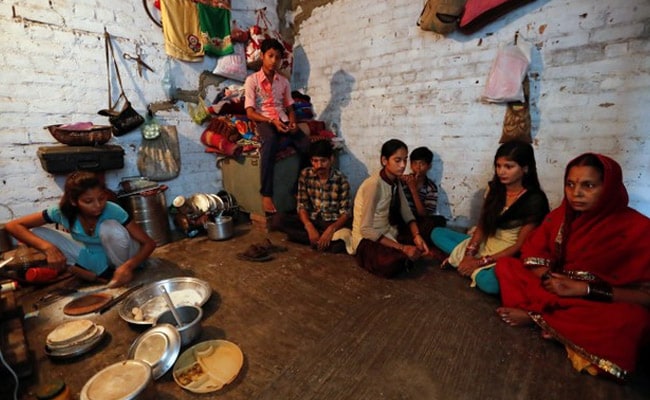
"GST has proved a death warrant for us," Ravinder Kashyap, 22, who lost his job as a powerloom operator earlier this year, said in a small rented room in Panipat that he shares with four friends.
He said his employer had lost sales orders because of the mess caused by the tax and so had let him off along with scores of others. "If this carries on for one or two years, we'll have to commit suicide."
(Except for the headline, this story has not been edited by NDTV staff and is published from a syndicated feed.)

-
Signature Play: The Classic Cocktail Is Dead. Or Is It?

Classic cocktails are disappearing from India's cocktail menus. But they're still being ordered, taught to bartenders and borrowed from. So, who's really having the last drink?
-
A New Samvat Wishlist: Inclusive Prosperity And Human Development
India has strengthened its economic foundations through infrastructure, digital access and enterprise. Its next growth chapter must deepen productivity, create better livelihoods and widen participation in prosperity.
-
Love, Sex Aur Dhokha: The Audacious Plot To Spy On Jensen Huang
A Taipei dinner, a Singapore chip buyer and a suspected Chinese asset: inside the alleged spy operation that got close to NVIDIA's Jensen Huang.
-
Ten Things I Learnt This Samvat
Patience can be a trap. Cheap stocks can stay cheap. Leverage can wipe you out. What did Samvat 2082 teach us? Niraj Shah writes on 10 lessons from the year gone by.
-
Talking Points This Week: Tech Nerves, FII Buying, And A Faraway Banking Shock
The global markets are not shining this Diwali. The exception in the large markets is, India.
-
Midterm Rally Lasted A Day. The Hard Reality Of A Divided US May Last Two Years | Opinion
Between a contested AI boom, a debt ceiling that arrives in 2027 and a president with every incentive to act alone, the next two years may prove more volatile than the first day's rally suggests.
-
Blue Wave Will Derail the AI Trade but Won't Dismantle the AI Era | Unhedged Position
The Democrats' sweep of the US Congress will see politics collide with economic forces both over the long and short term.
-
It's Time To Take The GST Council's Bet On Trust Global
Payment records can prove India's services exports, and clear, proportionate rules can bring foreign digital sellers into the tax net.
-
Opinion | India at 38: From Innovation Overperformer to Innovation Powerhouse
India now has 453 VC-backed deep science startups, 18 of them late-stage, after 117 percent growth since 2020. Laurus Labs, at USD 9.3 billion, is the most valuable deep science company in any middle-income economy outside China.









