The Government Lawyer’s Guide
Part One
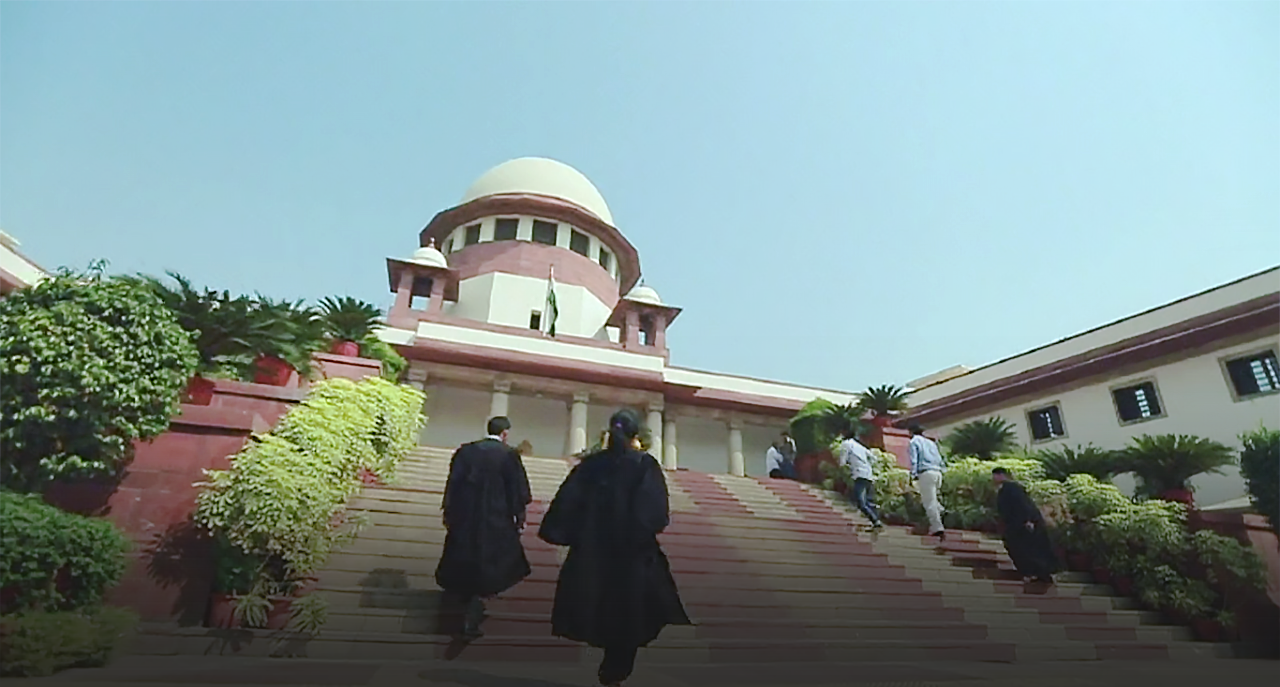
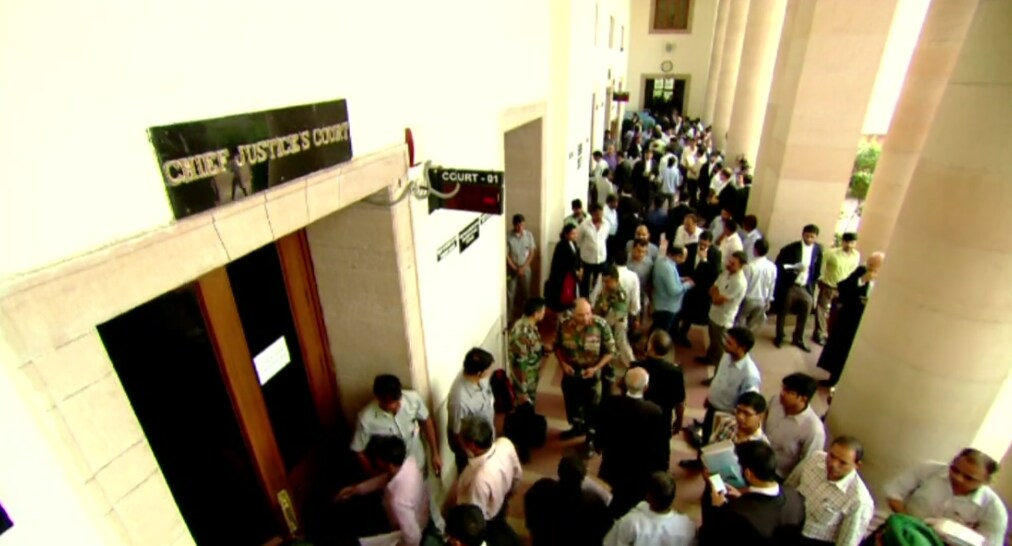
Two weeks ago, I watched from the second row as Mr Colin Gonsalves rose to make a submission to the Chief Justice's court. The Disabilities Act had now turned 21, he said, and although it provided for many steps to be taken by the respective Governments to provide access and assistance to those who were differently abled (ramps, Braille signage, slopes on pavements, warning sounds and signals, etc.), nothing had been done. Aware of the normal sticky tape that weaves its way through administration, Gonsalves merely sought as a first step, that over the next eighteen months, Central Government buildings arrange ramp access to the public. As the Bench began to leaf through the suggestions proffered, the Government's counsel slowly rose to his feet.
“If you may please…”, he began.
Justices Thakur, Chandrachud and Rao regarded him carefully. This was the moment when the court would be shown charts and photographs displaying how our less fortunate brethren had been fully taken care of. There would be sworn statements by top bureaucrats detailing how the law was well in compliant motion. Holes would be punched in this overenthusiastic petitioner's arguments, and as Gonsalves would struggle to respond, the mighty government would demand costs for having wasted the court's time.
“We are repealing this act,” he said, his moustache twitching.
I picked myself off the ground. I must have overbalanced.
Aware of the Chief Justice's perplexed eyebrow, he decided to elucidate. “There is a new bill, which was introduced in 2014. It has been referred to a standing committee of Parliament. It will repeal the old one.” When requested for a copy of this new bill, he came up with what is now standard format law officer speak – “We will file it. Give us six weeks.” I admired this astute move, of not being armed with the single document on which he was relying.
The government had carefully ensured that it had no obligations even under the existing law until the new one came into force. And the journey from standing committee to notified law could well take us to the next general elections. What is amusing is that the proposed bill makes no dent in the buffet of government obligations.
The net result? Messrs Gonsalves & co, returning after three years to renew their request, during which time many of the differently abled would have left to meet their maker, having been told till their last breath that they had lived in a heaven of freedom.
Part Two
A few matters later (by which time I had sidled into the front row), a nervous court master announced Item 110. Sprung I to the fore, righteously clutching the last order from two years ago in my eager paws. “Wetlands”, I cried.
There were a few titters.
I hastened to clarify. “The Ramsar convention obligations – a 15-year old public interest litigation to direct the governments to protect water bodies – the government was to respond on whether the nodal body under the regulations had been set up.”
The triumvirate looked balefully across the aisle.
“I am new” said the greying 53 year old gent. I found this strange. Even his mother would have contested the claim.
“I don't have the papers. I don't have instructions,” he said. Before adding two gems:
1. I have not been served the documents [Reverse onus]
2. We will file a reply. Give us 6 weeks. [See above]
And then a third:
3. It is an important issue. We mustn't hurry it. [Wisdom and caution]
The next date of hearing is in the middle of January, 2017.
Part Three
A few days on, and I was back. Same court. Same row. Same adversary.
“Months of struggle with the Anna Andolan, and now the government does not want to implement the Lok Pal,” led General Shanti Bhushan from the front. Several minutes worth of righteous indignation were heaped on the opposing ranks, and I would have sat back and smiled, but for the phlegmatic countenance of the Attorney General.
He waited till the bench sought a response.
“The act is unworkable”, he announced, his thumbs crooked into his waistcoat pockets. “We don't want a sham of a Lok Pal, and so we have a comprehensive amendment that is pending before a standing committee.” I hearkened heavenward, where the dark clouds of déjà vu were gathering.
It looks like an easy job, I thought.
I must get my hands on a copy of that Booklet.
THE CENTRAL AGENCY BOOKLET
[To be circulated to all government lawyers]
Lesson One: Appropriate Responses
- “We have not been served a copy” OR “We have not received the papers.” [NOT “We do not have the papers” – That swiftly shifts the blame from the opposite party to you]
- “I have just received the papers yesterday” [Which is usually true considering how the central agency has functioned over 30 years]
- “I do not have instructions on that” [The emphasis ought to be “on that”, thereby giving the impression that all 145 other points were swiftly covered in the 3 minute conference outside the courtroom ten minutes ago, except that]
- “We will file a better affidavit” [Usually to cover that]
- “I personally spoke to the secretary/chief secretary/managing director” [To add moral authority to the argument]
- “This is already covered by special leave petition________” [Most tax cases]
OR
- “This will open the floodgates.” [Service, tax and excise]
- “He is not cooperating with the investigation.” [Bail]
- “Please see the case diary in a sealed cover.” [Quashing, bail and discharge]
- “There is a proposed amendment.” [Any mandamus concerning a statute]
- “This is all political.” [Anything]
Lesson Two: Elbow Room Arguments
- “The (law officer) is leading me and he is in court 4/constitution bench/Brazil, etc.”
- “We will need some time as (fill in appropriate crisis: local riots, political leader passed away, lawyers' strike, religious festival, etc.)”
Lesson Three: Emotion
When money is to be paid:
- “We are the government.”
Followed by:
- “We will not run away.”
Or
- “We are good for it.”
When urgency is mentioned:
- “Heavens will not fall”.
- “They have waited ___ years. Six months will not change anything.”
- “I am ready to argue. Place it after six months.”
When binding precedent is shown:
- “Surely, I can be given six weeks to examine this.”
OR
- “How can this be relied upon? It needs to be referred to a larger bench.”
Lesson Four: Brownie Points
From the court:
- “Your Lordships are already burdened with so many cases. This can be taken up after six months.”
- “We are conscious of your Lordship's misgivings. We will revert in six months with a solution.”
From the client:
- “These officers have worked really hard in putting this together.”
- “They are experts in their field.”
- “Government is aware of its responsibility.”
Lesson Five: The Prayer
IF PETITIONER:
- Grant leave
IF ANYTHING ELSE:
Kindly place it after:
- Six weeks
- The summer vacation (because the other vacations are less than six weeks)
KINDLY NOTE:
1. Unless entirely unavoidable, do not argue the case.
2. Do not carry any manner of documentation being relied upon so that it can be filed after six weeks.
3. In case of sudden urge to argue, please visit the UCO Bank counter in the court premises and enquire why there is a ceiling limit on withdrawals.
This article was first published on www.livelaw.in and been republished with permission.
Gopal Sankaranarayanan is an Advocate practicing in the Supreme Court of India.
The views expressed here are those of the author's and do not necessarily represent the views of BloombergQuint or its editorial team.

-
The Curious Case of Equitas Small Finance Bank And A CEO Who Quit For Stock

PN Vasudevan believes persistent investor concerns over a perceived conflict of interest had become a governance overhang on Equitas Small Finance Bank's stock, even as the lender improved profitability and asset quality.
-
Talking Points This Week: AI Cash Burn, A Tiger Comeback And An India That Still Finds Its Own Path
India is not immune to higher oil or tighter global liquidity, yet its earnings base is broader, its domestic policy levers are still available.
-
Foreign Investors Own Half Of HDFC Bank and ICICI Bank. An LTCG Cut Could Matter Most Here
Foreign portfolio investors have US$115 billion parked in HDFC Bank, ICICI Bank. If the government cuts long-term capital gains tax, Jefferies says returning foreign money could land here first.
-
'Never Seen This Level Of Negativity': Sandeep Tandon Says The Next Rally May Be Closer Than You Think
Veteran investor Sandeep Tandon says foreign selling is easing, large-caps are due a comeback and mid-caps are crowded, while he turns positive on gold, power and pharma this Diwali.
-
Indians Stay With Family, Not In Hotels | The Reason Why
India still lacks enough clean, reliable and affordable hotels for budget-conscious travellers.
-
The Economic Imperative: Analysing The Material Driving Force Behind India-Canada Strategic Reset
This economic complementarity is further reinforced by deep institutional investment ties and talent mobility, which form the bedrock of the bilateral framework.
-
Medicine Pricing: Where Must Profit Stop?
India must confront excessive margins, hidden incentives and regulatory gaps that threaten the integrity of medicine.
-
Why Amazon And Flipkart Are Struggling To Beat Meesho In India's Smaller Cities
With 274 million users and lowest-cost logistics, Meesho is defending its value commerce crown against giants like Amazon and Flipkart.
-
High US Salaries, No Green Card Certainty: The Financial Calculation Facing Indian H-1B Families
The suspension of PERM processing at eight technology employers does not cancel existing H-1B visas. What it does is force a question many Indian families have been avoiding: is the US salary worth tying your career and family plans to one employer?
-
Swiggy vs Eternal: Food Delivery's Two Rivals Are No Longer In The Same Race
Eternal is building a private AI assistant, dark.ai. Swiggy is still working out how to make Instamart pay, with an operating loss of Rs 895 crore in the July-September quarter while Blinkit stayed profitable.










