The Dal Manifesto
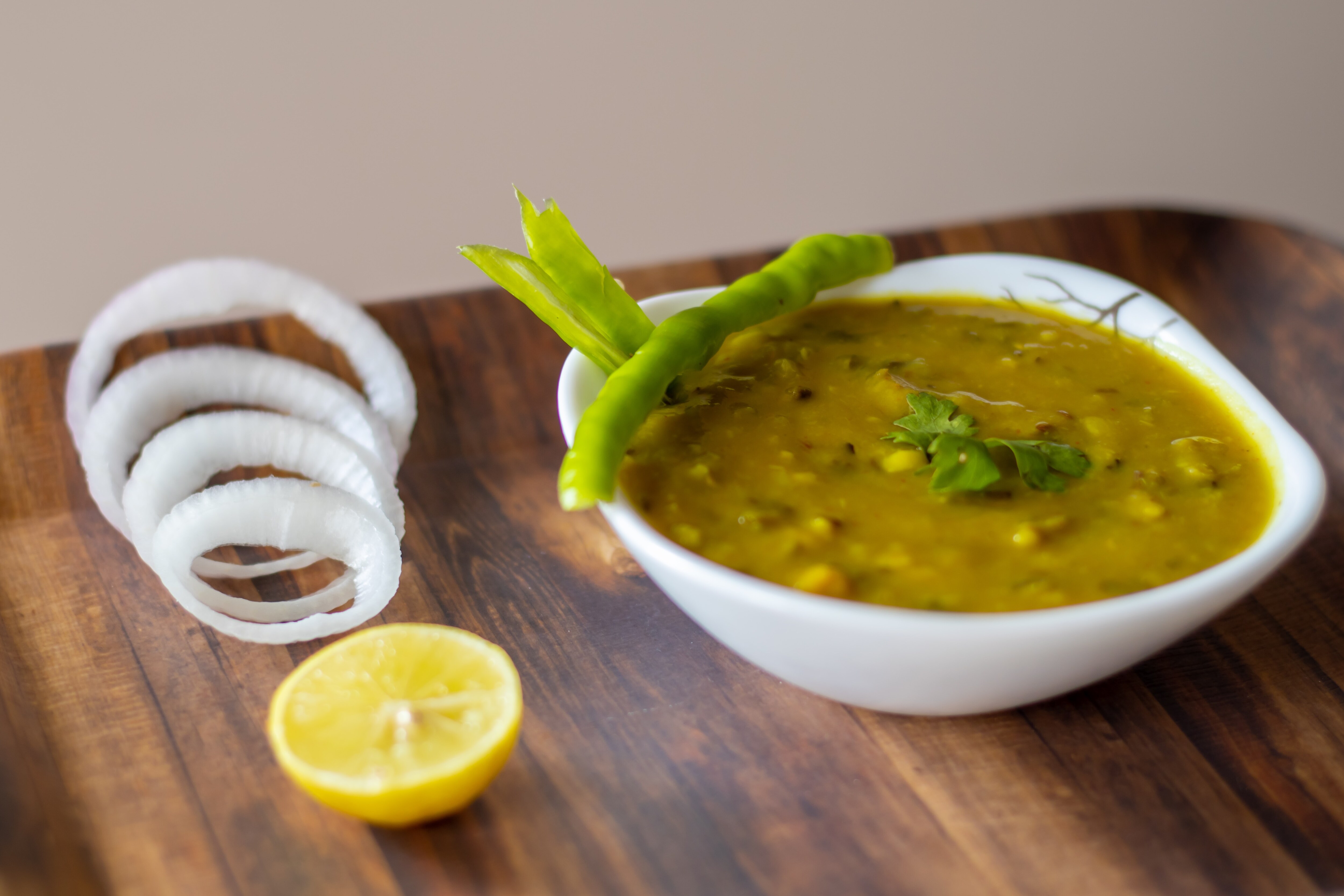
Shah Rukh Khan once said that if he could eat only three foods for the rest of his life, he would pick dal, rice, and onions. And when Atul Kochhar, the first Indian origin chef to be awarded a Michelin star, was asked to pick four favourite recipes, he began with dal. The YouTube video where he shows you how to make ‘perfect' dal has 4 million views but I would feel like a traitor if I followed any other Dal Makhani recipe besides the one I learned peering over my friend Shammy's shoulder.

Dal is personal. It's the first thing I learned to cook. The best dal I've ever eaten was the one my 11-year-old made for me with smoked Sirarakhong chillies. I still remember the time a guest snarkily remarked: “How can you serve dal at a dinner party?” Some of us need it, sister.

(Photograph: timolina/Freepik)
In this respect, I worry I sound exactly like all those well-travelled celebrities who invariably answer the favourite food question with ‘dal chawal'. But then, dal is the taste of home, specifically my maternal grandmother's home where we visited every Saturday to hang with cousins and play carrom and either book or corridor cricket.
Recently I had a sublime dal moment at a coastal village near Mumbai and for a few hours, I miraculously stopped worrying. The creator of this masterpiece had pressure-cooked moong and tur dal for three whistles with chopped tomatoes and slit green chilies. She used a hand masher after opening the cooker, then tempered the dal with mustard seeds, cumin seeds, pounded garlic, and asafoetida. Finally, she added turmeric and salt to taste.

(Photo by Dan Burton on Unsplash)
India is the largest producer and consumer of pulses in the world. Nearly a quarter of the world's pulses originate here though we still import them to meet our needs. It's easy for me to discuss the joy of dal but as inflation skyrockets, dal is increasingly out of reach for many Indians. There have been demands to include pulses in the public distribution system so that dal doesn't entirely disappear from the diet of rural households. Farmers argue that large retailers are also partly responsible for the high price of dal.
When I asked for dal recipes on a Facebook food group recently, Prachi Deshpande replied that one of her favourites was from historian Shahid Amin's Event Metaphor Memory: Chauri Chaura 1922-1992.
“It has a passage where Amin describes the local economy of arhar dal in eastern Uttar Pradesh near Chauri Chaura, and the local practice of eating it with a tadka of garlic fried in ghee….the description was brief but evocative, and I must have been hungry too, as the aroma of frying garlic wafted off the page into my senses, and I could not rest until I came back home from class and made the dal, sizzled the tadka over it, and ate it with hot rice with deep satisfaction,” she said. She added it to her repertoire of favourite dals alongside aamti with goda masala.

Everyone has an opinion on how to cook dal. Bestselling author Rujuta Diwakar even has three rules to eat dal.
For me, the beauty of dal is precisely that there are no rules. Dal with anything tastes as amazing.
There are thousands of dals and recipes for how to cook them in every corner of this country from Meghalaya's Daieneiiong to Maharashtra's Varan. For those who can only eat dal if there's some meat thrown in it (both my husband and daughter fall in this category), there are enough Dal Ghoshts, Dhansaks, Unakka Chemmeen Dals, and dals with pork or fish head.
Dal is a very inclusive Indian staple, it embraces everything even mushrooms. As Vir Sanghvi once said, it's the “great unifier of all Indian cuisines”.
When it comes to dal, everyone thinks they know best. “First you just boil the dal with salt and haldi,” an old aunt explained to newbie cook Rohini Singh, the author of The Foolproof Cookbook for Brides, Bachelors And Those Who Hate Cooking. “It must not be mashed or watery.” In case you're wondering, I found this book in my mother-in-law's bookcase.

(Photo by Urip Dunker on Unsplash)
Harsha Chawla says her children wouldn't eat moong dal until she slow-cooked it. “The fussy twins ate it without nakhras. The taste is so different from pressure-cooked dal.” Others go one step further and use an earthen pot to slow cook dal.
Me I'm more of a soak-and-two whistles kinda person. Imperfect dal tastes almost as good as perfect dal. That, I believe, is the beauty of dal.
Priya Ramani is a Bengaluru-based journalist and is on the editorial board of Article-14.com.
The views expressed here are those of the author, and do not necessarily represent the views of BQ Prime or its editorial team.

-
Talking Points This Week: Leadership Shock At Nvidia, Earnings Strength, And The Fog Over Hormuz

The Anthropic IPO pricing and first trading day, Nvidia's upcoming earnings, and any fresh signals from Iran will set the tone for the following week.
-
Signature Play: The Classic Cocktail Is Dead. Or Is It?
Classic cocktails are disappearing from India's cocktail menus. But they're still being ordered, taught to bartenders and borrowed from. So, who's really having the last drink?
-
A New Samvat Wishlist: Inclusive Prosperity And Human Development
India has strengthened its economic foundations through infrastructure, digital access and enterprise. Its next growth chapter must deepen productivity, create better livelihoods and widen participation in prosperity.
-
Love, Sex Aur Dhokha: The Audacious Plot To Spy On Jensen Huang
A Taipei dinner, a Singapore chip buyer and a suspected Chinese asset: inside the alleged spy operation that got close to NVIDIA's Jensen Huang.
-
Ten Things I Learnt This Samvat
Patience can be a trap. Cheap stocks can stay cheap. Leverage can wipe you out. What did Samvat 2082 teach us? Niraj Shah writes on 10 lessons from the year gone by.
-
Talking Points This Week: Tech Nerves, FII Buying, And A Faraway Banking Shock
The global markets are not shining this Diwali. The exception in the large markets is, India.
-
Midterm Rally Lasted A Day. The Hard Reality Of A Divided US May Last Two Years | Opinion
Between a contested AI boom, a debt ceiling that arrives in 2027 and a president with every incentive to act alone, the next two years may prove more volatile than the first day's rally suggests.
-
Blue Wave Will Derail the AI Trade but Won't Dismantle the AI Era | Unhedged Position
The Democrats' sweep of the US Congress will see politics collide with economic forces both over the long and short term.
-
It's Time To Take The GST Council's Bet On Trust Global
Payment records can prove India's services exports, and clear, proportionate rules can bring foreign digital sellers into the tax net.
-
Opinion | India at 38: From Innovation Overperformer to Innovation Powerhouse
India now has 453 VC-backed deep science startups, 18 of them late-stage, after 117 percent growth since 2020. Laurus Labs, at USD 9.3 billion, is the most valuable deep science company in any middle-income economy outside China.









