The Curious Case Of Alleged AT-1 Bonds Misselling By HDFC Bank
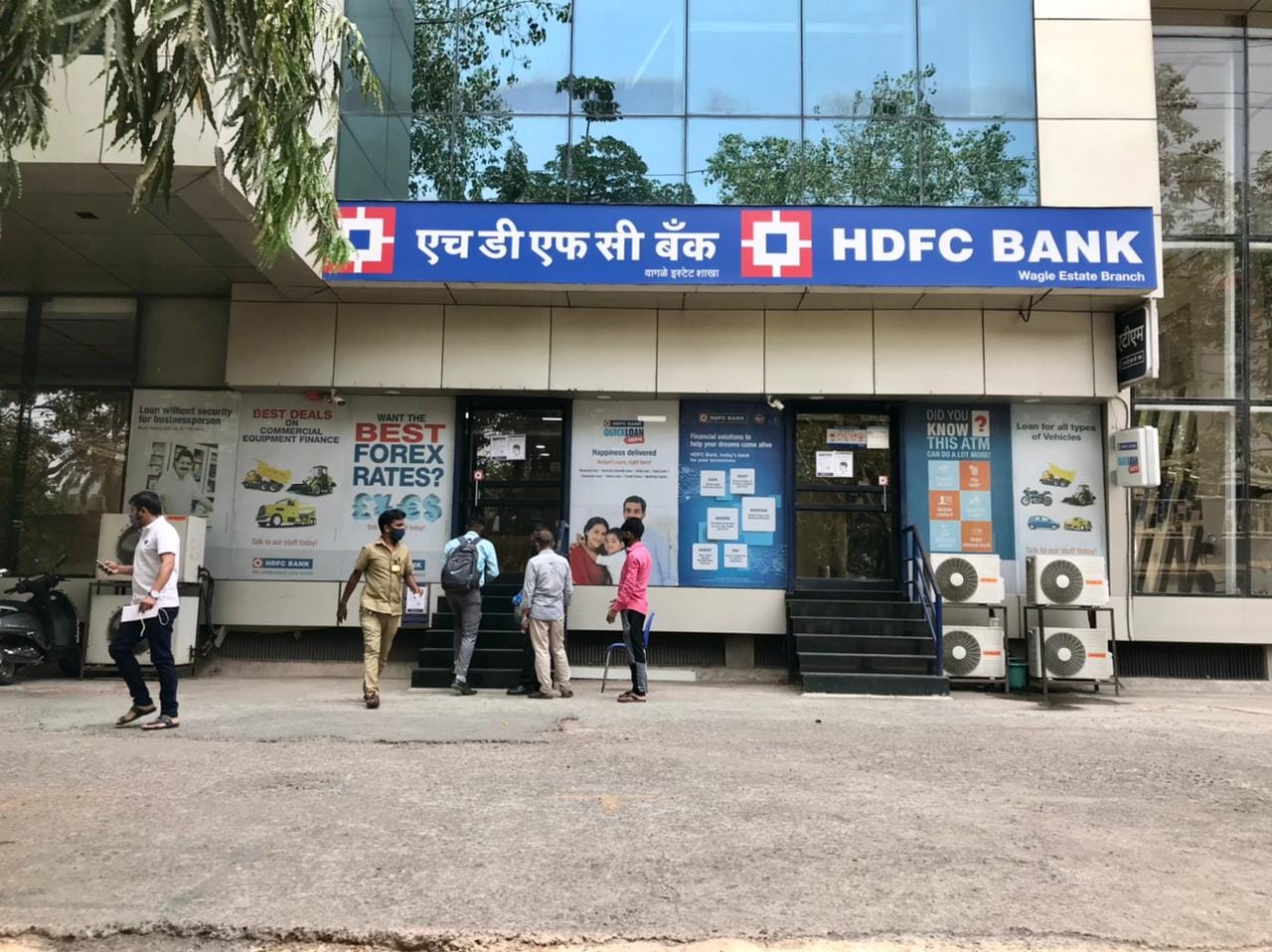
A miffed customer, who felt that he was robbed of hard-earned money, filed a police complaint against one of India's largest banks.
Pankaj Sinha, 47, managing director of the Colombo wing of a multi-national fast moving consumer goods brand, has filed a police complaint with the Gurugram police against private lender HDFC Bank Ltd. He has been a customer of the bank since 1999.
In his complaint, filed last month, Sinha alleged that employees of the bank colluded to missell him additional tier-1 bonds from two foreign banks, including those from Credit Suisse, without providing adequate details about the risk involved.
The bonds so purchased led to over $200,000 worth of investments being written down to zero, after Swiss regulator Finma wrote off Credit Suisse's $17 billion AT-1 bond portfolio in March. In his complaint, Sinha has attached screenshots of text messages exchanged between him and the bank's employees, as well those of emails sent to him.
BQ Prime has reviewed a copy of the complaint. HDFC Bank declined to respond to queries mailed.
Names of the HDFC Bank employees Sinha dealt with are being withheld in the story as BQ Prime has not been able to independently confirm details listed here with them.
Misselling AT-1 bonds has been a sore point in India after private lender Yes Bank Ltd. wrote-off Rs 8,500 crore worth of such bonds from its balance sheet during a reconstruction exercise in March 2020. A clutch of retail investors who were holding these bonds are still fighting a court battle against Yes Bank's decision.
Modus Operandi
In 2021, a relationship manager approached Sinha with a proposal to open an offshore account in HDFC Bank's Bahrain branch. Such an account could allow the bank transfer Sinha's fixed deposits in India to Bahrain and invest in offshore bonds, he was told.
"She assured me such investments to be super FDs with a fixed maturity period, 100% safe investment with handsome returns, which I would never have imagined and is not possible with the general product and investment scheme in India," Sinha said in his complaint.
The Gurugram-based relationship manager further contacted Sinha to arrange a call with an assistant vice president at HDFC Bank's Abu Dhabi office for this process. From thereon, both the HDFC Bank employees allegedly repeatedly followed up with Sinha about the proposal.
"It is relevant to mention herein neither any brochure or prospectus of these bonds were given to me nor was I told that those were AT-1 bonds," Sinha said in his complaint.
By August 2021, HDFC Bank's Bahrain branch had opened an offshore account for Sinha. He was sent a Master Facility Agreement, where the AVP from Abu Dhabi asked Sinha and his wife to sign at specific places, as this was a joint account.
At no point did the AVP explain anything about the risks involved. In fact he encouraged the couple to sign the documents without reading, as this was a mere formality, Sinha alleged. The couple were also not given any direct access to the offshore account and they were dependent on AVP to handle it.
Over the following months, AT-1 bonds issued by Standard Chartered Bank and Credit Suisse were pitched to Sinha as super FDs, where his capital would remain protected and he would get a high return. The AVP further signed him up for a 36-month $250,000 loan from HDFC Bank.
Later, Sinha's own funds and those availed from the loan were used to purchase $203,647.5 worth of Standard Chartered AT-1 bonds and $206,062.5 worth of AT-1 bonds from Credit Suisse, Sinha alleged in his complaint. He was informed that these bonds would mature in 2026 and 2030 respectively, despite these bonds being perpetual in nature.
Over the course of many months, Sinha tried to seek an exit from his investment, as he grew wary.
In June 2022, for example, Sinha noted that his investment was down $70,000 and asked the HDFC Bank AVP from Abu Dhabi to sell off the bonds at the earliest. However, the AVP assured him that the bonds were capital protected and there was no reason to worry about temporary price fluctuations, Sinha alleged in complaint.
Over the following few months, Sinha received four separate emails from HDFC Bank, asking him to put up additional funds against his investments, in the form of margin calls. When he sought clarification from the AVP about the emails, he was asked to ignore them.
By March, Sinha was informed that the Credit Suisse bonds had been written down. He was also informed that he had to put up additional collateral for the Standard Chartered bonds which were purchased using an HDFC Bank loan. If he could not provide the additional collateral, HDFC Bank would liquidate the bonds, he alleged.
The Aftermath
In a separate statement to BQ Prime, Sinha stated that the money he lost in this ordeal were funds he was saving for his children's education.
"I am a risk averse investor with zero appetite for risk as the key reasons for the savings is to create a corpus for my children's education abroad and create a retiral corpus," Sinha said in his statement.
Sinha submitted complaints to HDFC Bank and also to the bank's MD & CEO Sashidhar Jagdishan. His complaint was closed by the lender's Bahrain branch stating that he had signed the master agreement governing the transaction. Jagdishan's office is yet to respond to his complaint.
"Obviously I am at fault for not reading 47 pages of the MS agreements; however even there, the bank relationship managers asked me to just sign and not fill any thing," Sinha said.
A private sector banker, who spoke on the condition of anonymity, said that there is very little that the legal system can do in this situation. Two years ago, there was no way a financial institution could have predicted that Credit Suisse AT-1 bonds would be written down to zero. This is a case of a campaign at a bank having failed.
Moreover, the sign off on the master agreement may work against Sinha, since from a process point of view, all the boxes were ticked.
This may qualify as a case of misselling, which usually does not lead to any real legal troubles for the bank. At best, this is a reputational risk for the bank involved and not a legal issue, this banker said.

-
Extracting Value From Battery Scrap Could Be Challenging For India | The Reason Why

A discarded lithium-ion battery still contains valuable materials such as lithium, nickel and cobalt. These can be recovered and reused. When such batteries are crushed and shredded, they produce a dark powder called black mass.
-
One El Nino, India Can Handle. Two Could Break The Granary
India's grain stocks can absorb one bad year, but a second El Nino could drain the buffer in two to three years, economists say.
-
India's Troika Of Good Luck | Joining The Dots
As Jensen Huang's exit drags Nvidia down, a cooling AI trade and resilient earnings have revived investor interest in India. A likely RBI rate hike looms.
-
Talking Points This Week: Leadership Shock At Nvidia, Earnings Strength, And The Fog Over Hormuz
The Anthropic IPO pricing and first trading day, Nvidia's upcoming earnings, and any fresh signals from Iran will set the tone for the following week.
-
Signature Play: The Classic Cocktail Is Dead. Or Is It?
Classic cocktails are disappearing from India's cocktail menus. But they're still being ordered, taught to bartenders and borrowed from. So, who's really having the last drink?
-
A New Samvat Wishlist: Inclusive Prosperity And Human Development
India has strengthened its economic foundations through infrastructure, digital access and enterprise. Its next growth chapter must deepen productivity, create better livelihoods and widen participation in prosperity.
-
Love, Sex Aur Dhokha: The Audacious Plot To Spy On Jensen Huang
A Taipei dinner, a Singapore chip buyer and a suspected Chinese asset: inside the alleged spy operation that got close to NVIDIA's Jensen Huang.
-
Ten Things I Learnt This Samvat
Patience can be a trap. Cheap stocks can stay cheap. Leverage can wipe you out. What did Samvat 2082 teach us? Niraj Shah writes on 10 lessons from the year gone by.
-
Talking Points This Week: Tech Nerves, FII Buying, And A Faraway Banking Shock
The global markets are not shining this Diwali. The exception in the large markets is, India.
-
Midterm Rally Lasted A Day. The Hard Reality Of A Divided US May Last Two Years | Opinion
Between a contested AI boom, a debt ceiling that arrives in 2027 and a president with every incentive to act alone, the next two years may prove more volatile than the first day's rally suggests.









