Route Mobile To List On BSE, NSE On Monday
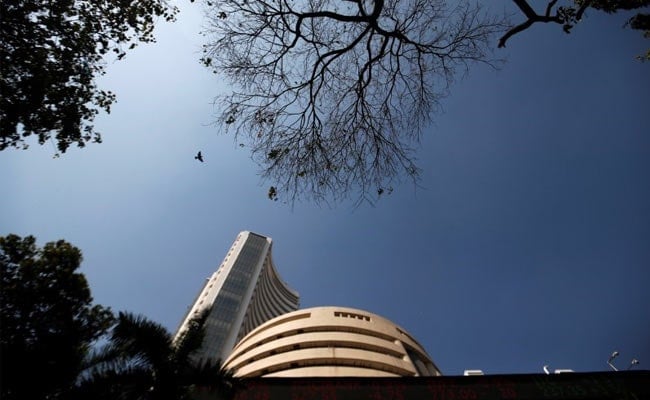
The cloud communication services provider Route Mobile, which concluded its initial public offering (IPO) on September 11, is set to make its debut on the stock exchanges on Monday i.e. September 21. The final issue price has been fixed at Rs 350 per share.
Happiest Minds Technologies shares had made a strong debut last week, listing at a premium of around 110 per cent on the stock exchanges. If analysts are to be believed, and going by the premium in the grey market, Route Mobile is also likely to command a hefty premium on debut.
The Mumbai-headquartered Route Mobile's public offer was open for bidding between September 9 and September 11, 2020, in the price band of Rs 345-Rs 350 per share.
The IPO was subscribed 73.30 times, receiving bids for more than 89 crore shares as against the total issue size of 1,21 crore shares, as per data available on the stock exchanges. The retail investors portion received total subscription of 12.67 times, non-institutional investors segment attracted bids worth 192.81 times and qualified institutional buyers segment was subscribed 89.76 times.
The public offering had comprised fresh issue of Rs 240 crore and offer for sale (OFS) of Rs 360 crore.
Route Mobile was established by Sandipkumar Gupta and Rajdipkumar Gupta in 2004. It is a leading Communications Platform as a Service (CPaaS) provider and a tier-one application-to-peer (A2P) service provider proving solutions in messaging, voice, analytics and monetization. The company has clients in Africa, Asia Pacific, Middle East, Europe and North America.
Route Mobile IPO is the fourth public offering this year, following the SBI Cards and Payment Services' share offering in March, Rossari Biotech's share sale in July and Happiest Minds IPO this month.

-
Extracting Value From Battery Scrap Could Be Challenging For India | The Reason Why

A discarded lithium-ion battery still contains valuable materials such as lithium, nickel and cobalt. These can be recovered and reused. When such batteries are crushed and shredded, they produce a dark powder called black mass.
-
One El Nino, India Can Handle. Two Could Break The Granary
India's grain stocks can absorb one bad year, but a second El Nino could drain the buffer in two to three years, economists say.
-
India's Troika Of Good Luck | Joining The Dots
As Jensen Huang's exit drags Nvidia down, a cooling AI trade and resilient earnings have revived investor interest in India. A likely RBI rate hike looms.
-
Talking Points This Week: Leadership Shock At Nvidia, Earnings Strength, And The Fog Over Hormuz
The Anthropic IPO pricing and first trading day, Nvidia's upcoming earnings, and any fresh signals from Iran will set the tone for the following week.
-
Signature Play: The Classic Cocktail Is Dead. Or Is It?
Classic cocktails are disappearing from India's cocktail menus. But they're still being ordered, taught to bartenders and borrowed from. So, who's really having the last drink?
-
A New Samvat Wishlist: Inclusive Prosperity And Human Development
India has strengthened its economic foundations through infrastructure, digital access and enterprise. Its next growth chapter must deepen productivity, create better livelihoods and widen participation in prosperity.
-
Love, Sex Aur Dhokha: The Audacious Plot To Spy On Jensen Huang
A Taipei dinner, a Singapore chip buyer and a suspected Chinese asset: inside the alleged spy operation that got close to NVIDIA's Jensen Huang.
-
Ten Things I Learnt This Samvat
Patience can be a trap. Cheap stocks can stay cheap. Leverage can wipe you out. What did Samvat 2082 teach us? Niraj Shah writes on 10 lessons from the year gone by.
-
Talking Points This Week: Tech Nerves, FII Buying, And A Faraway Banking Shock
The global markets are not shining this Diwali. The exception in the large markets is, India.
-
Midterm Rally Lasted A Day. The Hard Reality Of A Divided US May Last Two Years | Opinion
Between a contested AI boom, a debt ceiling that arrives in 2027 and a president with every incentive to act alone, the next two years may prove more volatile than the first day's rally suggests.









