The Challenges Piyush Goyal Faces At Indian Railways
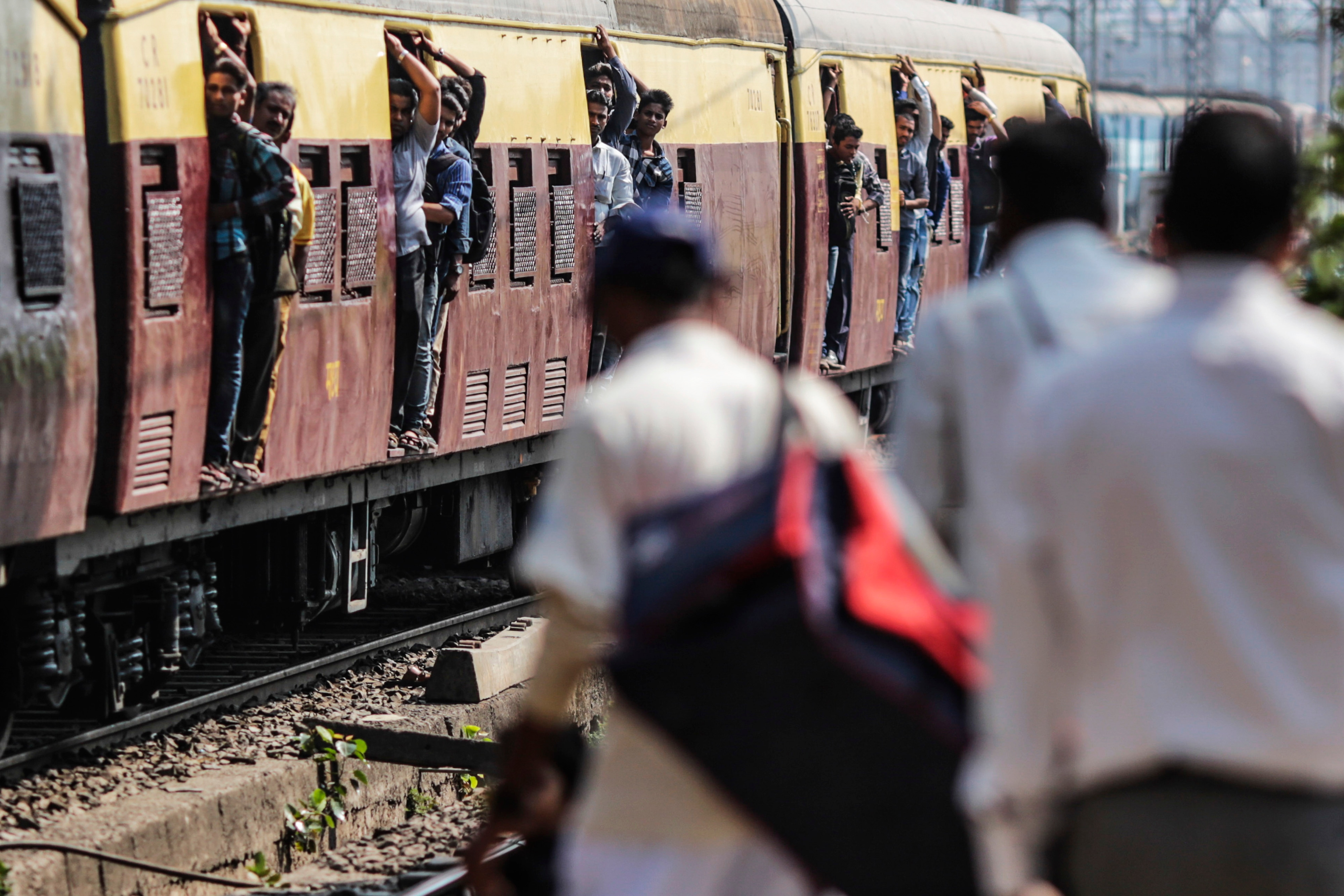
Twenty-two people died after Utkal Express derailed in Muzaffarnagar in western Uttar Pradesh last month. It was one of the four train derailments is less than a month.
Facing criticism, Suresh Prabhu offered to resign as the railway minister. While Prabhu was moved out of the ministry in the subsequent cabinet reshuffle, the onus to fix the problem lies with his successor Piyush Goyal.
Goyal, the former minister of state for power, mines and renewable energy, was elevated to a cabinet rank and given the charge of railways. The scale of challenge he faces is reflected by the data on rail accidents over the past three years.
As many as 193 people died in train derailments in 2016-17, the most in 10 years, according to an IndiaSpend analysis. A Right to Information response quoted by Firstpost in a report revealed that there have been over 370 major train accidents since April 2014.
Safety is one aspect of the problem. Goyal needs to look for new investments and consider way to boost the revenue, something his predecessor had been working on.
Also Read: Cabinet Reshuffle: Prime Minister Narendra Modi's New Ministerial Team
Safety Of Passengers
Safety is tarnishing railways' image, said professor G Raghuram, director, Indian Institute of Management, Bangalore.
“One of the issues is that a lot of specific investments are required,” he said. Considering investments with safety as a major focus would be a key area to look at, said Raghuram, a specialist in infrastructure and transport systems, and logistics and supply chain management.
Goyal must also ensure that there is more integration across different departments, he said. And he needs to prioritise projects.
Investments Into Existing Assets
Investment into modernising tracks, increasing the speed of trains and rehabilitation is another challenge.
The Comptroller and Auditor General criticised the railways for delays in track electrification, which led to cost overruns of Rs 3,000 crore. Railways took nearly nine years to invite tenders for two dozen approved projects to electrify tracks, the auditor had said highlighting the tardy progress.
It's time railways prioritised investing on maintenance, better management and didn't look at reforms, Abhay Agarwal, partner (transaction advisory services, infrastructure and public-private-partnership) at EY. “This should be done to make existing assets better and safer,” he said.
It's important to consider if the railways can “reduce the number of trains, increase speed and let go some short distance traffic”, he said. The effort should be to see where all investments should be made so that the financial future of railways is safer and better, said Agarwal.
Also Read: Cabinet Reshuffle: Ten Top Takeaways
Revenue Growth
Railways' revenue grew 12 percent to Rs 157,880 crore in the year to March 2015. Revenue rose 4.6 percent the following year, much lower than the 10-19 percent increase in the previous four years. That was the worst performance in six years, according Indian Railways' website. The national transporter missed its target in the year to March too.
The railways has to compete with airlines and road transporters as far as passenger travel is concerned and with road hauliers for cargo movement. As road infrastructure and connectivity improved, share of railways in cargo movement has come down, Deloitte's Naidu said. The railways has an economic advantage in long-distance transportation. Yet, it hasn't materialised due to several constraints, he said.
Internationally, travel by railways in terms of customer experience is no different from travel by airlines, he said. “To bring about this transformation, the key is to focus on railways in terms of its business objective – of efficiently moving people and cargo.”
The key challenge facing is one of massive organisation and operational transformation.
Poor Services
The CAG in July had said the national carrier was serving food unfit for humans. Its audit found poor hygiene and substandard quality of food at stations and in the trains.
The railways is responsible for its own travellers and should ensure that hygienic food is served, IIM-Bangalore's Raghuram said.
Catering is a service-oriented business and constraints of numerous processes and procurement may not be the best way forward, according to Peeyush Naidu, partner at Deloitte Touche Tohmatsu India LLP. “Private sector involvement and operation is required.”
Also Read: Railways Delayed Tenders For 24 Projects By Over Eight Years, Finds CAG

-
We May Need Another Tukaram Mundhe To Fight Air Pollution | The Reason Why

Developers may install basic measures such as sprinklers and green nets, resume work, and continue violating rules when this equipment stops working.
-
Extracting Value From Battery Scrap Could Be Challenging For India | The Reason Why
A discarded lithium-ion battery still contains valuable materials such as lithium, nickel and cobalt. These can be recovered and reused. When such batteries are crushed and shredded, they produce a dark powder called black mass.
-
One El Nino, India Can Handle. Two Could Break The Granary
India's grain stocks can absorb one bad year, but a second El Nino could drain the buffer in two to three years, economists say.
-
India's Troika Of Good Luck | Joining The Dots
As Jensen Huang's exit drags Nvidia down, a cooling AI trade and resilient earnings have revived investor interest in India. A likely RBI rate hike looms.
-
Talking Points This Week: Leadership Shock At Nvidia, Earnings Strength, And The Fog Over Hormuz
The Anthropic IPO pricing and first trading day, Nvidia's upcoming earnings, and any fresh signals from Iran will set the tone for the following week.
-
Signature Play: The Classic Cocktail Is Dead. Or Is It?
Classic cocktails are disappearing from India's cocktail menus. But they're still being ordered, taught to bartenders and borrowed from. So, who's really having the last drink?
-
A New Samvat Wishlist: Inclusive Prosperity And Human Development
India has strengthened its economic foundations through infrastructure, digital access and enterprise. Its next growth chapter must deepen productivity, create better livelihoods and widen participation in prosperity.
-
Love, Sex Aur Dhokha: The Audacious Plot To Spy On Jensen Huang
A Taipei dinner, a Singapore chip buyer and a suspected Chinese asset: inside the alleged spy operation that got close to NVIDIA's Jensen Huang.
-
Ten Things I Learnt This Samvat
Patience can be a trap. Cheap stocks can stay cheap. Leverage can wipe you out. What did Samvat 2082 teach us? Niraj Shah writes on 10 lessons from the year gone by.
-
Talking Points This Week: Tech Nerves, FII Buying, And A Faraway Banking Shock
The global markets are not shining this Diwali. The exception in the large markets is, India.









